Goldsmiths - University of London

Image bar

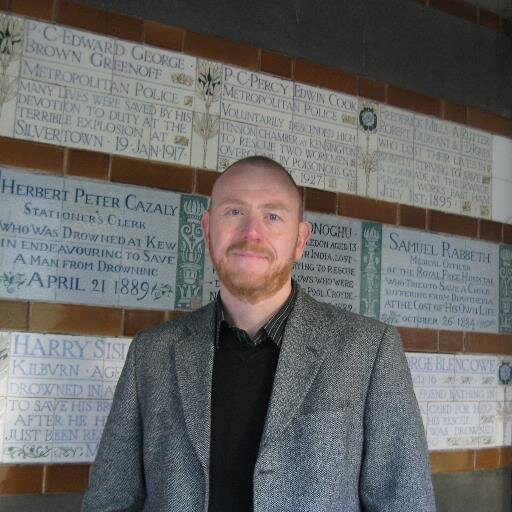
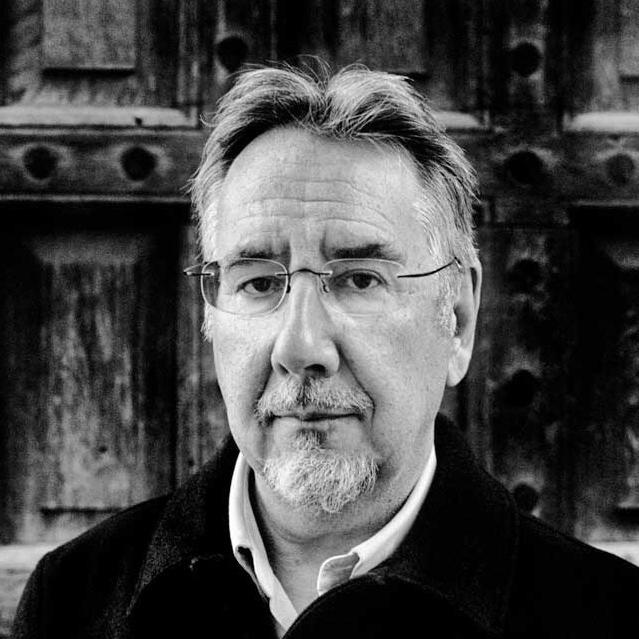
Prof Richard Grayson BA, D.Phil

Position held:
Head of History (2011-14) and Professor of Twentieth Century History

Phone:
+44 (0)20 7919 7490

Email:
r.grayson (@gold.ac.uk)

I specialise in British and Irish history in the twentieth century, with a particular focus on Ireland in the era of the First World War.  My main contribution to the subject is my 2009 book, Belfast Boys: How Unionists and Nationalists Fought and Died Together in the First World War.  My current research is on Dublin’s Great Wars: Home Rule, The First World War, the Easter Rising and Ireland’s Fight for Independence, 1912-23.  This major project is to be published by Cambridge University Press in 2017, and I am also carrying out other work in this general subject area.  I work closely with community groups, especially in Northern Ireland, as they tackle issues around remembrance.

Earlier in my career, my research was focused on inter-war British foreign policy and I published two monographs in that field, while I have also published on subject ranging from the history of the Channel Tunnel, youth culture in the 1960s, and the history of British liberalism.  I joined Goldsmiths in 2004, spending six years in the Politics department before moving to History in 2010.  Prior to 2004 I spent five years working in politics as Director of Policy of the Liberal Democrats, including two years as Charles Kennedy's principal speechwriter. Previous to that, I was Director of the Centre for Reform, a public policy think tank, and taught history/politics at Oxford University, UEA, Buckingham and the Open University.

My First Class BA (Hons) in English and American History was from UEA in 1991 (where I was also sabbatical General Secretary of the Students' Union), and my doctorate in Modern History was from Oxford University in 1995.

Teaching

In 2011-12, I shall be convening and teaching the following courses:

  • Life in the Trenches: Perspectives on British Military History, 1914-18 (Year Three Special Subject)
  • A Troubled Culture: Northern Ireland since 1921 (MA Spring Term Unit)

In addition, I shall be giving five lectures as part of the first year course, Religion, Peace and Conflict, covering Irish history from 1606 to 1994.

Areas of supervision

I supervise in twentieth century British and Irish history, with particular interests in the First World War, Northern Ireland’s Troubles and inter-war politics. Students I have supervised have recently completed PhD theses on:

  • Feminist political thought during the First World War
  • Women's involvement in the Liberal Democrats
  • Nostalgia in political parties: myths, members and activism

I am currently the main supervisor for the following postgraduate MPhil/PhD students: 

  • Niamh Dillon, ‘The British Diaspora: Race, Return Migration and Identity In 20th Century Britain’
  • Mary Ingham, ‘Improper Relations: British Women and German POWs Held in the UK in the Immediate Postwar Years’

Professional activities

Co-Editor, Irish Political Studies

Media appearances

I appeared as an expert on the BBC's 'My Family at War' series in 2008, discussing the experiences of Belfast soldiers in the First World War. I occasionally make appearances in the media as a political commentator, having appeared on Radio 4’s Any Questions and most BBC news programmes, while I have written articles for the New Statesman, Independent and Guardian. I have contributed to the Historical Association's 'Social & Political Change in Britain 1800-present' podcast series, with pieces on the inter-war impact of the First World War.

Research interests

My main research interests are in Ireland and the First World War, with linked interests in the role of remembrance in contemporary society.  My book Belfast Boys: How Unionists and Nationalists fought and died together in the Great War, was published in August 2009 by Continuum, with a revised paperback following in 2010. It focuses on two battalions with overt West Belfast connections in 1914-18, the 9th Royal Irish Rifles and the 6th Connaught Rangers, but also draws in other units of the army, navy and Royal Flying Corps in which West Belfast men served. It covers the stories of the men who fought in the war, the experiences of those who returned, the work of women and children on the home front, and the controversies which have surrounded remembrance of the war in Belfast. I recently gave a series of lectures in the USA about this book, one of which, at Boston College, was filmed and can be viewed online here.

I am now currently working on Dublin’s Great Wars: Home Rule, The First World War, the Easter Rising and Ireland’s Fight for Independence, 1912-23.  This major project is to be published by Cambridge University Press in 2017, and I am also carrying out other work in this general subject area.  I work closely with community groups, especially in Northern Ireland, as they tackle issues around remembrance.  My edited volume, With the 16th (Irish) Division: The Staniforth Letters, 1914-18, is to be published by Pen and Sword in the summer of 2012.

Prior to my current research, I published two books on British politics and foreign policy in the inter-war years, along with articles on a range of historical subjects across the twentieth century, and I continue to work in this field occasionally.  I have also carried out research into a number of issues in public policy.  These included a comparative study of secondary education systems in England, Sweden, Denmark and the Netherlands; a study of the fiscal systems OECD countries; and policies being developed in Newark, New Jersey during Cory Booker’s tenure as Mayor. 

Selected publications

First World War

  • 'The Place of the First World War in Contemporary Irish Republicanism in Northern Ireland', Irish Political Studies, 25, 3 (2010), pp. 325-345.
  • Belfast Boys: How Unionists and Nationalists Fought and Died Together in the First World War (Continuum, 2009).

I have also applied my academic research to inform engagement with genealogists and the wider community. I have been closely involved in the establishment of the 'Hemel at War' project at Hemel Hempstead School, and have also made the following written contributions:

  • 'The 6th Connaught Rangers at War' and 'How to find out more about the 6th Connaught Rangers', in 6th Connaught Rangers Research Project, The 6th Connaught Rangers: Belfast Nationalists and the Great War (Belfast: 6th Connaught Rangers Research Project, 2008), pp. 18-29 & pp. 67-69.
  • 'Finding out about Irish Servicemen in WWI', North Irish Roots: Journal of the North of Ireland Family History Society, 20, 1 (2009), pp. 4-7.
  • 'Sergeant James Powell, 2nd Royal Irish Rifles', Review: Journal of the Craigavon Historical Society, 9, 2 (2008-9), pp. 58-59.
  • 'When Enemies United', History Today, 60, 3 (March 2010), pp. 23-25.  Available here.
  • 'Community engagement in local history: a report on the Hemel at War project', Teaching History, 145 (Dec 2011), pp. 4-12 (co-written with Lynda Abbott).

Inter-war UK political history

  • ‘The Historiography of Inter-war Politics: Competing Conservative World Views in High Politics, 1924-29’, in William Mulligan and Brendan Simms, eds., The Primacy of Foreign Policy (London: Palgrave, 2010), pp. 277-290.
  • 'Leo Amery's Imperialist Alternative to Appeasement in the 1930s', Twentieth Century British History, 17, 4 (2006), pp. 489-515.
  • 'Imperialism in Conservative defence and foreign policy: Leo Amery and the Chamberlains, 1903-1939', Journal of Imperial and Commonwealth History, 34, 4 (2006), pp. 505-527.
  • 'Austen Chamberlain' in T.G. Otte, ed., The Makers of British Foreign Policy: From Pitt to Thatcher, (Palgrave, 2002), pp. 150-172.
  • Liberals, International Relations and Appeasement: The Liberal Party, 1919-39, (London: Frank Cass, 2001).
  • Austen Chamberlain and the Commitment to Europe : British Foreign Policy, 1924-29, (London: Frank Cass, 1997).
  • 'The British Government and the Channel Tunnel, 1919-39', Journal of Contemporary History, 31, 1 (Jan. 1996), pp. 125-144.

Post-war UK political history

  • Review article: 'Conservative Ideologies and the Conservative Party', Contemporary Politics, 11, 4 (2005), p. 271-77. ISSN 1356-9775
  • 'Mods, Rockers, and Juvenile Delinquency in 1964: The Government Response', in Contemporary British History, 12, 1 (1998), pp. 19-47.
  • 'The British Government, the Channel Tunnel and European Unity, 1948-64', European History Quarterly, 23, 3 (1996), pp. 415-436.

Contemporary liberalism and Liberal Democrats

  • The Liberal Democrat Journey to a Lib-Con Coalition – and Where Next?, (London: Compass, 2010).  Available here.
  • ‘Social liberalism’, in Kevin Hickson, ed., The Political Thought of the Liberals and Liberal Democrats since 1945, (Manchester University Press, 2009), pp. 48-64.
  • (Co-editor, with Duncan Brack and David Howarth), Reinventing the State: Social Liberalism for the 21st Century (London: Politicos, 2007).
  • (Editor) Special issue of The Political Quarterly, 78, 1 (2007) on the Liberal Democrats.
  • 'Analysing the Liberal Democrats', The Political Quarterly, 78, 1 (2007), pp. 5-10. ISSN 0032-3179
  • 'Social Democracy or Social Liberalism? Ideological Sources of Liberal Democrat Policy', The Political Quarterly, 78, 1 (2007), pp. 32-39. ISSN 0032-3179
  • 'Change and Continuity in the Liberal Democrat General Election Campaign of 2005', Political Quarterly, 76, 3 (2005), pp. 393-401.
  • (Editor) Liberal Democrats and the Third Way, (London: Centre for Reform, 1998).

Contemporary public policy

  •  ‘Localism the American Way’, Public Policy Research, 17, 2 (2010), pp. 75-9.  [A case study of the policies and politics pursued by Mayor Cory Booker in Newark, New Jersey.]
  • British Politics: A Beginner’s Guide (Oxford: One World, 2010).
  • (Co-editor with Jonathan Rutherford), After the Crash: Reinventing the Left in Britain (London: Lawrence & Wishart, 2010).  Available here.
  • ‘Localising and Decentralising the National Health Service’, in Seth Thévoz, ed., The Local Parliament: A Liberal Democrat Approach to Devolution (London: Local Government Association, 2009), pp. 24-28.
  • ‘Reforming the NHS: A Local and Democratic Voice’, in Duncan Brack, Richard S. Grayson and David Howarth, eds., Reinventing the State: Social Liberalism for the 21st Century (London: Politicos, 2007).
  • Learning from Europe : Lessons in Education, with Nick Clegg, (London : Centre for European Reform, 2002).
  • Funding Federalism: A Report on Systems of Government Finance, with Nicholas Bromley, Jay Liotta, Margaret Sharp and Ryan White, (London: Centre for Reform, 1999).
  • Saving Our Future: Disaffection with Schools, with John Howson, (London: Centre for Reform, 1998).

Alternative histories

  • 'What if Gustav Stresemann had lived beyond 1929?', in Duncan Brack, ed., President Gore and other things that never happened, (London: Politico's, 2006), pp. 133-148.
  • 'What if the Liberal Party had Emerged United from the First World War?', in Duncan Brack and Iain Dale, eds., Prime Minister Portillo and other things that never happened, (London: Politicos, 2003), pp. 1-20.