MA in Culture Industry

Using an innovative mixture of advanced cultural theory, and practice-based elements including placements and student-led research and experimental projects, this new MA aims to put debates about organisation and production at the forefront of cultural thinking.

You'll also have the opportunity to undertake placements within the culture industry, where you'll be able to study specific practices.

Applying
Length
1 year full-time or 2 years part-time.
Funding
If you're applying for funding, you may be subject to an application deadline. Find out more about funding opportunities for home/EU applicants, or funding for international applicants.

UK/EU students may be eligible for AHRC funding.

Careers
Culture industry; NGOs; academic and non-academic research.
Skills
Project realisation; research; independent and interdisciplinary culture.
Fees
See our tuition fees.
Contact the department
Contact Lisa Rabanal
Visit us
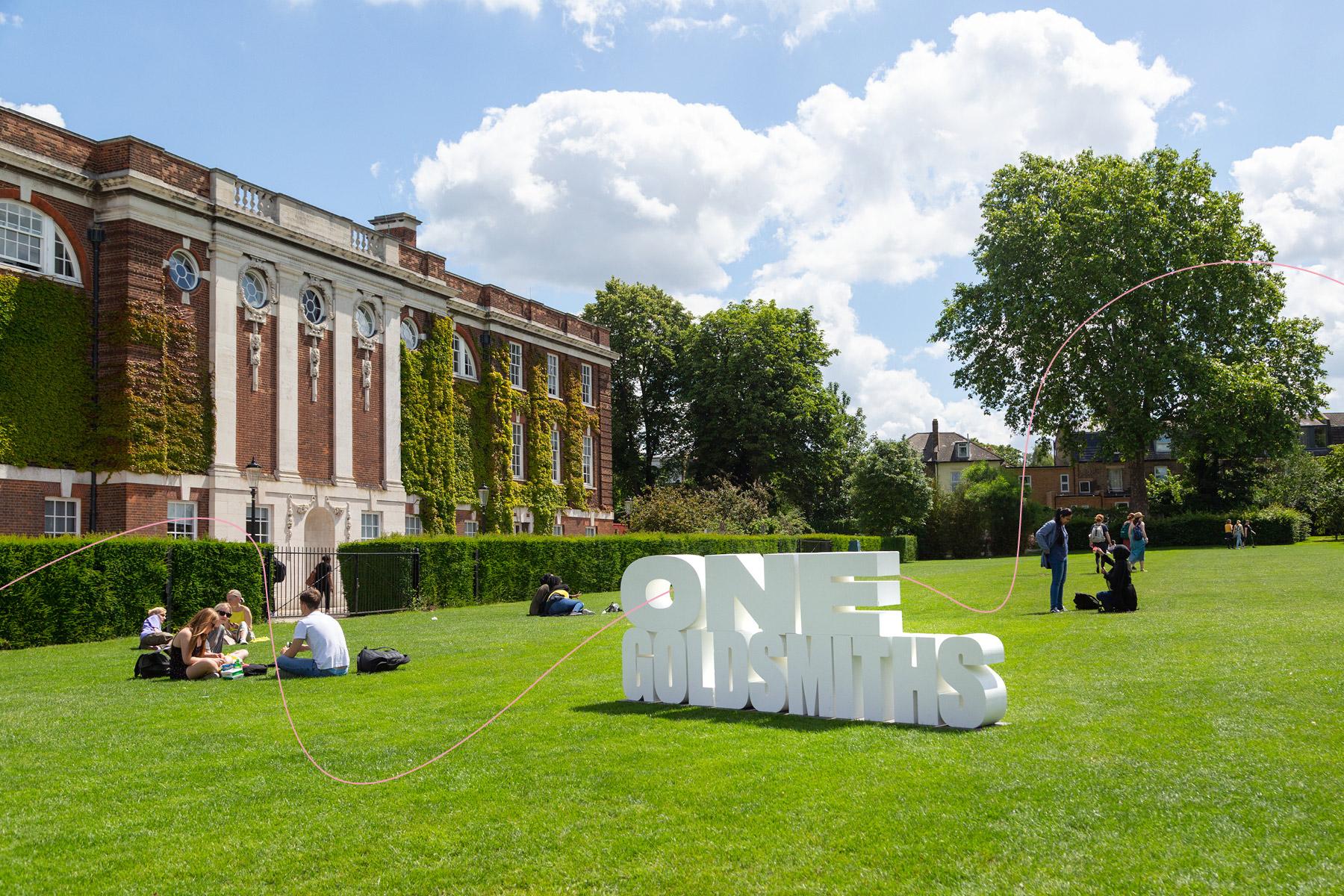
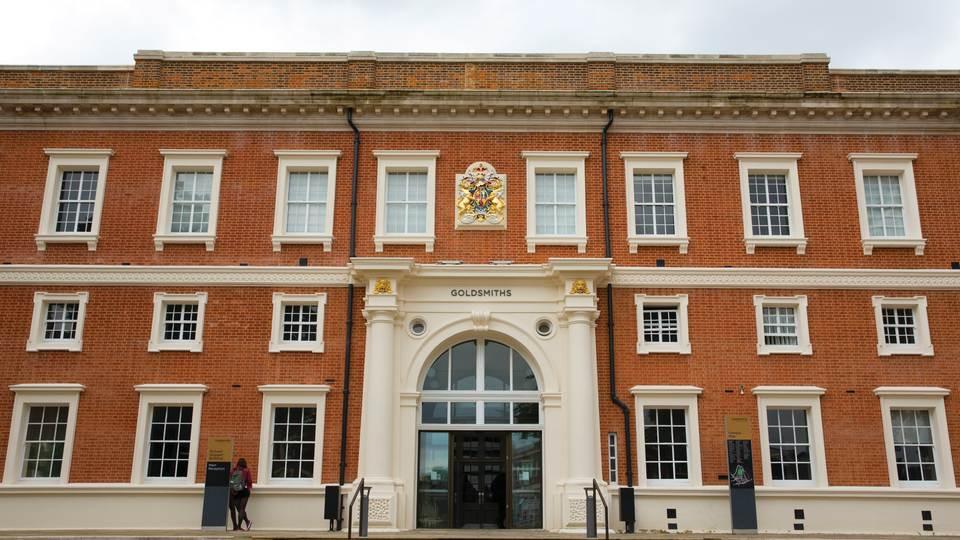
Find out about how you can visit Goldsmiths at one of our open days or come on a campus tour.

A collaboration between the Department of Media and Communications and the Centre for Cultural Studies, the teaching team includes Professor Scott Lash, Professor Angela McRobbie, and Dr Matthew Fuller.

The programme is aimed at graduates with an interest in working and intervening in the cultural industries.

Some candidates may come via the traditional academic route, while others will have experience of working within the cultural field in some way before undertaking the degree.

If you want to incorporate contemporary thinking on the organisation and work of culture into your practice or research, this is the programme for you.

Find out more about:

Assessment

Essays; project report and documentation/placement report and documentation; research lab participation.

Register your interest

If you register your interest in this programme we will keep you informed about open days and send you relevant further information. If you subsequently decide to apply for this programme you will be able to use the same login details to apply.


Applying and entrance requirements

You can apply directly to Goldsmiths via the website by clicking the ‘apply now’ button on the main programme page.

Before submitting your application you’ll need to have: 

  • Details of your education history, including the dates of all exams/assessments.
  • The email address details of your referee who we can request a reference from, or alternatively an electronic copy of your academic reference.
  • A personal statement. This can either be uploaded as a Word Document or PDF, or completed online.
  • If available, an electronic copy of your educational transcript (this is particularly important if you have studied outside of the UK, but isn’t mandatory).

You'll be able to save your progress at any point and return to your application by logging in using your username/email and password.

When to apply

Applicants are encouraged to submit by 31 May, though applications after this date may still be considered to start the following September. 

We encourage you to complete your application as early as possible, even if you haven't finished your current programme of study. It's very common to be offered a place that is conditional on you achieving a particular qualification. 

If you're applying for funding you may be subject to an application deadline. Find out more about funding opportunities for UK/EU students and international students. 

Late applications will only be considered if there are spaces available.

Selection Process

Admission to many programmes is by interview, unless you live outside the UK. Occasionally, we'll make candidates an offer of a place on the basis of their application and qualifications alone.

Entrance Requirements

You should have (or expect to be awarded) an undergraduate degree of at upper least second class standard in a relevant/related subject. 

You might also be considered for some programmes if you aren’t a graduate or your degree is in an unrelated field, but have relevant experience and can show that you have the ability to work at postgraduate level.

We also accept a wide range of international equivalent qualifications, which can be found on our country-specific pages. If you'd like more information, please contact the Admissions Office.

English Language

If your first language isn't English, you need to demonstrate a minimum score of 7.0 in IELTS (including 7.0 in the written element) or equivalent to enroll and study on this programme. 

Please check our English Language requirements for more information.

Find out more about applying 

Contact us 

Get in touch via our online form

UK/EU

+44 (0)20 7919 7766
course-info@gold.ac.uk

International (non-EU)

+44 (0)20 7919 7702
international-office@gold.ac.uk

Courses and Structure

Core courses

Code Course title Credits
CU71015A Theories of the Culture Industry: Work, Creativity and Precariousness 30

This course sets out the key theorisations of the culture industry. Whilst incorporating classical figurations of the culture industry, the course is primarily concerned with assembling a clear engagement with contemporary research, such as that spearheaded by leading researchers at Goldsmiths.

The organisation and substance of work and of precarious labour, of the developing debates and mechanisms of ‘intellectual property’, and cultural workers’ development of institutions and networks, as well as contemporary configurations of the professional, will be discussed. You will learn to strategise cultural production and intervention through exploration of relevant material. The globalisation of the culture industry will provide a persistent and ambitious point of reference.

CU71016A Practices of the Culture Industry 30

This module presents a series of lectures and presentations by cultural practitioners. It aims to introduce students to contemporary debates in architecture, the legal framing and development of culture, visual art, design, community art and media, and interactive media. The course will map out the tricky transitions between theory and practice and include a rigorous discussion of the nature and the political, intellectual, and cultural stakes of interdisciplinarity.

Driven by questions of practice, this core course is organised around a series of more detailed analyses of specific cultural dynamics, where the theoretical models from part one are brought to bear on individual areas of practice and the ways that they can and cannot be thought of in terms of ‘industry’.

Cultural organisation has become increasingly important as a cultural form in itself. Whether this is seen in artists’ self-organisation, or through the changing scope of music distribution set in play by digital networks and other ‘disruptive technologies’, what culture means is increasingly seen as being critically interwoven with how it is ‘done’.

CU71018A Minor Placements / Minor Projects 30

Minor Placements

One kind of placement available is short and London-based, accounting for 30 credits. The course is intended to make use of Goldsmiths’ location in London, a global capital of cultural production. Through the proximity of London’s cultural industries – music, fashion, radio, new technologies – and the input of practitioners and experts, you'll be encouraged to bring cultural theory and a critical perspective to bear on London cultural industries and the practice of London’s cultural workers.

Minor Projects

You'll be able to undertake projects towards your dissertation, and as a minor. These projects are self-initiated and are expected to engage with practices of culture in significant terms.

Work on projects will be supported by the provision of a Research Lab space. Rigorous work within an interdisciplinary context will be crucial. You may also develop and define the scope of project work in relation with other students, external organisations, events or practitioners.

While such self-initiated work can be of a purely experimental or speculative nature, you may also wish to establish some kind of connection with outside agencies, such as competitions, exhibitions, NGOs, and community groups.

CU71018A/19A Research Lab *

A key part of the MA is the Research Lab, a platform for experimental research and practice in culture. The Lab is a weekly space by which, through the use of a learning plan and in discussion with teaching and support staff, you customise your practical and theoretical skills in culture industry research.

The Research Lab is a key aspect of the support for Projects and Placements (see above).

CU71019A Major Placements / Major Projects / Dissertation 60

Major Placements

These placements are more substantial, quite possibly overseas, and can provide the major focus for your dissertation, with a weight of 60 points. All placements will take advantage of the Centre for Cultural Studies’ significant network within the relevant professional fields and will be supervised by the course convenor or an appropriate tutor from within the Centre. Placements will result in an appropriately sized report, essay or dissertation. As such, the placement is not strictly focused on the delivery of training, but on placing you in a context within the culture industry in which you are able to make a study of specific practices. The written components provide a space for you to explore the connections between the practical issues concerning your placement and the theoretical issues addressed in the other parts of the degree. Reports may be submitted with a multimedia and/or visual component alongside the written part.

Major Projects

You'll be able to undertake projects towards your dissertation, and as a minor. These projects are self-initiated and are expected to engage with practices of culture in significant terms.

Work on projects will be supported by the provision of a Research Lab space. Rigorous work within an interdisciplinary context will be crucial. You may also develop and define the scope of project work in relation with other students, external organisations, events or practitioners.

While such self-initiated work can be of a purely experimental or speculative nature, you may also wish to establish some kind of connection with outside agencies, such as competitions, exhibitions, NGOs, and community groups.

Dissertation

10-12,000 word Written Dissertation.

Option courses

Code Course title Credits
CU71002A Cultural Theory 30 CATS

This course asks the questions: What is cultural studies. and, what is culture? A wide range of cultural theory dealing with issues concerning technology, art media, philosophy, and the economy, are explored in order to address a number of connected questions that span the field of contemporary cultural studies. Can culture be understood per se or may we only ever consider cultures? What is the nature of culture and how should we try to understnad what is specific to contemporary culture? What is cultural studies in a changing order, whereby China, India, and Latin America - the East and the South - become the drivers of global change? We look at the cultural foundations of the global economy: at 'individualist' and 'relational' orders of value. We ask who this non-Western  other is and again, this time wth new eyes, who is 'the West'? We enquire into the Greek and Jewish-Christian transcendental God and in the process investigagte its association with the economic culture of our age; for its messianic ethos; for its critique of law; of neoliberalism and sovereignty and its everlasting obsession with justice; we think it as well for its implicit universalism and ask the broader question: what is universalism? We look at cultures of the East (especially China) and of the South. Here, as opposed to Western ontology, are questions of conduct and 'the way'; as opposed to the Western other-worldly God, immanent this-worldly, non-monotheistic, regimes of religion. We look at the immanent and relation culture of the gift and the clan, the linguistic foundations of Chinese culture. We ask, in this context, whether a new global universalism is possible.

M. Foucault, The Birth of Biopolitics
A. Badiou, Saint Paul: The Foundations of Universalism
Martin Heideggger, 'The Question Concerning Technology'
Francois Jullien, Detour and Access
Aristotle, Metaphysics
Marcel Mauss, The Gift
G Deleuze and F Guattari, Anti-Oedipus
Bernard Stiegler, Technics and Time
Sigmund Freud, New Introductory Lectures on Psychoanalysis
Max Weber, Religion of India

CU71022A Text and Image 30 CATS

This course traces lines of intersection and divergence between theories of language or textual media and theories of the image. It aims to familiarize students with some of the problems that contemporary theory has inherited from previous attempts to think the relations among looking, seeing, knowing; writing, inscription, and memory. A secondary aim is to complicate dominant stories about the relationship of one set of paradigms, often textual or written, to rationality, communication, and instrumental thinking and the relationship of other, often visual paradigms to affect, embodiment, and a heightened sense of immediacy or violence in the confrontation with radical alterity. Special attention will be given to the place of models of language and of aesthetic experience in the definition of public space and political life, and to the legacies of modernity as seen through the lens of the “new” technologies of memory and of inscription via which it arrives. Given this concern with political and ethical dimensions of these models and paradigms, the course can be considered a 21st-century course in aesthetic theory.

 Readings will be drawn from primary texts across a broad range of fields, including philosophy, literary and critical theory, linguistics, optics, and photography history and theory. We will consider the different statuses accorded text and image with respect to epistemological questions: questions about truth, or about the limits of reason and of knowledge. We will ask why these questions cannot be considered in isolation from their ideological and political implications, and we will explore various accounts, given in the theoretical literature, of the power of texts and images actually to determine what we think or know. Marxist theories of the commodity, historical accounts of colonial uses of photography, and theories of race as a visual technology are all equally apropos. 

Students are expected to read closely and in depth and to do significant independent research in the relevant bodies of secondary literature in the preparation of the final essay. Successful essays will take into account a range of complications and counter-arguments in relation to a clearly defined problem and set of readings and will simultaneously demonstrate a command of the full spectrum of arguments presented in the lectures over the term. I.e., the lectures are structured in such a way that arguments are cumulative and knowledge requires synthesis, and it is essential that students attend all of the weekly lectures as well as a weekly seminar (see below).

Specific questions will include how philosophies of nature, being, and mind are entangled with art; perception with poiesis; mimesis with idealism; tekhne with fiction and revolution. It is common knowledge why the poets are cast out of Plato’s republic, but why is it that the true statesman, like the true philosopher, can be trusted to use figural language, when the rhetorician and the sophist cannot? Why does Marx’s commodity speak in hieroglyphs, whereas the master trope of ideology is the camera obscura? Why is mass literacy understood to be a baseline condition of modern democracy and yet a mass public transformed by globalization is thought to be readily deceived, perhaps now more than ever before, by pictures? Why could the Romanian revolution, the fall of the Berlin Wall, and the first Gulf War only be televised, whereas the dissemination of images from other wars has been confined almost exclusively to the Internet?

Photography will be an important point of reference throughout, allowing us to trace in detail the history of a given technology, and to consider the ways that images and their meanings may or may not be both historically specific and culturally bound. Focused treatment of key problems in the history and theory of photography will highlight the legacy of all these entanglements for European modernity and for the ongoing production and deployment of non-European others. We will explore the obvious yet still undertheorized connections between photography and colonialism and the corollary destabilization of common understandings of photography as the inheritor of Western pictorial traditions (the metaphysical understanding of perspectivalism, the reduction of the physical world into units of information). How does photography help to expose or, alternatively, obscure the time-honored yet continuously shifting connections between race, gender, and other ruses and techniques of power? How best to analyze the collusion and transformation of textual and visual memory regimes in the development of new technologies and regimes of surveillance, war, and power?

 Indicative reading list:

 Agamben, Giorgio, The Man Without Content (Stanford: Stanford UP, 1999).

Alloula, Malek, The Colonial Harem, trans. Myrna Godzich and Wlad Godzich (Minneapolis: U of Minnesota P, 1986).

Azoulay, Azoulay, Death’s Showcase: The Power of Image in Contemporary Democracy (Cambridge, MA: Zone Books/MIT Press, 2003) and The Civil Contract of Photography, trans. Rela Mazali and Ruvik Danieli. (Cambridge, MA: Zone Books/MIT Press, 2008).

Barthes, Roland, “The Reality Effect” (The Rustle of Language) and Camera Lucida: Reflections on Photography, trans. Richard Howard (New York: Hill and Wang, 1981).

Bataille, Georges, Manet, trans. Austryn Wainhouse and James Emmons (Geneva: Skira, 1955).

Bersani, Leo, The Death of Stéphane Mallarmé (Cambridge: Cambridge UP, 1982).

Blanchot, Maurice, “Literature and the Right to Death,” in The Work of Fire, trans. Charlotte Mandell (Stanford: Stanford UP, 1995) and The Writing of the Disaster, trans. Ann Smock (Lincoln: U of Nebraska P, 1995).

Breton, André, Surrealism and Painting, trans. Simon Watson Taylor (London: Macdonald and Co., 1972).

Crandall, Jordan, ed., Under Fire, Volumes 1-2 (Rotterdam: Witte de With, 2005).

Crary, Jonathan, Techniques of the Observer: On Vision and Modernity in the 19th Century (Cambridge: MIT Press, 1992).

de Man, Paul, Allegories of Reading: Figural Language in Rousseau, Nietzsche, Rilke, and Proust (New Haven: Yale UP, 1979) and “Sign and Symbol in Hegel’s Aesthetics,” in The Aesthetic Ideology, ed. Andrzej Warminski (Minneapolis: U of Minnesota, 1996).

Derrida, Jacques and Bernard Stiegler, Echographies of Television: Filmed Interviews, trans. Jennifer Bajorek (London: Polity, 2002).

Derrida, Jacques, “…that dangerous supplement…” (Of Grammatology) and Dissemination, trans. Barbara Johnson (Chicago: U of Chicago P, 1983).

Descartes, René. Optics (selections).

Didi-Huberman, Georges, The Invention of Hysteria: Charcot and the Photographic Iconography of the Salpêtrière (selections);

Dyer, Richard, White: Essays on Race and Culture (London: Routledge, 1997).

Edwards, Elizabeth, Raw Histories: Photographs, Anthropology, and Museums (Oxford: Berg, 2001).

Fabian, Johannes, Time and the Other: How Anthropology Makes Its Object (New York: Columbia UP, 1983).

Foucault, Michel, This Is Not a Pipe.

Gonzalez, Jennifer, “Morphologies: Race as a Visual Technology,” in Only Skin Deep, ed. Coco Fusco and Brian Wallis (New York: Harry N. Abrams, 2003).

Hegel, G.W.F., Introduction to Aesthetics (Oxford: Clarendon, 1975).

Heidegger, Martin, “The Age of the World Picture,” in The Question Concerning Technology and Other Essays (New York: Harper and Row, 1977).

hooks, bell, “The Oppositional Gaze,” in Black Looks: Race and Representation (Boston: South End P, 1992).

Keenan, Thomas. “Looking like Flames and Falling like Stars: Kosovo, ‘the First Internet War’”; “Mobilizing Shame.”

Kofman, Sarah, “The Melancholy of Art,” in Sarah Kofman, Selected Writings, ed. Georgia Albert et al. (Stanford: Stanford UP, 2007) and “Rousseau's Phallocratic Ends,” in Nancy Fraser & Sandra Lee Bartky, eds., Revaluing French Feminism: Critical Essays on Difference, Agency, and Culture (Bloomington and Indianapolis: Indiana UP, 1992).

Lévi-Strauss, Claude, Tristes Tropiques (London and New York: Penguin, 1992 [1955]).

Lindberg, David, C., “Ancient Theories of Vision,” Theories of Vision from Al-Kindi to Kepler (Chicago: U of Chicago P, 1976).

Mallarmé, Stéphane, selected poetry and prose.

Marin, Louis, To Destroy Painting, trans. Mette Hjort (Chicago: U of Chicago P, 1995).

Negri, Antonio, The Political Descartes: Reason, Ideology, and the Bourgeois Project (London: Verso, 2006).

Plato, Republic.

Poole, Deborah, “Equivalent Images” (Vision, Race, and Modernity).

Raiford, Leigh, “The Consumption of Lynching Images,” in Coco Fusco and Brian Wallis, eds., Only Skin Deep, (New York: Harry N. Abrams, 2003).

Rousseau, Jean-Jacques, Confessions (selection from Book One).

Saussure, Ferdinand de, Course in General Linguistics, ed. Charles Bally and Albert Sechehaye (New York: McGraw-Hill, 1966).

Sekula, Allan, “The Body and the Archive,” in Richard Bolton, ed., The Contest of Meaning: Critical Histories of Photography (Cambridge, MA: MIT Press, 1989).

Sontag, Susan, On Photography (New York: Picador/Farrar, Straus and Giroux, 1977) and“Regarding the Torture of Others,” in The New York Times, May 23, 2004.

Starobinski, Jean. Jean-Jacques Rousseau: Transparency and Obstruction (Chicago: U of Chicago P, 1988).

Virilio, Paul, War and Cinema: The Logistics of Perception, trans. Patrick Camiller (London and New York: Verso, 1989)

CU71007A Interactive Media Critical Theory 15 or 30 CATS

Students taking this as an option can choose the full 30 CAT course, or - with a minimum of 5 week's attendance - take it as a 15 CAT option.

This course looks at the intersection of theories of communication, perception and organization for a re-thinking of the concept of interactivity in the context of digital mediation – from photography to sound, from generative architecture to open source and viral networks. The course brings together philosophical, scientific, and aesthetic concepts to develop a trans-disciplinary discussion and approach to analyse the impact of software machines on modes of interactivity. This trans-disciplinary view implies a new engagement with software media focussed not exclusively on the analysis of new media within the context of dominant and classical critical approaches to media. The course rather poses an emphasis on the trans-disciplinary process of formation and production of key concepts in the field of software media insofar as such emerging field demands a novel design of thoughts. The course draws on the transformations of media theories - from semiotic (Barthes) to postsemiotics (Pierce), from psychoanalysis (Lacan, Zizek) to schizoanalysis (Guattari), from radical media theories  (from McLuhan to tactical media) to new media theories (F.A. Kittler, P. Weibel, L. Manovich, M. Hansen, P. Levy, V. Flusser). These theories are studied according to recent approaches developed in critical thought through the works of Deleuze and Guattari, Foucault, Serres, Stiegler, Badiou, Grosz, Irigaray, Stengers, Massumi, Negri and in conjunction with mathematical theories of information and computing (Shannon and Weaver, Wiener, Turing, Von Neumann, Chaitin), biological theories of self-organization and nonlinear evolution (Maturana, Varela, Bateson, Margulis and Sagan), physical theories of chaos and complexity (Prigogine, Thom).  

The first part of the course will focus on the concept of interactivity by looking at the software nature of interactive media from the standpoint of cybernetics, information theory, autopoietic self-organization, nonlinear evolution to develop an ecological or machinic approach for a philosophical, aesthetic and technoscientific study of digital media. The second part of the course will examine digital aesthetics (from photography to virtual reality, digital games and sound) by discussing the difference between information and sensation, the virtual and the actual, movement and affect, visual and acoustic space, the analogical and the digital, the continual and the discrete. The third part of the course will look at media ecologies in terms of network environments as a way to examine generative architectures, peer 2 peer, free-scale and open source networks from the standpoint of algorithmic calculation, rhizomatic organizations, memetic culture and collective socialities. The course will discuss the philosophical, technoscientific and aesthetic dimensions of new media ecologies by analysing interactive artworks, online and off line installations, and digital artefacts as examples for discussion.

Indicative reading

A-L Barabási, Linked: The New Science of Networks

H Bergson, Matter and Memory

G Deleuze and F Guattari A Thousand Plateaus. Capitalism & Schizophrenia

T Druckrey with A Electronica (eds), Ars Electronica: Facing the Future

F Guattari, “Machinic Heterogeneities”, in Reading Digital Culture, D Trend (ed)

V Flusser, “On the Theory of Communication”, Writings

M Fuller (ed) Software Studies

F Kittler, Literature, Media, Information Systems: Essays

P Levy, Becoming Virtual: Reality in the Digital Age

M McLuhan, Understanding Media, the Extensions of Man

R H. Maturana and J F. Varela, The Tree of Knowledge: the Biological Roots of Human Understanding

B Massumi, Parables for the Virtual. Movement, Affect, Sensation

Noah Wardrip-Fruin and Nick Montfort (eds), The New Media Reader

Lev Manovich, The Language of New Media.

I Prigogine, The End of Certainty. Time, Chaos, and the New Laws of Nature

M Serres, Hermes, Literature, Science, Philosophy

_____, The Parasite

C E Shannon. and W Weaver, The Mathematical Theory of Communication

Baruch Spinoza, The Ethics

N Wiener, The Human Use of Human Beings: Cybernetics and Society

Weibel Peter and Bruno Latour, Iconoclash.Beyond the Image Wars, in Science, Religion and Art.

Online Journals

CTheory

Fiberculture

CultureMachine

Multitude


CU71008B Interactive Media Practical Methods 1: Media Systems, Media Ecologies, Turbulence 15 CATS

About Interactive Media Practical Methods

This course promotes a critical attitude to media; its systems, and its ecologies. We will use a series of defamiliarisation techniques to create an environment where media becomes strange again and thus a site of experimentation.

The practical methods employed are not illustrations of the theoretical, just as the theory is not a simple distillation of the practical. Our methods will become tangible speculations, prods and pokes into the mediasystems that reassemble, block, or make possible our worlds.

Your learning will be self-directed within a group environment. You will need to be totally curious and open. You will formulate questions, based on your curiosities, that are answerable through research. You will foster the ability to perceive yourself objectively and accept feedback from others about personal performance non-defensively. We encourage you to constantly diagnose your own learning needs â identifying experiences and human, material, resources to accomplish the tasks you set yourself.

Media Systems, Media Ecologies, Turbulence

Lectures and seminars will focus on diverse topics of new media such as the confluence of media and culture and their relationships within social systems, different levels of perception in cultural narratives, the production and distribution of culture, etc. Lab sessions will be dedicated to the development of small projects and the teaching of technical skills. Visiting tutors might occasionally collaborate with lecturers or workshops.

CU71011A Postcolonial Theory 30 CATS

The aim of this course is to introduce students to canonical, founding texts of Postcolonialism. Close, first-hand reading of texts is emphasized and student are required to probe the whole spectrum of postcolonial thinking -- from literary theory, politics, psychoanalysis, diaspora studies, race and gender studies, to philosophy, art, anthropology and history. Geopolitically, the emphasis is on the non-West and on the connections, linkages and translatory cultures forged through colonization, movements, travel and deterritorialization. We seek to problematize the very notion of post-coloniality -- understood not as a temporal marker but more as a style of thought -- as a problem. We begin with Edward Said’s Orientalism, and ponder the founding role of discourse in shaping geopolitical destinies and historical subjectivities. And that takes us into complex questions about the complicity between power and knowledge and the legacy of slavery and colonialism in the present. These discussions are pursued throughout the seminars as we proceed from Bhabha through Spivak and Gilroy to Mbembe and Povinelli. We interrogate Bhabha’s ideas of colonial ambivalence and mimicry and read Fanon and Glissant in the light of a generalised, global unhomliness to mark out the time of the postcolonial ‘contramodernity’ (Gilroy). While reading Spivak and Povinelli, we interrogate the enunciative modalities of liberal discourse and look for strategic prohibitions within which would not let the subaltern speak. The question about agency and location is confronted headlong in Chakrabarty’s Provincializing Europe while in

Through Timothy Mitchell’s Colonizing Egypt we debate the role of representation in non-western modernity. Through an interrogation of Deleuze’s idea of difference, we try to make sense of the postcolonial ‘right to difference' in the context of the politics of multiculturalism. Other themes highlighted in the course are: empire, secularism, governmentality, multiculturalism, gender and sexual politics, representation, minorities in Europe and diaspora.

Indicative reading:

Talal Asad, Formations of the Secular, 2003.

Homi Bhabha, The Location of Culture, 1994.

Sion Bignall and Paul Patton (ed.), Deleuze and the Postcolonial, 2010.

Dipesh Chakrabarty, Provincializing Europe, 2000.

Gayatri Chakrovorty Spivak, Can the Subaltern Speak?, 1988.

Franz Fanon, The Wretched of The Earth, 2004.

Edouard Glissant, Poetics of Relation, 1997.

Paul Gilroy, Against Race, 2000.

Peter Hallward, Absolutely Postcolonial, 2002.

Achille Mbembe, On the Postcolony, 2001.

Naoki Sakai, Translation and Subjectivity: On "Japan" and Cultural

Nationalism, 1997.

Charles Taylor, The Politics of Recognition, 1994

CU71012A Cultural Studies and Capitalism 30 CATS

This course involves a close reading of Karl Marx’s Capital (Volume One). The connections between cultural studies and critiques of capitalism are considered in an interdisciplinary context (cinema studies, anthropology, musicology, international relations, and philosophy) which reaches from Marx through to Film Studies, from ethnographic approaches to Heidegger, from anarchism and surrealism to German critical theory and poststructuralism/post-colonialism/post-early-for-christmas. Topics covered include: alienation, commodification, production, technology, education, subsumption, anti-imperialism, anti-war movement and complicity. Using a series of illustrative films (documentary and fiction) and key theoretical texts (read alongside the text of Capital), we examine contemporary capitalism as it shifts, changes, lurches through its very late 20th and early 21st century manifestations – we will look at how cultural studies copes with (or does not cope with) class struggle, anti-colonialism, new subjectivities, cultural politics, media, virtual and corporate worlds.

Indicative reading:

The main reading will be the relevant chapter or chapters of Capital each week. Do also read the footnotes, they are sometimes quite entertaining (attacks on ‘moneybags’, comments on Shakespeare, notes on bamboo ‘thrashings’, and celebrations of the work of Leonard Horner, factory inspector).

K Marx, Capital: Volume One (Penguin or Progress Press) 

T Adorno, Minima Moralia 

G Bataille, The Accursed Share

Marx and Engels, The Communist Manifesto

F. Jameson, Representing Capital: A Reading of Volume On

S Lotringer (ed), Hatred of Capitalism: A Reader

G Spivak, A Critique of Postcolonial Reason

M. Taussig, My Cocaine Museum

CU71024A Media Philosophy 15 CATS

Media Philosophy is taught by Bernard Stiegler who is spending part of his time as a Professor at Goldsmiths. Bernard is author with Jacques Derrida of Echographies of Television, the celebrated Technics and Time and many other books. His work is translated in 15 languages. He has been a curator in Paris with Jean François Lyotard was Director IRCAM in Paris (after Pierre Boulez). He now heads up the Centre for Cultural Development at Centre Pompidou in Paris. He is the world’s most widely cited media theorist.  This five-lecture course investigates the time and space of media. Of how technological media are involved in a process of what Plato called anamnesis (‘unforgetting’). It takes Derrida’s idea of language or ‘writing’ and incorporates this into a much more encompassing phenomena of technics. This course goes beyond Heidegger to establish how human beings are already and constitutively technical beings.  We address the psychoanalysis of our technological culture. We look at its irreducible entanglement in images, in the psychoanalytic imaginary.  We investigate how the incorporation of this imaginary, via media technologies, is at the heart of contemporary capitalism. We go beyond Heidegger’s being-toward death to look at a futurity of media and technology that violates the finitude of human beings. We understand media as much from an engineering point of view (Simondon) as from a philosophical one. We look at how information and media comprise self-reproducing non-linear systems; and how this involves the interchange of information between media and ourselves as neurological beings.    This course is uncompromising in dealing with the philosophical questions underpinning contemporary media and technology. And is at the same time always embedded in the critique of today's capitalist political economy.

Readings:
B. Stiegler, Technics and Time
J. Derrida and B. Stiegler, Echographies of Television
G. Simondon, Psychic and Collective Individuation
J. Lacan, The Ethics of Psychoanalysis, Seminar of Jacques Lacan, Book 7.
M. Heidegger, Being and Time
J. Derrida, Writing and difference
Plato, Timaeus and Critias
B. Stiegler, For a New Critique of Political Economy

CU71027A Biopolitics & Aesthetics 15 CATS

If, in modernity, bare life enters the stage of history and the field of politics for the first time - as the philosophers Michel Foucault and Giorgio Agamben have extensively argued - and we are living in a biopolitical age in which power intimately accesses and regulates this life, how do aesthetics register, mirror and contest these developments? The desire for modernist, avant-garde and critical art to burst their banks and fuse with 'everyday life', the chaos and contingency of social life, the body as a site of experience and action, parallels power's increasing need to act upon 'active subjects' and to co-opt the vitality of populations. This course will move schematically through key artists, movements and conditions of beholding, from the late 18th century until today, to explore this relationship and consider art's dual role as pioneer and antagonist of biopolitical power.

CU71028A Mediating the Social 30 CATS

What is the social in social media? In this course we undertake theoretical and practical groundwork to develop an understanding of how social worlds operate. We look at a wide range of social processes and practices, both offline and online. The aim is to search for concepts and ideas that enable us to understand sociality, as it is found in existing forms of social media, and, more importantly, in that which is yet to be developed.

We will ask questions such as: What does it mean when we talk about networks or communities, audiences or users, needs or practices, media or mediation, interaction or collaboration, relations or ties, dyadic friendships or groups, assemblages or systems, structures or co-individuation, organisations or societies, publics and privacy, atmospheres and affects, cultures and ethos? How shall we understand the time of sociality, from presence and liveness to emergence and archives? How can we grasp a self that is at the same time a node in various networks, a member of various forms of collectivities, a habitus with a complex history, a mix of subjectivities, identities and a performance of confession? How should we take account of class, gender and other (demographic) differences? How can we start to understand mixed economies of digital and non-digital labour, money and various forms of values – and what is exploitation? What is the difference of exchange and gifts? What is the role of property, and what are its alternatives? What are individual and collective interests, and how are they organised in games? How can we conceptualise order, formal and informal rules, hegemony, control, power and its opposites? What does it mean, if all this plays out in the forms and limits of data, metadata, code, algorithms, texts, links, lists and (moving) images? To what extend can the social be programmed, and what happens, if developers and entrepreneurs envisage, co-create and co-control social worlds? What do we know about social, cultural and political impacts of social media, and what are possibilities of activist and hacktivist interventions? 

In the lectures you will be introduced to concepts and theoretical takes, both classical and contemporary, that will help you to think through such questions. In the seminars you learn to apply these impulses to case studies. You engage in short ethnographic explorations, both offline and online (the seminars therefore includes training in basic ethnographic techniques). While you do so, you will also learn how to analyse specificities of various forms of media hardware in contemporary everyday life’s multi-screen environments. You develop ideas for new forms of social media and learn to address these to specific communities. You discuss the influence of cultural backgrounds, and you engage in the latest debates on social media.

You will be assessed continuously throughout the course. You will develop, often in group work, four small case studies, which each lead to 1000 word essays and sometimes to presentations. Some of these case studies are based on ethnographic explorations, others can use alternative methods, some are about offline social worlds, others are online case studies, or look into the integration of offline and online practices. Mediating the Social is the core course for the new MA/MSc in Creating Social Media (MACSM). MACSM students will write a further 1000 word reflexive essay on how one theme of the course informed a practical project. Non-MACSM students will develop a concept idea for an intervention into social media.

Indicative reading

Auslander, P. (2008), Liveness. Performance in a Mediatized Culture, Routledge

Baym, N. (2010), Personal Connections in the Digital Age, Polity

Benkler, Y. (2006), The Wealth of Networks: How Social Production Transforms Markets and Freedom, Yale University Press

Berry Slater, J. and Pauline van Mourik Broekman (ed) (2009), Proud to be Flesh, Mute

Bourdieu, P. (1977), Outline of a Theory of Practice, Cambridge University Press

Chun, W. (2011), Programmed Visions, MIT Press

Collins, R. (2004), Interaction Ritual Chains. Princeton University Press

DeLanda, M. (2006), A New Philosophy of Society: Assemblage Theory and Social Complexity, Continuum. 

Gluckman, M. (1958), Analysis of a Social Situation in Modern Zululand, Rhodes-Livingstone Paper 28

Goody, J. (1977), The Domestication of the Savage Mind, Cambridge: Cambridge University Press

Illouz, E. (2007), Cold Intimacies. The Making of Emotional Capitalism, Polity

Knorr-Cetina, K. (2001), ‘Objectual Practice’ in Theodore Schatzki et al (ed.),The Practice Turn in Contemporary Theory, Routledge, 175–188

Marx, K. and F. Engels (1998), The Communist Manifesto, Penguin

Mauss, M. (1990), The Gift: Forms and Functions of Exchange in Archaic Societies, Routledge.

McKenzie Wark, K. (2007), Hacker Manifesto, Harvard University Press

Scholz, T. and Laura Y. Liu (2010), From Mobile Playgrounds to Sweatshop City, Situated Technologies Pamphlets 7

Simondon, G. (1958), Du mode d'existence des objets techniques. Paris. (Partial translation on available on web)

Turkle, S. (2011), Alone Together: Why We Expect More from Technology and Less from Each Other, Basic Books 

White, H. C. (2008), Identity and Control: How Social Formations Emerge (Second edition). Princeton University Press

CU71069A Software Studies 15 CATS

Software Studies is specifically concerned with the inter-relation between the cultural, social, and the technical. The course provides key theoretical tools for understnading digital technologies and the software that underlies them. It provides an essential interface for courses that aim to link cultural and social concerns and practices with the technical.

Students will read and work with current and historical documents from the history of computing and computing culture, alongside those from cultural theory, as such this is be a uniquely interdisciplinary course that brings together and works through different approaches to the problematic of effective and inventive working in contemporary creative and social technologies.

Software studies is an interdisciplinary field that has emerged over the last decade amonthst an international range of scholars and has a particular strength in Goldsmiths. It combines approaches form the arts, humanities and social sciences with those drawn from computing, in order to develop a creative and critical approach to the theories and practices of computing. Software is understood to be a core, yet under-theorised, aspect of contempoarary culture and society. This course examines how software, and computing more broadly, is deply implicated in the development of aesthetics, political forms, social agency and the generation of new forms of subjectivity. It follows a line of enquiry that draws together inventive critical thinking from technologists, hackers, computer scientists, philosophers, artists and cultural theorists, thus providing the context for a rich discussion on the nature of contemporary software cultures.

Students will write an essay or investigative report into a software stysem, a programming language, an aspect of the history of computing, work of software art, or other such topic.

Graduate profile

Ho Kyung

"The MA opened my eyes to multi-layered arts and cultural scenes, and diverse approaches to culture industry. I think one of the most important experiences and achievements at Goldsmiths was rebuilding and refiring my enthusiasm for the arts and culture, extending my theoretical knowledge and encouraging me to develop potential and my own perspective in creative industry areas. Since coming back to South Korea in 2011, I've been writing a book on the context of sustainable cultural practices. I was also involved in a city regeneration research project of a local government in Korea, and I am currently managing a cultural tour programme in Seoul, Korea."

Bryony Beynon

Age: 26
Nationality: British
Undergraduate degree and course: English and Cultural Studies at Sussex University
Previous job before MA: Public Relations Executive
Current Job: Programme Officer at Arts Council England

“I had been looking to further expand on my interest in cultural theory and was uncertain if PR was really for me. This opportunity to study at Goldsmiths came along at just the right moment.

I was interested in the focus on production and organisational critique, and the fact that it brought together theory and practice in a meaningful way with the scope of the final projects.

Throughout the course I was constantly challenged in my thinking and forced to consider multiple angles by our tutors Matthew Fuller and Josie Berry Slater. The opportunity to attend seminars with Angela McRobbie hugely informed my thinking and illuminated the path for an intersectional radical feminist critique of the culture industries.

A particularly memorable moment was walking through the land that would become the Olympic park. Walking from Stratford to Mile End with cultural critic Anthony Iles completely upturned everything I thought I knew about the Olympics. It’s a walk I've taken many friends on since, a public footpath route that has become smaller and smaller as the Games preparation has progressed.

For my major project I spent a month at the office of a volunteer-run magazine based in San Francisco, mapping the knowledge exchange, working hierarchies and modes of production at play. This experience taught me the value of reflexivity when it came to any kind of ethnographical work.

The knowledge I gained from my MA has been absolutely invaluable to me in my current job. My position involves running a pilot programme that offers advice and loan funding to creative businesses. It's ultimately about balancing creativity and life under capitalism, the very same debate that struck at the heart of so much of what we debated on the MA course.

I am currently working on a community project to create an autonomous creative space in South London that will link up independent musicians and artists with learning disabled adults and other social groups that have trouble accessing the arts. My goal at the moment involves getting that off the ground with successful fundraising and grants, and creating a sustainable proposition for that space to exist on a permanent basis.

I would advise prospective students to be ready to think critically and look beyond your own world when it comes to what we mean by 'culture.'”

Interviewed by Claire Shaw

John McKieran

Nationality: British
Undergraduate degree and course: Business and sustainable innovation at the Open University
Current Job: Founder of Platform-7 – a micro events company that hosts live performances in everyday spaces

“I wanted to find an MA that made sense to what I was trying to discover. Of the three courses I looked at, I felt Goldsmiths was perfect for me and what I was thinking about.

I set off with a plan to mess up my own thinking in the first term, rebuild it in the second term, and find out something interesting in the third term. I was interested in the performer and audience, and what that audience was. But as I got into first term, I realised there was a third part, which was space - so I decided to focus on the relationship between audience, performer and space.

I had an absolutely fantastic time and met some amazing people who have become great friends since. The course took me on a journey that I was really wanting to go on. I was not really interested in grades, but more on comments, and talking to people and doing stuff.

The course has helped me to contextualize things better. It gave me a whole new set of thoughts, and opened up a whole different line of threads. I think the course makes you braver, so as not to be scared of not knowing.

What most people agree with who go to Goldsmiths is that it is like nowhere else. People think quite abstract at Goldsmiths, and you are always being challenged by what you think. People do not shut you down, but challenge their perception as well as your own.

Cumulatively, there were a lot of things that challenged my thoughts. I came across a lot of philosophy which I had never heard of before, and I learnt how to read it. Production of Space was a particularly important book to me, as well as Foucault’s Discipline and Punish - it is truly a fantastic piece of writing, and you cannot help change the way you think after reading it.

The course has influenced me hugely. At the end of the MA, I allowed myself three months to make a decision to see if Platform-7 was a viable idea. What I got out of my MA, was that it was viable. We now do big cemetery events around Remembrance week in November, which is likely to go national this year. The idea is to have fine art, poetry, contemporary dance, and classical music situated around a large cemetery in the evening,  with people walking though it and coming across these small pieces which are displayed and performed for one minute at a time, to inspire people to keep moving on.

This course is for people who want to be challenged, and also want to challenge themselves and question their own thinking - you just need to throw yourself into it.”

Interviewed by Claire Shaw

Ashley Wong

Age: 27
Nationality: Canadian
Undergraduate degree and course: BFA Digital Image/ Sound and the Fine Arts at Concordia University, Montreal
Previous job before MA: Project Manager, Videotage - Hong Kong's media art organisation
Current Job: Digital Producer at Somewhat, a mobile-first creative agency based in Shoreditch and co-founder of DOXA, an international research collective

“I thought the MA course provided a good mix of theory and practice. It was experimental and merged a range of interests in cultural production that was cross-disciplinary.

I was actually accepted onto a Cultural Analysis course at the University of Amsterdam, but decided to choose this course at Goldsmiths because I felt it was more forward-thinking in its content and form, and more open to other kinds of practices beyond straight academia or exhibition making.

Studying at the onset of the recession provided me with new perspectives and allowed me to think critically about how the economy operates and the role of culture in society today.

During the course I particularly enjoyed reading and learning new areas of thought, which I didn't know how to articulate in my own practice. The texts: ‘Immaterial Labour’ by Maurizio Lazzarato, ‘Capital and Language’ by Christian Marrazi, and ‘Craftsmen’ by Richard Sennett, really inspired me and challenged my thoughts.

I now understand my work better within a larger context of social practices, but I have come to realise it is not about following particular cultural trends, but rather collectively coming together with common ideas. My ideas of culture and practice are now much broader in relation to the global economy.

In the future I would like to start my own company or organisation that is self-sustaining and community led, between public and private that supports both research and practice/production. I feel for it to be effective, it must be global and use digital as a tool for knowledge production and distribution.

I would advise prospective students interested in this course to think long and hard about what they want to get out of it, and why they are doing the course. I also think it is important to visit the university and meet the professors to get a feel for the place beforehand.”

Interviewed by Claire Shaw

Indicative Reading

  • Scott Lash and Celia Lury, Global Culture Industry: The Mediation of Things, Cambridge: Polity, 2006
  • Angela McRobbie, British Fashion Design: Rag Trade or Image Industry?, Routledge, 198
  • Andrew Ross, No Collar, the Humane Workplace and its Hidden Costs, New York: Basic Books, 2003
  • Nicholas Bouriaud, Relational Aesthetics, Bordeux: Editions du Réel, 2002
  • Matthew Fuller, Media Ecologies: Materialist Energies in Art and Technoculture, Cambridge: The MIT Press, 2005
  • Maurizio Lazzarato, ‘Immaterial Labour’, in Radical Thought in Italy, Paolo Virno and Michael Hardt (eds), Minneapolis: University of Minnesota Press, 1996
  • Geert Lovink, My First Recession, Rotterdam:V2_publishers/NAI, 2004
  • Jean Francois Lyotard, Libidinal Economy, London: Athlone, 1995
  • McKenzie Wark, A Hacker Manifesto, Harvard: Harvard University Press, 2005

Goldsmiths, University of London, New Cross, London, SE14 6NW, UK
Telephone: + 44 (0)20 7919 7171

Goldsmiths has charitable status

© 2000- Goldsmiths, University of London. Copyright, Disclaimer and Company information | Statement on the use of cookies by Goldsmiths