Goldsmiths logo
Imagebar

MA in Film and Screen Studies

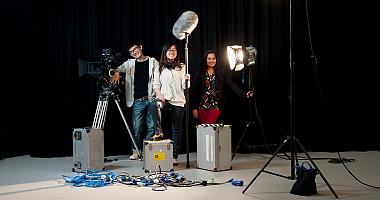
What is cinema if it is no longer merely celluloid projected in movie theatres but appears in such diverse settings as the art gallery, the Internet and console game screens? The MA in Film and Screen Studies is for students concerned with the future of cinema – its aesthetics, technology and politics. You will explore the most current theoretical, philosophical and social debates about what film was and is now becoming in the global context. You will be encouraged to think creatively and to explore the relationship between screen theory and practice.

Length:
1 year full-time or 2 years part-time.
Applying:

Deadline: 1 March for entry the following September. If you're applying for funding, you may be subject to an earlier application deadline – 14 February is the deadline if you're applying for AHRC funding. 

Applications received by the deadline are guaranteed consideration; we will consider later applications if there are vacancies.

Places still available

Find out more about applying

Entrance requirements:

You should have an undergraduate degree of at least upper second class standard in a relevant subject. You need to demonstrate an awareness of the historical and contemporary significance of screen-based media and a willingness to accept the challenge of interdisciplinary study. If your first language is not English, you normally need a minimum score of 7.0 in IELTS (including 7.0 in the written element) or equivalent. Find out more about our English Language requirements.

Funding:

AHRC

The Department of Media and Communications may offer fee waivers for this programme. Check the most up-to-date information on our departmental awards page.

Find out more about funding opportunities for home/EU applicants, or funding for international applicants.

Fees:
Please see Tuition fees.
Further information:


MA in Film and Screen Studies - additional information

References - our departmental preference is for referees to upload a confidential reference to the on-line admissions system. Please make sure to select the option for your referees to be automatically notified of the need for them to submit a reference on your behalf.

Staff research interests:
Please see Staff research interests.
Contact the department:
Contact Dr Pasi Valiaho
About the department:
Media & Communications

Download a booklet [PDF, 1,119KB]


What you study

This MA acquaints you with what is vital and original in present culture of moving images. You will explore current changes in film and screen-based media and their historical sources, from technologies and aesthetics to global contexts of production and consumption. You will learn to critically evaluate the scope and aims of film studies today. You will develop your research skills by writing a dissertation that consolidates this learning and prepares you for further study or engagement in today's film and screen media. We are currently also developing practice-oriented courses for you to have the opportunity to study the making of images alongside theory.

Teaching and supervision draw on the diverse research strengths of the globally renowned academics at one of the world's leading media and communications departments. You are taught by scholars of international standing who have expertise in new screen technologies; in film theory and its history; in early cinema and the media archaeology of modernity; in artist’s film; and in non-fiction film (e.g., documentary and avant-garde). Please see more information about our research interests.

Core courses

The core courses will give you a foundation to the subject. They introduce current debates in film and screen studies through the key notions of the magic and the real, develop new ways of conceptualizing the cinematic today, and map the culture of contemporary screens through the themes of power, aesthetics, technology and subjectivity. Whilst exploring advances in scholarly research, the core courses also promote innovative empirical takes on how our encounters with screens work in daily life settings.

Goldsmiths options

The range of options offered in the MA in Film and Screen Studies is uniquely wide and varied, accommodating many possible interests. You can opt for modules that relate directly to film and screen studies, covering topics such as World Cinema Studies, Cinema and Society, and Representing Reality.

Alternatively, you can choose from a range of research led options by leading scholars at Media & Communications and other Departments in Goldsmiths, spanning After New Media, Media Audiences and Media Geographies, Embodiment and Experience, Media Rituals, and so more. Also several practice-oriented courses are on offer to students on this programme.

Intercollegiate options

Students on the MA Film and Screen Studies programme are also able to use the intercollegiate option-sharing agreements under the University of London Screen Studies Group to take an option from one of the MA Film & Media programmes at other University of London colleges.

Please consult the SSG website for further details of other programmes and the Film and Screen Studies Convenor at Goldsmiths for more details on how to take part options at other colleges. Options taken under this scheme are deemed to count for 30 CATS at Goldsmiths.

Skills

You will develop skills enabling you to analyse, contextualise, historicise and theorise current and future developments in screen-based media.

Careers

Possible careers include film and video distribution, film exhibition, museums, film and television criticism, new media criticism, new media art, and other jobs associated with screen culture, as well as further academic study.

Staff appointment news

We are pleased to announce the appointment of Sean Cubitt as Professor of Film and Television Studies, with effect from 1 August 2012. Sean Cubitt is the author of Timeshift: On Video Culture (Routledge), Videography: Video Media as Art and Culture (Palgrave), Digital Aesthetics, Simulation and Social Theory (Sage), Ecomedia (Rodopi Press), and The Cinema Effect (MIT Press).

Assessment

Essays; dissertation.

Register your interest

If you register your interest in this programme we will keep you informed about open days and send you relevant further information. If you subsequently decide to apply for this programme you will be able to use the same login details to apply.


Goldsmiths, University of London, New Cross, London, SE14 6NW, UK
Telephone: + 44 (0)20 7919 7171

Goldsmiths has charitable status

© 2012 Goldsmiths, University of London. Copyright, Disclaimer and Company information

Sitemap

Edit