Common
Nikolai Duffy
Publication
A coming to terms with marriage and career, the life-long impact of a father's alcoholism, and an aunt's insistent example to live an unroofed life.
“I had come to the common because my aunt had died, and because I wanted to remember her in some way. More obliquely, I had come because I was overwhelmed by a sense of time passing. I had wanted, I think, to pause or to retract its passage, to find my way back to a moment in which it appeared to me I had somehow come unstuck, at least to an extent. Not all these desires were compatible. I did understand that. The common was shot through with all that I had propelled into it, the descending mist like a kind of moving screen for the words and faces I could neither embrace nor relinquish.”
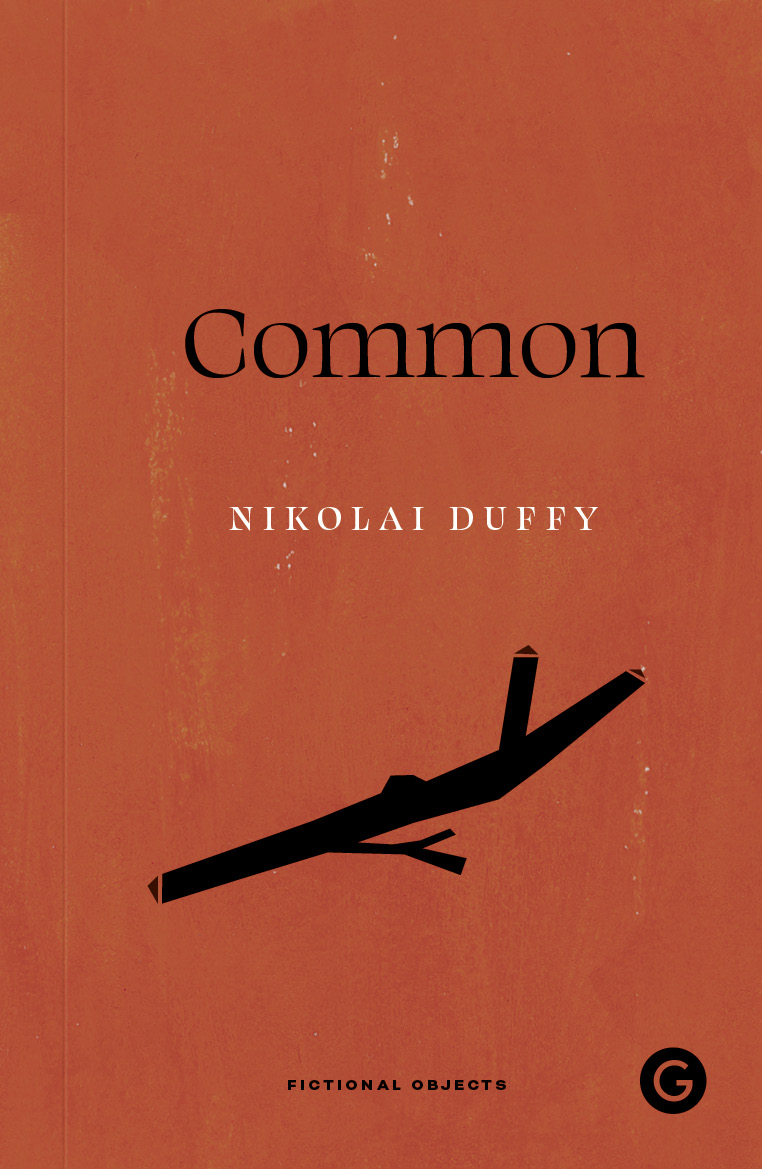
In the wake of his aunt’s death, Robert travels from Manchester to his childhood home in Hampshire to settle the affairs of her estate. Confronted with the debris of a life left behind, Robert goes for a walk on nearby Ludshott Common, a large area of ancient heathland. While there, Robert takes the impulsive decision to build a ramshackle hut on the common, where he stays for seven days, attempting to come to terms with his marriage and career, parenthood, the life-long impact of his father's alcoholism, and his aunt's insistent example to live an unroofed life.
Lyrical and irreverent, Common offers a moving reflection on solitude, freedom, responsibility, and the repeated attempt to transcend the legacies of the past.
A beautiful novel, radically humane, intelligent and curious. In doing away with the trappings of conventional narrative along with their capacity for reduction, Duffy creates something far more urgent – and a story far more engaging. Every sentence feels perfectly weighted and imbued with a rare honesty that makes it one of the more profound meditations on life, love and mortality I’ve read.
Through this lyrical and beautifully poised novel, we come to understand how quietly a man’s life can fall apart and how violence and love can send their after image into our hearts and minds for years. Duffy asks us to reflect on the compromises we make to survive and to move through the world, holding each one up to the light in this deeply moving meditation on family, marriage and grief.
Common suggests nothing out of the ordinary and yet here, around the building of a hut, we have the remarkable accrual of an ordinary life. Through the thickets of various relationships, we are invited to tread a fine and deftly-drawn line between shelter and isolation.