Ruderal Witchcraft
Working Class Ecologies in Revolt
Margaretha Haughwout and Oliver Kellhammer
Publication
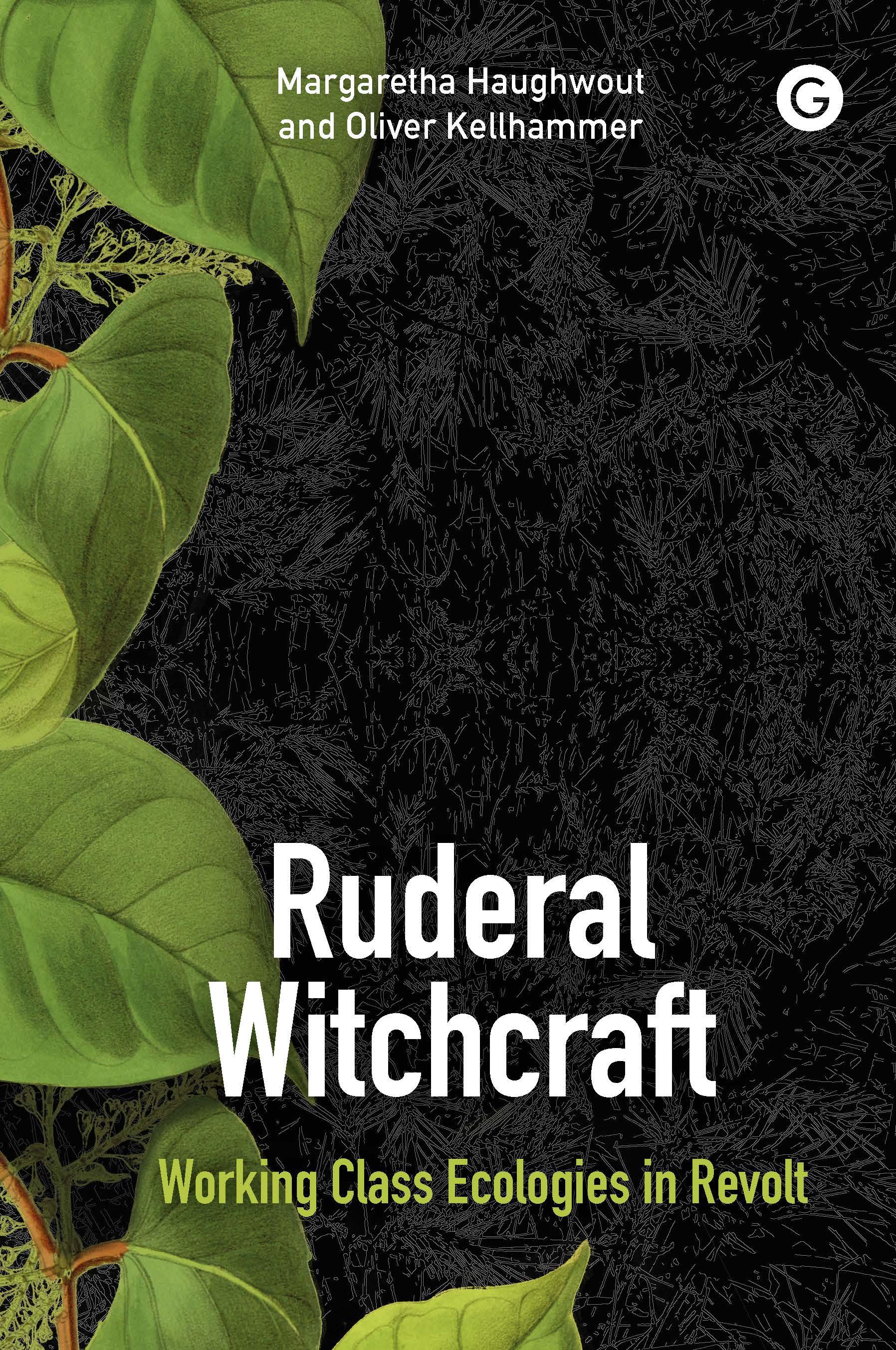
Interventions, gestures, cultivations, and conjurings for creating coalitions between outcast of capitalist modernity.
Ruderal Witchcraft offers a theoretical framework and a set of practices specific to the planetary, weedy natures that emerge as a result of capitalogenic processes. The book is organized according to five categories of witchy, revolutionary action: love spells and invisibility magic in the margins; ‘biotarian’ timecraft; shapeshifting powers of hyperecologies and hyperorganisms; fugitive commoning; and the category of healing, remediation and danger. Drawing primarily from Marxist feminism, Marxist environmental history, science and technology studies, Situationism, as well as the authors’ own ecological interventions in the so-called United States, the authors propose that these actions, when conducted together, can expand the territory from which revolutionaries can renew themselves. Descriptions of how to work with ruderal plants and ruderal ecologies, plant monographs, spells, and other hands-on information that at times resembles a field book, a cultivation guide, or a grimoire round out the offerings in Ruderal Witchcraft.