Dooneen
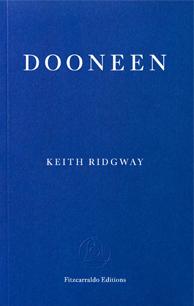
Bartholomew Port, known to all as Mew, steps into the bushes in a London park and steps out of the bushes in a Dublin one. Not only that – there are no cars; there are moving footpaths; there is no church; everything seems quite queer. Mew has arrived in a Dublin that is alive with song, with rumour, with ghosts, and with an unmistakable sense of insurgency. In this suspiciously timeless city that breathes an old revolutionary air, Mew fiercely misses his beloved Mootie, back home in London. An unravelling, an impossibility, a gathering of voices and a single dream, 'Dooneen' is the layered, allusive and wildly original new novel from Keith Ridgway, ‘one of Ireland’s best writers, in a country with no shortage of them’ (The Times).
About the author
Keith Ridgway is a Dubliner living in London. His novels include 'A Shock', which won the 2021 James Tait Black Memorial Prize for Fiction and was shortlisted for the Goldsmiths Prize; 'Hawthorn & Child'; and 'Animals'. His first novel 'The Long Falling' was filmed by Martin Provost as 'Où Va La Nuit' in 2011. He has been awarded the Prix Fémina Étranger and Premier Roman Étranger, the O Henry award and the Rooney Prize for Irish Literature. 'Dooneen' is published by Fitzcarraldo Editions and by New Directions.
Judge Kate Briggs on Dooneen
"Keith Ridgway’s Dooneen invents its own narrative logic, starting with an exit. Mew steps through the bushes in London and out into an altered Dublin bright with panic, violence, protest, unlikely camaraderies and strange new animations. Mew’s letters to his lover Mootie, pleated with stories and songs, are vivid dispatches from a city under siege in all its weird chaos and frightening, detailed closeness. But sentence by exquisite, bewildered sentence, Dooneen is also a narrative of separation. ‘It is never only one person who feels anything is it, Mootie?’ Daring to write with sincerity, with sweetness, with a profound love for a person as well as the world and a future that has already foreclosed, Ridgway’s Dooneen is a rare experiment in tone. It couldn’t feel more generative, more novel, or more necessary."