Goldsmiths - University of London

Imagebar

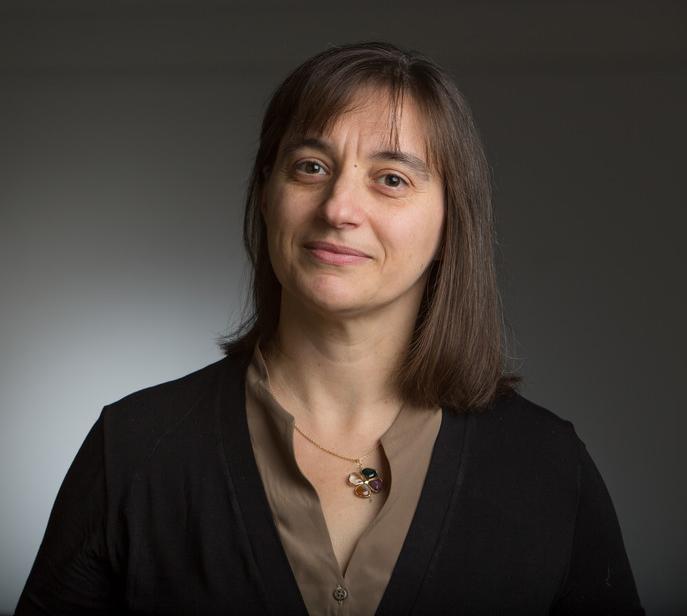
Dr Lucia Boldrini

Position held:
Senior Lecturer in English

Phone:
+44 (0)20 7919 7434

Email:
l.boldrini (@gold.ac.uk)

Room 408
4th Floor
Warmington Tower

Office hours:
Mon 14.00-15.00
Tues 9.00-10.00

Academic qualifications

1997    PhD, University of Leicester
1995    Dottorato di Ricerca, University of Pisa
1989    Laurea in Lingue e Letterature Straniere [Modern Languages], University of Pisa.  110/110 summa cum laude

Teaching

I have extensive teaching and examining experience at both undergraduate and postgraduate level, in seminars and lectures, on courses I have devised as well as on colleagues’ courses as part of a team. Much of my teaching is linked to my research interests, but I also enjoy teaching foundation and survey courses.

I was among the first at Goldsmiths to be awarded a fellowship to develop web-based teaching tools, and in 2011 I was the recipient of a Peake Excellence in Learning and Teaching Award, for which I was nominated by students. I believe in stretching students, while giving them strong support. In 2009 and 2010 three of the students that took my very challenging course ‘Literature in Question: Writing since the Second World War' won essay prizes in the Emory Elliot international essay competition, organised by the Literary Encyclopedia.

Areas of teaching: Theories and methodologies of comparative literature; Modernism, Postmodernism, Post-War II writing, Joyce; Dante; the short story, fictional auto/biography.

Examples of courses taught:

Studies in Comparative Literature and Criticism (core course for the MA in Comparative Literary Studies, pathway in Comparative Literature and Criticism)

The course includes sessions on the history, methodologies, concerns of comparative literature; its relationship with translation studies and world literature; classical, medieval and modern versions of concepts such as imitation, translation, influence, intertextuality, tradition. It associates theoretical focus with comparative readings where the concepts are put into practice and tested, for example following the development of heroic figures, such as Odysseus/Ulysses or Dido, of topoi (e.g. representations of the underworld), of myths (such as Arachne, or Narcissus and Echo). It also considers representations of colonial and cultural encounters or clashes and how identity is formed within these encounters. Texts studied range from classical and medieval to early modern, modern and contemporary.

Literature In Question: Writing Since World War II (final year undergraduate).

Taking its cue from the debate initiated by Jean-Paul Sartre’s ‘What is Literature?’ and looking at literary and theoretical texts published since the Second World War, this course examines how the role, scope and status of literature have been questioned and re-assessed both within literary texts and by other disciplines. It looks at relationships between literature and philosophy, literature and science, literature and history, literature and ethics, and at how generic boundaries and literary forms are re-defined. Texts studied include essays, excerpts or full works by, amongst others, Sartre, Adorno, Lyotard, Snow, Kuhn, Banville, Levi, Blanchot, Sebald, Swift, Coetzee, Enzensberger, Winterson, Süskind, Carter, Lispector.


Areas of supervision

Recent and current topics of supervision:

  • fantastic literature and magical realism
  • James Joyce
  • Menie Muriel Dowie
  • Georges Perec
  • Fictional auto/biography
  • 21st century fiction
  • Forster & Saba
  • Children fairy-tale picture-books

I have also supervised MA by Research work on Joyce, Joyce’s Italian writings, Eliot & Montale, Pinter.

Professional activities

  • General Coordinator of the REELC/ENCLS (European Network for Comparative Literary Studies), 2005-09, and Ex-officio member of the Executive Committee, 2009-13
  • Member of the Council ofthe International Comparative Literature Association, 2010-13
  • Member of the Executive Committee of the British Comparative Literature Association since 1998
  • Member of the Board of Trustees of the International James Joyce Foundation 2000-2006
  • Member of the Editorial Board of Comparative Critical Studies and Status Questionis
  • Peer reviewer for various presses, journals, and institutions

Research interests

Principal areas of research:

1) James Joyce, Dante, and Modernist Medievalism.

I am especially interested in intertextual relations between medieval and modern writers, texts and ideas. The monograph Joyce, Dante, and the Poetics of Literary Relations was published by CUP in 2001 and reissued in paperback in 2009. I have also edited Medieval Joyce (Rodopi, 2002), published a number of articles, and organized conferences / workshops in this area. From 2000 to 2006 I was a Trustee of the International James Joyce Foundation.

2) Fictional Biographies and Autobiographies of Historical Characters, or ‘Heterobiography’.

I have been investigating this field for many years. I published a monograph on the subject in 1998 (in Italian), co-edited a journal issue on ‘autobiografictions’ (2004) after organizing a conference on the topic (2003), and have published various articles in internationally recognized journals (such as the Slovenian journal Primerjalna književnost). A new book, Autobiographies of Others: Historical Subjects and Literary Fiction, will be published by Routledge in May 2012.

3) Comparative Literature

As well as working ‘in’ comparative literature, I am also interested in it as a subject, in its relationship with neighbouring practices such as translation, and from a longer historical perspective than is usually considered. I have published articles in prestigious journals such as Translation and Literature and Comparative Critical Studies

I am also interested in aspects of the relationship between literature and science.

Selected publications

  • 2012 Autobiographies of Others: Historical Subjects and Literary Fiction. New York: Routledge (forthcoming)
  • 2011 ‘Rattling the Cage of Meaning: Primo Levi’s The Periodic Table, the Two Cultures, and the Ethical Duty of the Writer’. In Restoring the Mystery of the Rainbow: Literature’s Refraction of Science, ed. by Cedric Barfoot and Valeria Tinkler Villani. Amsterdam: Rodopi, 2011, 2 Vols., Vol. 1, pp. 187-206.
  • 2010 ‘Comparative Literature and Translation, Historical Breaks and Continuing Debates: Can the Past Teach Something About the Future?’. diacrítica. Dossier Literatura Comparada, 24.3 (2010), pp. 181-199
  • 2009 ‘The Anamorphosis of Photography in Michael Ondaatje’s The Collected Works of Billy the Kid’. Image technologies in Canadian Literature: Narrative, Film and Photography, ed. by Carmen Concilio and Richard J. Lane. Brussels: Peter Lang, 2009, pp. 31-46.
  • 2009  ‘Heterobiography, Hypocriticism, and the Ethics of Authorial Responsibility’. Primerjalna književnost 32 (2009), special issue: The Author: Who or What is Writing Literature?, ed. by Vanesa Matajč and Gašper Troha, pp. 85-95 (in Slovenian), and pp. 249-259 (in English)
  • 2009   ‘Anna Banti and Virginia Woolf: A Grammar of Responsibility’. Journal of Anglo-Italian Studies, 10 (2009), pp. 135-149.
  • 2008 Comparative Critical Studies 2-3, 5 (2008), Folly, co-edited with Florian Mussgnug (Department of Italian, UCL). [ISSN 1744-1854]
  • 2007 'Keeping Our Nerve: Scientific and Historical Paradigms in John Banville's Doctor Copernicus', Primerjalna knjizevnost 30 (2007), Special issue: Zgodovina in njeni literarni zanri / History and Its Literary Genres, ed. by Vanesa Matajc and Gasper Troha, pp. 27-41 (in Slovenian) and pp. 141-157 (in English)
  • 2006 'Literature and Science. Full Stop?', Colloquium Helveticum, 37 (2006), pp. 55-72
  • 2006 ‘Comparative Literature in the Twenty-first Century: A View from Europe and the UK’, Comparative Critical Studies III.1 (2006), Comparative Literature at a Crossroads?, ed. Robert Weninger, pp. 13-23
  • 2004 (ed. with Peter Davies) Comparative Critical Studies 1, 3 (2004), Autobiografictions: Comparatist Essays; includes my ‘“Allowing it to speak out of him”: The Heterobiographies of David Malouf, Antonio Tabucchi and Marguerite Yourcenar’, pp. 243-263.
  • 2003 ‘Translating the Middle Ages: Modernism and the Ideal of the Common Language’. Translation and Literature, special issue: Translation and Modernism, ed. By Adam Piette. Vol. 12.1, Spring 2003, pp. 41-68.
  • 2002 (ed.) Medieval Joyce. Amsterdam and Atlanta: Rodopi, European Joyce Studies Series, 2002.
  • 2001 Joyce, Dante, and the Poetics of Literary Relations: Language and Meaning in Finnegans Wake. Cambridge: Cambridge University Press, 2001, re-issued in papaerback, 2009.
  • 1999  ‘The Ragged Edge of Miracles, Or A Word or Two on Those Jack Hodgins Novels’. In Coterminous Worlds: Magical Realism and Contemporary Post-colonial Literature in English, ed. by Elsa Linguanti, Francesco Casotti and Carmen Concilio. Amsterdam: Rodopi, 1999, pp. 83-102.
  • 1998 Biografie fittizie di personaggi storici. (Auto)biografia, soggettività, teoria nel romanzo contemporaneo [Fictional Biographies of Historical Characters. (Auto)biography, Subjectivity, Theory in the Contemporary Novel]. Pisa: ETS, 1998.
  • 1998 ‘The Artist Paring His Quotations: Aesthetic and Ethical Implications of the Dantean Intertext in Dubliners’. Re-Joycing: New Readings of Joyce’s Dubliners, ed. By Harold Mosher and Rosa Maria Bosinelli, U. of Kentucky P., 1998, pp 228-246.
  • 1995  ‘(Im)proper Wife: Robert Graves’s Wife to Mr Milton’. Focus on Robert Graves and His Contemporaries, 2.4 (1995), pp. 15-19
  • 1994  ‘The Failure of Argumentation and the Disjunction of Aesthetics in Robert Browning’s “Pictor Ignotus”’. Linguistica e Letteratura, 19 (1994), pp. 155-181.