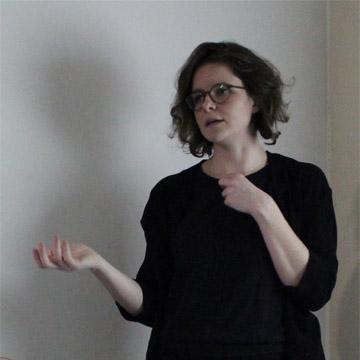
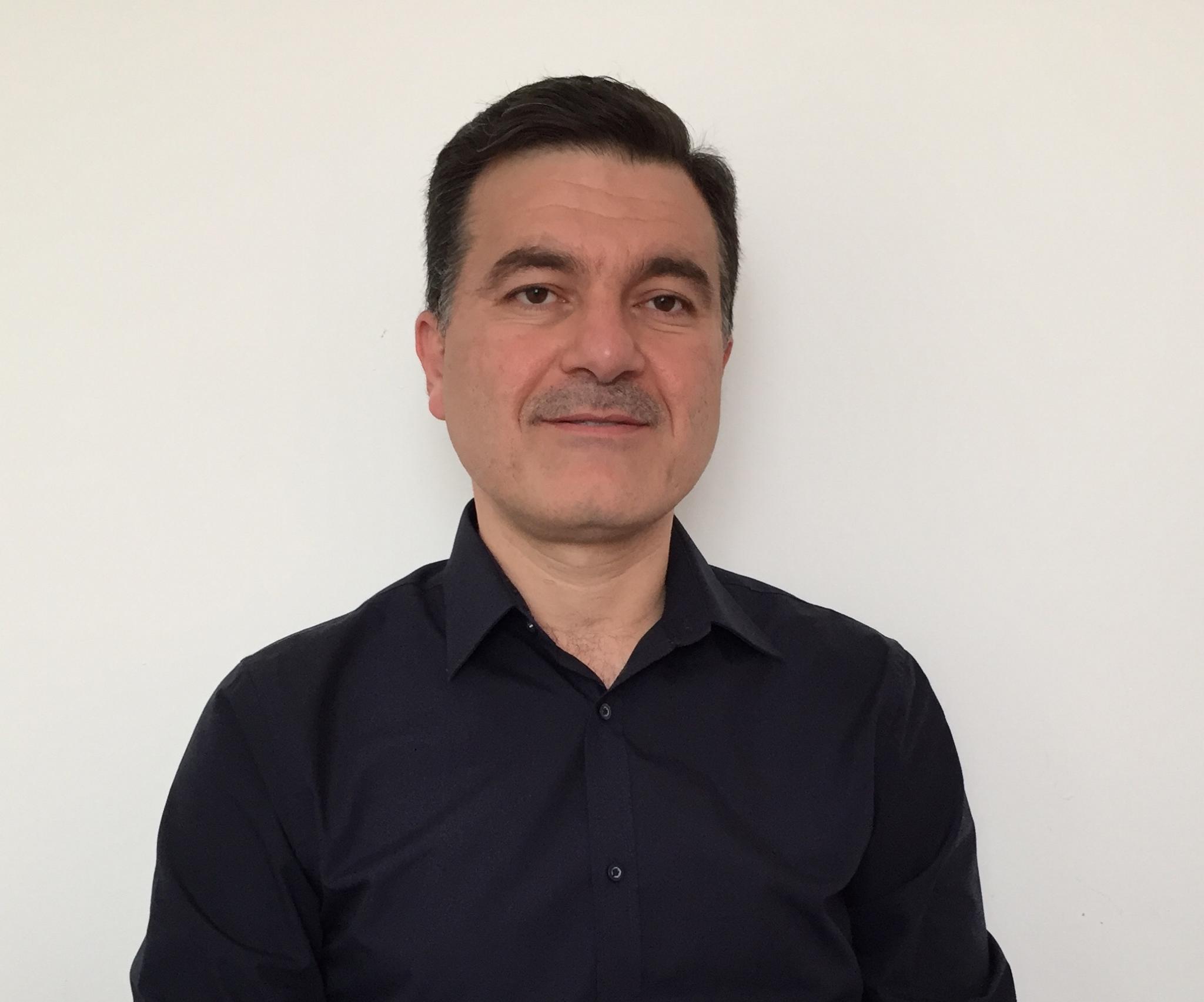
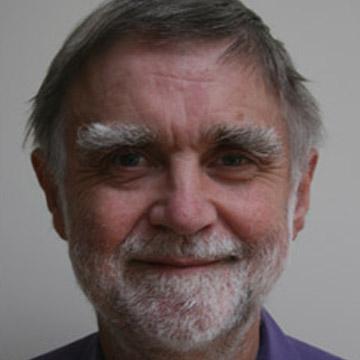
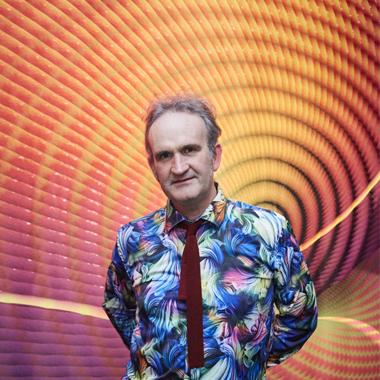
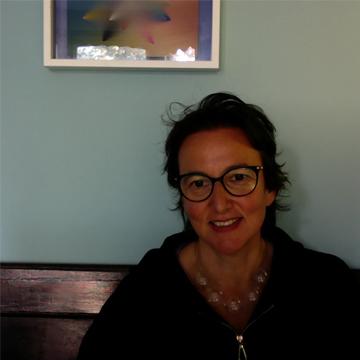
Prof Mark Bishop
Address:
2, 29 St James
Department of Computing
Goldsmiths, University of London
New Cross
London
SE14 6NW
United Kingdom
Office hours:
Monday 12:00 - 14:00
Online calendar
Role
Professor of Cognitive Computing
Chair AISB
The AISB is the world's oldest society for the study of Artificial Intelligence and the Simulation of Behaviour.
Society for the Study of Artificial Intelligence and the Simulation of Behaviour.
External Examiner
Undergraduate degrees in Computing, Department of Computing, University of Kent.
I have examined four theses submitted for the award of PhD/MPhil: Anderson (QMW); Pratheepan (BROOKES); Dawidowicz (HERTS) and Marques (ESSEX).
Departmental Duties
These currently include: (a) Co-organiser of the Goldsmith College Whitehead Lectures and (b) Program Leader (MSC Cognitive Computing) MSC course tutor for Cognitive Computing.
As a core component of the MSC in Cognitive Computing I teach the module, Cognitive science and its critics.
Part III Undergraduate Projects
I am happy to supervise undergraduate projects in any area of Computer Science albeit as my particular interests are in the fields of Cognitive Science and Artificial Intelligence, I prefer to supervise work in these areas.
Part IV and MSC Projects
I am looking to supervise 'Implementational' project work involving Artificial Intelligence, (AI); Neural Networks; Swarm Intelligence and Stochastic Diffusion Processes, (SDPs) in any relevant application domain.
Higher Degree Supervision
I have successfully supervised 8 graduate students to the award of PhD. I currently supervise one research student - Mohammad Majid.
I am happy to supervise 'Research Dissertations' in any area of Cognitive Science but prefer to supervise research in the broad area of AI and Cognitive Science; specifically the investigation of the Swarm Intelligence meta-heuristic and the sub-field of Stochastic Diffusion Processes (SDPs).
I also maintain the SDP paper repository at Goldsmiths.
Papers presented
Plenary invitations
- Philosophy of the Information and Computing Sciences, The Lorentz, Leiden, Netherlands
- 8th Annual Hatter Lecture, Zombie Robots & Killer Droids, ORT Seminars on Robotics & Technology, ORT House Camden, UK, October 2009.
- Symposium on Human and Robot, 39th International Symposium for Robotics, ISR 2008, COEX Convention Center in Seoul, Korea, (October 2008).
- Debate on Machine Consciousness, IEE Conference on Biologically Inspired Cognitive System, Stirling, UK, (August 2004).
International seminars
- Talk on Philosophy of Information, Lorentz Centre, Leiden University, Holland, (February 2010).
- Seminars on the Chinese room, Microsoft Research, Seattle, USA, (2002).
- The Restaurant Game, Alexandria University, EGYPT, (1997).
- A Tutorial on Weightless Neural Networks, Alexandria University, EGYPT, (1997).
UK university research seminars
- COGS Seminar, University of Sussex, UK, (February 2010).
- Mechanical Bodies, Mythical Minds, Department of Computing, Middlesex University, UK, (October 2008).
- Mechanical Bodies, Mythical Minds, Department of Computing, Hertfordshire University, UK, (October 2008).
- Cry robot: the crocodile tears of a computing machine, Centre for Cognitive & Neural Systems, University of Warwick, UK, (December 2007).
- An Introduction to Stochastic Diffusion Processes, Nottingham Trent University, Nottingham, UK, (January 2007).
- Mechanical Bodies, Mythical Minds, Department of Computing, Oxford Brookes University, UK, (April 2004).
- An Introduction to Search and Optimisation using Stochastic Diffusion Processes, Department of Computing, University of Essex, UK, (February 2004).
- Mechanical Bodies, Mythical Minds, Department of Psychology, Warwick University, Cumberland Lodge, Windsor, UK, (January 2004).
- Society Rules: the role of Stochastic Diffusion Processes in Cognition, Computation & Culture, Dept. of Computer Science, Goldsmiths College, University of London, (May 2003).
- Mechanical Bodies, Mythical Minds, Bioinformatics, Exeter University, (February 2003).
- Dancing with Pixies, Functional Imaging Laboratory, University College, (UCL), University of London, (November 2001).
- Stochastic Diffusion Process: self organisation, search & intelligence, University of Cardiff, (November 2001).
- Stochastic Diffusion Process: self organisation, search & intelligence, University of York, (March 2001).
- Dancing with Pixies, Queen Mary College, University of London, (March 2001).
- Stochastic Diffusion Process: self organisation, search & intelligence, University of Kent, (March 2001).
- Dancing with Pixies, Computing Laboratory, University of Oxford, (November 2000).
- Stochastic Diffusion Processes, Imperial College, London, (November 1999).
- Redcar Rocks: strong artificial intelligence and panpsychism, McKay Institute of Communication & Neuroscience, University of Keele, UK, (June 1999).
Industry seminars
- Dancing with Pixies, IBM Hursley Institute of Technology, Winchester, (July 2003).
- Image Processing & Quality Control, Colourgen, Derby, (April 1996).
- Computing Machinery & Intelligence, Courtaulds, Derby, (June 1994).
- Neural Networks: an introduction, ICI Research, Manchester, (June 1991).
- Neural Networks: a silicon brain excavated from the past, Courtaulds Research, Derby, (March 1991).
Public lectures
- Mechanical Bodies, Mythical Minds, UK Cybernetics Society, Kings College, UK, (July 2007).
- Mechanical bodies, mythical minds; dancing with pixies, The Whitehead Lectures on Cognition, Computing & Creativity, Goldsmiths College, (November 2004).
- Dancing with Pixies: strong Artificial Intelligence & panpsychism, British Computer Society, (Berkshire Branch), (November 2001).
- Dancing with Pixies, University of Reading Public Lecture Program, (October 2000).
- Virtual Bodies & Virtual Spaces, The Body and Representation, University of Reading, (May 1997).
Professional development
Journal editorship
Conference and workshop organisation:
Organising committee:
- The Alan Turing Centenary Year, Europe, (2012).
- AISB Workshop, Towards a Comprehensive Intelligence Test, Leicester, UK, (2010).
- IEEE Workshop, What is Computational Swarm Intelligence?, Trondheim, Norway, (2009).
- 2nd AISB Symposium on Computing & Philosophy, Edinburgh, UK, (2009).
- AISB Symposium on the Turing Test, University of Reading, UK, (2008).
- 1st AISB Symposium on Computing & Philosophy, Aberdeen, UK, (2008).
- EPSRC/NSF International Workshop on Cognitive Robotics, Windsor, UK, (2006).
- AISB Symposia, Exploration versus Exploitation in Naturally Inspired Search, Bristol, UK, (2006).
- ACM International Conference on Creativity & Cognition, (Treasurer), London, UK, (2005).
- DERA Workshop on Neural Computation, Chertsey, UK, (2000).
- Workshop on, Stochastic Diffusion Processes, Reading, UK, (1998).
- Workshop on, Applied Neural Computation, Reading, UK, (1994).
Program Committee:
- PPSN 2010 - Parallel Problem Solving from Nature, Krakow, Poland.
- VRIC 2010 - Laval Virtual, Laval, France.
- IEEE CEC 2010 - IEEE Congress on Evolutionary Computing, Barcelona, Spain.
- IEEE CEC 2009 - IEEE Congress on Evolutionary Computing, Trondheim, Norway.
- ICEC 2009 - International Conference on Evolutionary Computing, Madeira Portugal.
- VRIC - The Philosophy of Identity in the Virtual, Laval, France, (April 2009).
- IEE Biologically Inspired Cognitive Systems (BICS), Sao Luis, Brazil, (2008).
- IEE Biologically Inspired Cognitive Systems (BICS), Lesbos, Greece, (2006).
- European Conference on Artificial Life, (ECAL), Kent, UK, (2005).
- EURISCON Conference, Advisory committee, Athens, Greece, (1998).
- MOBINET Conference, Scientific Board, Athens, Greece, (1997).
Residential workshops (funded invitations to participate)
- FORESIGHT: Cognitive Science Project, OST funded symposium, (IBM Winchester 2003).
- SWARM Network of Excellence, EPSRC funded workshop, Wortleyhall, (Sheffield 2003).
- SBSE Third International Workshop on Search Based Software Engineering, EPSRC funded workshop, Cumberland Lodge, (Windsor 2003).
- EMERNET Fourth International Workshop on Learning from the Brain: Neuroscience for Novel Computational Architectures, EPSRC funded workshop, (York 2000).
Radio and television appearances
- Interview for Whereits@TV, (Sky Digital 461), Discussion on Cybernetics, (25/7/01).
- Knowledge Talks - The Turing Test, Round table discussion for BBC2 / BBC Knowledge with Prof. Kerstin Deautenhahm, Prof. Bill Philips, Prof. David Stork, Chaired by Simon Singh, (28/6/01).
- Heaven & HAL, Radio Four documentary debate on AI with Prof. Marvin Minsky, Jonathan Miller and Prof. Susan Greenfield, (Dec. 2000).
- The Today Program, Radio Four live debate with Prof. Warwick regarding putative robot domination of the world, (Nov. 2000).
- The News, Radio Berkshire, Comments on the Cybernetic approach to AI, (Oct. 2000).
Newspaper, magazine & internet articles about my research:
- CHOICE VIEWING: a review of Knowledge Talks, The Independent, (21/09/01).
- System has Opinion on Newspaper Style, Reading Evening Post, (27/06/01).
- Have we got news for you, University Bulletin, (No. 372; 28/06/01).
- Bish, Bash, Bosh, Terminator theory is quashed, Reading Chronicle, (02/11/00).
- AI is stranger than fiction, Computing, (02/11/00).
- Dancing with Pixies, Spark, (23/10/00).
- It's Apachecon 2000, Need To Know, (20/10/00).
- Boffins do battle over Cyber-prof's Terminator theory, Reading Chronicle, (19/10/00).
- Colleague kicks Captain Cyborg in the nuts, The Register, (17/10/00).
- Pandora, The Independent, (17/10/00).
- Robo-Flop, Reading Evening Post, (12/10/00).
- Too dim to rule the world, Reading Evening Post, (09/10/00).
- Communication in Cyberspace helps deaf people, University Bulletin, (29/04/99).
- Student shows how email may end deaf's isolation, Reading Standard, (08/04/99).
- Email may end deaf isolation, Reading Evening Post, (01/04/99).
Research interests
Cognitive Computing is an interdisciplinary subject involving biologically-inspired computational accounts of all aspects of natural and artificial cognitive systems and bridges the gap between life sciences, social sciences, engineering, physical and mathematical sciences, and humanities. Areas of particular interest include: artificial intelligence, neural networks, cognitive neuromorphic engineering and other hardware implementations, the philosophy of cognitive computation, cognitive robotics, autonomous cognitive systems, neuroscience nanotechnology, self-organizing, swarm and immune systems, complex systems and control theory, and computational cognitive neuroscience, as well as focusing on the development of latest research into practical Cognitive Computing applications.
Under the aegis of Cognitive Computing my research activity spans Computational Intelligence (theory and applications) and the Philosophy of Computational Intelligence.
In the field of Computational Intelligence I have been involved in foundational theoretical work in the development of a novel conceptual Swarm Intelligence framework, Stochastic Diffusion Processes, whilst also building up substantial experience in the application of Computational Intelligence techniques to real-world problems - most notably in the domain of colour physics, optimisation theory, trajectory planning and localisation. In these areas I have received significant research funding from the EPSRC, ESA (European Space Agency) and the EU.
In contrast, in the area of the Philosophy of Computational Intelligence - together with John Preston - I instigated an international critique of John Searle's 'Chinese Room Argument', one of the most controversial arguments in modern philosophy of mind. This project entailed collaboration with twenty eminent philosophers and scientists including the Nobel Laureate Herbert Simon; Sir Roger Penrose; John Taylor; Kevin Warwick; Terry Winograd; Stevan Harnad; Ned Block; John Haugeland; George Rey and John Searle. In 2002 the completed work was published as the book, Views into the Chinese Room, Preston, J. & Bishop, J.M., (Oxford University Press).
Linked to the above work in the philosophy of AI, I have also developed arguments against the possibility of machine/computational consciousness (for a very brief outline see Bishop, J.M., 2004, Can computers feel?). These have attracted some media attention, not least because they attempt to undermine sensationalist claims that, 'robots will take over the world'. Over the last few years I have been invited to debate this position several times: on TV as a panel guest on the BBC program 'Knowledge Talks' and twice on Radio Four, 'The Today Program' (live) and as one of the keynote speakers on a special New Year's Eve documentary on AI which also included contributions from Susan Blakemore, Jonathan Miller, Marvin Minsky, Kevin Warwick and Arthur C. Clarke.
Awards
At the recent Emerald Publishing Literati Network Awards for Excellence 2006, a paper I co-authored with Dr. Slawek Nasuto, second order cybernetics and enactive perception, won the Norbert Wiener Award and was recognised as Outstanding Paper of 2006 by the journal Kybernetes.
Current research
Now that their mathematical properties are well understood, my current research in computing is centred around examining new application areas for Stochastic Diffusion Processes, (SDPs) and working to embed SDPs within a wider research context, (e.g. evolutionary algorithms; swarm intelligence; interaction algorithms; multi-agent systems etc).
In Philosophy of Artificial Intelligence I continue to argue against computationalism whilst embracing Second Order Cybernetics and Evolutionary Robotics as a more coherent framework within which to understand and build cognitive systems.
In the broad area of cognitive Science I remain interested in exploring second order cybernetics and enactive perception in the context of Francisco Varela's ideas on embodiment, O'Regan & Noe's sensorimotor theories of perception and dynamic theories of cognition.
I am also interested in computations on colour and the philosophy of colour.
Selected publications
To date I have published a book, over 110 academic papers and been involved in twenty UK and European research projects together with a total research spend of around three million pounds.
Book
Published reviews of the above:
- Rapaport, W.J., (2006), Review of J. Preston and M. Bishop (Eds.) Views into the Chinese Room: New Essays on Searle and Artificial Intelligence, Australian Journal of Philosophy, 94: 1, pp. 129-145.
- Waskan, Jonathan A. (2005). Review of J. Preston and M. Bishop (Eds.) Views into the Chinese Room: New Essays on Searle and Artificial Intelligence. Philosophical Review, 114(2): 273-277
- Sprevak, M.D., (2005), The Chinese Carnival, Studies in the History & Philosophy of Science, 36, pp.203-209.
- Richeimer, J., (2004), Review of J. Preston and M. Bishop (Eds.) Views into the Chinese Room: New Essays on Searle and Artificial Intelligence, Philosophical Books 45 (2) pp.162-167.
- Freeman, A., (2004), The Chinese Room Comes of Age A Review of Preston & Bishop, Journal of Consciousness Studies, vol. 11, no. 5-6, pp. 156-158(3).
- Overill, J., (2004), Views into the Chinese Room: New Essays on Searle and Artificial Intelligence, Journal of Logic and Computation, vol. 14, no. 2, pp. 325-326(2).
- Garvey, J., (2003), A room with a view?, The Philosophers Magazine, 3rd Quarter, p.61.
- Freeman, A., (2003), Output still not really convinced, The Times Higher, April 11, UK.
Special Issues
A cross section of other publications include:
Computational Philosophy
- Bishop, J.M., (2010), The Imitation Game, Kybernetes 3/4, Emerald UK.
- Bishop, J.M., (2009), Why computers can't feel pain, Mind & Machine,: Volume 19, Issue 4 (2009), Page 507-516.
- Bishop, J.M., (2009), A Cognitive Computing fallacy? Cognition, computations and panpsychism, Cognitive Computing 1:3, pp. 221-233
- Bishop, J.M. & Nasuto, S.J., (2005), Second Order Cybernetics and Enactive Perception, Kybernetes, 34: 9/10, pp. 1309-1320.
- Bishop, J.M., (2005), Dreams, Phantom Limbs and Virtual Reality: challenges to the singularity of space?, Proc. The Phantom Limb: a neurobiological diagnosis with aesthetic, cultural and philosophical implications, London, UK.
- Bishop, J.M., (2004), Mechanical bodies; mythical minds, Proc. Brain Inspired Cognitive Systems, BICS, 2004, CD ROM ISBN 1 85769 199 7, Stirling Scotland.
- Bishop, J.M., (2004), A view inside the Chinese room, Philosopher, 28:4, pp.47-51.
- Bishop, J.M., (2004), Can computers feel?, AISB Quarterly, 119, pp. 6, UK.
- Bishop, J.M., (2002), Counterfactuals can't count: a rejoinder to David Chalmers, Consciousness & Cognition, 11:4, pp: 642-652.
- Bishop, J.M., (1995), Artificial Intelligence: a modern myth?, Robotica, 13, pp: 637-638, Cambridge University Press, UK.
Computational Intelligence: theory
- Majid, M. and Bishop, J.M., (2010), The Mining Game, AISB Quarterly.
- Nasuto, S.J., Bishop, J.M. & De Meyer (2009), Communicating neurons: a connectionist spiking neuron implementation of stochastic diffusion search, Neurocomputing 72, pp. 704-712.
- Nasuto, S.J. & Bishop, J.M., (2008), Stabilizing swarm intelligence search via positive feedback resource allocation, In: Krasnogor, N., Nicosia, G, Pavone, M., & Pelta, D. (eds), Nature Inspired Cooperative Strategies for Optimization, Studies in Computational Intelligence, vol 129, Springer, Berlin, Heidelberg, New York, pp. 115-123.
- Bishop, J.M., (2007), Stochastic diffusion search. Scholarpedia, 2(8):3101.
- De Meyer, K., Nasuto, S.J. & Bishop, J.M., (2006), Stochastic Diffusion Optimisation: the application of partial function evaluation and stochastic recruitment in Swarm Intelligence optimisation, in Abraham, A., Grosam, C., & Ramos, V. (eds), (2006), Studies in Computational Intelligence (31): Stigmergic Optimization, Chapter 8, pp. 185-207, Springer Verlag,
- Myatt, D.M., Bishop, J.M., Nasuto, S.J., (2004), Minimum stable convergence criteria for Stochastic Diffusion Search, Electronics Letters, 22:40, pp. 112-113.
- Bishop, J.M., Nasuto, S.J., De Meyer, K., (2002), Dynamic knowledge representation in connectionist systems, Proc. ICANN 2002, in Lecture Notes in Computer Science, 2415, pp. 308-313, Madrid, Spain.
- De Meyer, K., Bishop, M., Nasuto, S., (2002), Small world effects in lattice Stochastic Diffusion Search, Proc. ICANN 2002, in Lecture Notes in Computer Science, 2415, pp. 147-152, Madrid, Spain.
- Nasuto, S.J., & Bishop, J.M., (1999), Convergence of the Stochastic Diffusion Search, Parallel Algorithms, 14:2, pp: 89-107.
- Nasuto, S.J., Dautenhahn, K. & Bishop, J.M., (1999), Communication as an emergent metaphor for neuronal operation, Lecture Notes in Artificial Intelligence, 1562, pp. 365-380, Springer-Verlag.
- Nasuto, S.J., Bishop, J.M. & Lauria, S., (1998), Time complexity analysis of the Stochastic Diffusion Search, Proc. Neural Computation '98, pp. 260-266, Vienna, Austria.
Computational Intelligence: applications:
- Izzo, D.M., Myatt, D.R., Becerra, V.M. , Nasuto, S.J., Bishop, J.M., (2006),
Search Space Pruning and Global Optimisation of Multiple Gravity Assist Spacecraft Trajectories, Journal of Global Optimisation, 38 (2), pp. 283-296.
- Myatt, D.R., Becerra, V.M., Nasuto, S.J., Bishop, J.M., Izzo, J., (2005), An efficient pruning technique for the global optimisation of multiple gravity assist trajectories, Proc. Global Optimisation 2005, p.1-7.
- Myatt, D., Torr, P.H.S., Nasuto, S.J., Craddock, R. & Bishop, J.M., (2002), NAPSAC: high noise, high dimensional model parameterisation - its in the bag, Proc. BMVC 02, pp. 458-467, Cardiff, UK.
- Westland S., Iovine L. & Bishop J.M., 2001. Kubelka-Munk or neural networks for computer colorant formulation, Proceedings of SPIE: 9th Congress of the International Color Association, 4421, 745-748, Rochester, USA.
- Beattie, P. & Bishop, J.M., (1998), Self localisation in the SENARIO autonomous wheelchair, Journal of Intelligent & Robotic Systems, 22, pp. 255-267.
- Katevas, N., Sgouros, N.M., Tzafestas, S., Papakonstantinou G., Beattie, P., Bishop, J.M., Tsanakas, P & Koutsouris D., (1997), The autonomous mobile robot SENARIO: a sensor-aided intelligent navigation for powered wheelchairs, IEEE Robotics and Automation, 4:4, pp. 60-70.
- Bishop, J.M., Bushnell, M.J. & Westland, S., (1991), The application of neural networks to computer recipe prediction, Color, 16:1, pp. 3-9.
A full list of publications can be found here.