CISP Research Archive
Read about the previous CISP research projects.
Primary page content
-400x554.jpg)
Annie Pfingst in conversation with Samah Saleh and Marsha Rosengarten
Abstract
In this workshop I want to introduce a discussion that will trace and present the visual as both a methodology, part of a dynamic interdisciplinary spatial, visual, archival and theoretical practice of inquiry, as well as a photographic recording of a series of encounters. I do this through my current work on state imposed Emergency practices applied by Israel over Palestine and Palestinians since 1948, and of the British colonial administration over Kenya in the 1950s. The landscapes of Emergency and the geographies of resistance are visual spaces in which the structures (or their remnants) of control and containment are found. The photograph, in this moment, ‘speaks’ as it were, invites contemplation of its meaning, of its moment of capture, of what is inside and outside the frame, of the purpose of its composition. What is the dynamic interplay between the remnants, landscapes and archives of Emergency practices? How might the visual ‘perform’ Emergency as encountered in the ‘migrated’ files from the end of colonial rule recently released into the public domain or in the proceedings of detention and deportation? How might arbitrary arrest, administrative detention, closed areas, collective punishment, confiscation, curfew, demolition, forfeiture, interrogation, passes, removal, screening, or surveillance be apprehended visually?
Bio: Annie Pfingst is a Visiting Research Fellow in the Unit of Play, Sociology, Goldsmiths. She brings an interdisciplinary practice to her current work onEmergency: a genealogy of Emergency Regulations, funded by British Academy/Leverhulme Trust. Her visual practice combines installation, site specific performance and photography and is an integral part of her scholarly research. She was active in the curating of SPACE & GAZE: Jean Mohr & Edward Said in Palestine. She co-authored, with Marsha Rosengarten, ‘Medicine as a tactic of war: Palestinian precarity, Body and Society, 2012. She was awarded a doctorate by the University of Technology, Sydney for Erasure, Enclosure, Excision: Framing Palestinian Returnin which she traces the frames that authorise Israeli practices over Palestine, Palestinians and Palestinian return.

with Todd Meyers (Wayne State University) and Sophie Day (Goldsmiths)
Techniques of Return
Todd Meyers, Department of Anthropology, Wayne State University, USA
The question of return––which isn’t really a question at all but rather an act requiring, and facilitated by, some previous knowledge, condition, or inhabitance––is deceptively simple and conceptually fraught. I recently returned to fieldwork in Baltimore that I began a decade ago. Over the course of four years I followed one woman through clinic visits, hospitalizations, and the care of her grandchildren, adult children, and ailing mother. I hoped to make visible how the management of illness reconstitutes social arrangements and to trace the contours of these transactions as they take shape between biomedical and domestic spheres. I was there and I went away, and after some time, returned. The return of the ethnographer––as well as what João Biehl describes as ‘the return of the ethnographic subject’ herself––demands ethical attention as much as any rupture. If, according to Veena Das, anthropology is indeed a dwelling science, then what is it to take leave only to return, as an instance of repair as much as reappearance? Here, the desire to impose some notion of continuity (therapeutic, narrative, or otherwise) is great, as is the desire to overwrite, to recuperate, and to reinstate rather than to recognize as new––yet the return forces new habits of seeing and can render the texture of relationships once familiar, foreign.
Fieldwork as a Technique of Existence: Proximity
Professor Sophie Day, Department of Anthropology, Goldsmiths
Proximity tends to be taken for granted as a definitional feature of fieldwork in anthropology, or simply assumed in practice. Given the attention devoted to associated techniques of arrival and departure, being here and being there, the coeval, or in still other formulations, the many explorations of self/other such as being both at home and a stranger in fieldwork, it is striking that so little has been said about proximity. A succinct dictionary definition reads, “nearness in place, time, relation, etc” from Latin,proximatas, nearness, vicinity (Random House, 2005). However, a relation of closeness, which I consider to be the default connotation in fieldwork, differs perhaps in interesting ways from a concept of being ‘next to’. I illustrate by way of two examples from fieldwork in a London NHS cancer service. To put it crudely, the first draws on the ‘spaces’ of neighbourhood, an uncomfortable togetherness in waiting which nonetheless elicits relations of care, often through a mutuality of relations. The second draws on causal relations in ‘times’, such as those associated with biomedical research in modeling proximate relations. What is ‘next to’ something can stand in for it or become a placeholder; in this site, perhaps a surrogate or biomarker, or the patient waiting beside you. This next-to relation serves as a proxy measure of an association, which you can ‘play with’, change or see if it might serve as ‘sufficient’ cause, like PSA for prostate cancer. Both examples ask what goes or moves with what. These and other examples suggest complexities and a variety of connotations to the term. If techniques of fieldwork accommodate proximity through the sense of closeness, whether as observer / witness or participant observer who feels for and with interlocutors, a relation of being ‘next to’ might draw on different vocabularies such as the ‘orthogonal relation of adjacency’ which attends to the contingent singularities of contemporary life. (Rabinow 2008)
Robbie Duschinsky
Chair: Monica Greco, Department Sociology, Goldsmiths.
Respondent: Patricio Rojas, Department of Sociology, Goldsmiths.
View a paper by Patricio Rojas here: Rojas, P - The Uses of Attachement (PDF download)
This seminar will critically explore the politics of knowledge in contemporary attachment theory, with a focus on the status of ‘disorganised/disoriented’ child behaviours recorded on film in the Ainsworth Strange Situation Procedure. In the course of this exploration, John Bowlby and Gilles Deleuze will be discovered as strange allies in conceptualising primate infants as machines of movement and desire. An integration of their insights will be used to analyse the intersection of expressions of play and fear in the Strange Situation, and to argue against widespread perspectives regarding the epistemological and political commitments of attachment research. On the way, the seminar will address the relationship between conceptual categories and visual media, between theory and clinical and welfare practice, and between conservatism and centrifugal political forces.
Bio: Dr Robbie Duschinsky is Reader in Psychology & Society at Northumbria University, and Visiting Lecturer in Psychoanalysis at UCL. His research uses sociological methods to explore issues of psychological classification in social policy, professional practice and in psychiatric discourses. He has published in journals such as Philosophy,the Journal of Social Policy, Sociology, the European Journal of Social Work, and Review of General Psychology.
View a paper by Duschinsky here: Duschinsky, R - Filming Disorganised Attachement (PDF Download)
With Des Fitzgerald (King’s College London) & Felicity Callard (Durham University)
Chaired by Monica Greco
In this paper we offer an account of the dynamics of interaction across the social sciences and neurosciences, and we work to re-imagine what those dynamics can and should look like. In particular, we call for a more expansive imaginary of what experiment – as practice and ethos – might offer as a mode of creative intervention in this space.
We argue that an upsurge in interactions between the social sciences and neurosciences is increasingly hard to avoid, both in a technocratic commitment to ‘interdisciplinary’ engagements between these domains, and in often worried accounts from the field. But this paper situates itself against existing conceptualizations of these dynamics, which it groups under three rubrics of neuro-engagement: critique, ebullience, and interaction. Despite their differences, each of these modes either insists on an on-going distinction between sociocultural and neurobiological knowledge, or fails to imagine how a more entangled and epistemologically-potent field might be realised through practices of experimentation.
We link the limitations of these modes to what we identify as the ‘régime of the inter-’, a guiding spirit of interaction between disciplines, grounded in a political/epistemological commitment to their pre-existing separateness. Our core argument is therefore twofold: (1) that, contra the ‘régime of the inter-,‘ it is no longer practicable or desirable to maintain a hygienic separation between sociocultural webs and neurobiological architecture, whose entanglements remain indifferent to disciplinary ethos; (2) that the cognitive neuroscientific experiment, as a rich space of epistemological and ontological excess, offers a still-mostly-uncharted space for researchers, from all disciplines, to understand, explore and register the outcomes of this realization.
Des Fitzgerald is a postdoctoral researcher, and member of the Urban Brain Lab, at the Department of Social Science, Health and Medicine, at King’s College London. His research interests include neuroscience and psychiatry, urbanicity, autism, affect, and interdisciplinarity. He can be reached at des.fitzgerald@kcl.ac.uk
Felicity Callard is a senior lecturer in social science for medical humanities at Durham University, where she is also based in the geography department. Her research centres on the history and present of psychiatry, psychoanalysis, cognitive neuroscience, and the ‘affective turn’, which she is currently exploring through attention to accounts of ‘rest’ and ‘mind-wandering’ in cognitive neuroscience, and in a book-project on the genealogies of agoraphobia and panic disorder in psychiatric nosology. She can be reached at Felicity.Callard@Durham.ac.uk
Convened by Jennifer Gabrys
Speculative approaches to research and practice are emerging across multiple fields as a way to develop not simply descriptive engagements with topics, but rather to make propositions that invent new possibilities for research and practice. What types of speculation specifically materialize across these approaches, and what differences or similarities might be identified in the range of speculative projects underway? Steven Shaviro has discussed the ways in which a speculative realism developed through a Whiteheadian approach might be rather different from the speculative realism as articulated through object-oriented ontologies as outlined by Graham Harman and others. When working through a speculative approach, what are the contours or modalities of propositional engagements? Is emphasis placed on relationality, concrescence, processuality or essential objects? What are the consequences of thinking through and working with speculation in these different ways? In this seminar and in conversation with Steven Shaviro, we will think through what speculation enables along the lines of a Whiteheadian tactic of creating adventures for better problem-making; and how to cultivate approaches to speculation as a mode of research and practice tuned to invention. We will ask how these differing speculative approaches might specifically inform the work of the social sciences—and what difficulties might emerge in translating speculative philosophy to social and political concerns.
Readings:
Steven Shaviro, “The Universe of Things,” Theory & Event 14, no. 3 (2011)
Steven Shaviro, “Without Criteria” in Without Criteria: Kant, Deleuze, Whitehead and Aesthetics (Cambridge, MA: MIT Press, 2009), 1-12.
Bio: Dr. Steven Shaviro is DeRoy Professor at Wayne State University. He specializes in cultural theory, cultural studies, film and new media, postmodernism, and science fiction. Professor Shaviro received a Ph.D. from Yale University in 1981 and has since published widely on topics ranging from body horror to Whitehead. His books include Passion and Excess: Blanchot, Bataille, and Literary Theory, The Cinematic Body, Doom Patrols: A Theoretical Fiction About Postmodernism, Connected, Or, What It Means To Live in the Network Society, Without Criteria: Kant, Whitehead, Deleuze, and Aesthetics, and, most recently, Post-Cinematic Affect.
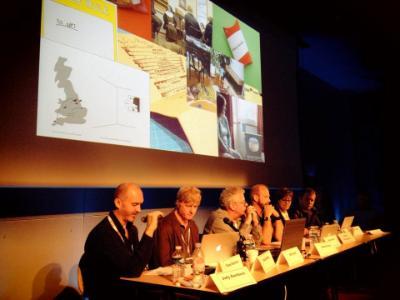 ASSHH Conference 7-10 July 2013
This interdisciplinary roundtable discussion will generate a dialogue on the possibilities afforded by speculative research, in contrast to more familiar and accepted modes that seek to establish causal relations, predictive accounts etc. The session will be introduced with a brief account of what is meant by ‘topological thinking’ and ‘inventive problem making,’ followed by a proposal for collaborative research that brings together innovative social theory and radical design methods. Discussion will be directed toward what possibilities may be opened up or, indeed, closed down by attending to processes of ontological transformation–for example, the way an intervention can be variously prophylactic, a marker of international exploitation and the occasion for the renegotiation of sexual practices—that emerge from unexpected encounters and relations (including research encounters).
Speakers:
Professor Bill Gaver, Interactive Design Studio, Goldsmiths, University of London, UK.
Professor Robert Grant, Gladstone Institute, UCSF, USA.
Ms Kim Koestner, Gladstone Institute, UCSF, USA.
Dr Dean Murphy, Australian Federation of AIDS Organisations and UNSW, Australia
Dr Kane Race, Department of Gender and Cultural Studies, University of Sydney, Australia.
Professor Marsha Rosengarten, Unit of Play, Department of Sociology, Goldsmiths, University of London, UK.
Mr Martin Savransky, Unit of Play, Department of Sociology, Goldsmiths, University of London, UK.
Discussants:
Dr Judy Auerbach, Science and policy consultant and Adjunct Professor in the School of Medicine at UCSF, USA.
Mr Michael Bartos, UNAIDS.
Dr Fiona Samuels, Overseas Development Institute, UK.

Anna Munster
A talk about data structures in network experience based on Anna Munster’s An Aesthesia of Networks: Conjunctive Experience in Art and Technology (MIT Press, 2013)
In An Aesthesia of Networks, I rethink the function and place of assemblages such as databases in network cultures, histories and aesthetics. Rather than the conceiving of database as symbolic form, I suggest that it functions diagrammatically in conjunction with other sociotechnical machines. Data has been ‘unhinged’ from its organisational base, does not conform to medial forms and ceases to play a representational role in contemporary culture. The redesign of the database in the 1960s shook up its organisation and performance, so that it worked quite differently, ‘declaring’ its operativity as it performed. Running a data query simultaneously became a declaration of how the data sets were to relate, essentially generating the database. This unhinging of data from ‘base’, alongside the concomitant generation of multiple views and levels of data, made data relational, and this relationality is imbricated in the co-emergence of a new sociotechnical diagram. Data’s relationality is been caught up with the development of a network dispositif, in which information comes to be organized by and as relation. This dispositif is co-extensive with the new activities of self-perpetuating modes of administration and machine-human subjectivations such as the systems administrator. And yet out of this gray terrain novel artistic practices emerge, taking the gray relationality of network, database and data mining to task. This talk will touch upon this aesthetic work, which I call data undermining in my book, looking at the work of, for example, Paolo Cirio (persecuting.us), Heath Bunting (The Status Project) and Adam Nash (Autoscopia). Such artwork offers alternative aesthesias that do not represent digital culture but rather unhinge its territorialisations.
Bio: Anna Munster is a writer, artist and educator. Her new book, An Aesthesia of Networks (MIT Press, 2013), explores novel expressions of networks beyond the‘link-node’ image and new understandings of experience that account for the complexity of contemporary assemblages between humans and nonhuman technics. She is also the author of Materializing New Media (Dartmouth College Press, 2006).
Recent articles include:
- 'From a Biopolitical Will to Life to a Noopolitical Ethos of Death in the Aesthetics of Digital Code’ (2011), Theory, Culture and Society, 28, 6.
- ‘Syn-aesthetics – total artwork or difference engine? Thinking synthesis in digital audiovisuality’ (2010) Inflexions, 4.
Anna is a media artist, regularly collaborating with Michele Barker from the College of Fine Arts. Barker and Munster recently completed a large-scale multi-channel interactive work, HokusPokus (Watermans Gallery, London 2012), exploring the relations between perception, magic and early moving image technologies and techniques. Other collaborative projects include: Duchenne’s smile (FILE Festival, Brazil, 2010) The Love Machine II (Seoul Museum of Art, 2011; and Struck (Art Gallery of NSW, Sydney 2007). Anna Munster is an associate professor at the College of Fine Arts, University of New South Wales, Sydney Australia and a founding member of the online peer-reviewed journal The Fibreculture Journal.
Michael Halewood: Halewood, M - There is no Meaning (PDF download)
Surprising as it may seem, Alfred North Whitehead coined the term "creativity" in the 1920s as a very specific, technical philosophical term. Since then, the term seems to have taken on a life of its own. Nowadays, creativity is something that we are expected to demonstrate, admire and respect, be it in our job applications, teaching styles, sex life, and beyond. However, when attempting to so do, I am not sure that we always know what we are talking about. In this paper, I will briefly outline Whitehead's concept of creativity and the role that it plays in his philosophy. I will stress that, for him, creativity is a neutral term; in itself it is neither good nor bad. Its philosophical purpose is to challenge static philosophical concepts and to enable him to account for novelty. I will then link this to his distinction between "general" and "real" potentiality. General potentiality is a metaphysical concept, linked to the concept of creativity considered in abstract. It is not something that we ever witness. Real potentiality is also linked to the concept of creativity, but constitutes the limited and limiting realm of the contemporary and future world that we actually inhabit. It is in respect to real potentiality that genuine questions of the role and worth of creativity can be raised and linked to questions of responsibility, politics and ethics.
Bio: Michael Halewood is a Senior Lecturer at the University of Essex. His main area of research is the relation of philosophy and social theory, especially in the work of A.N. Whitehead. He has written on authors such as Badiou, Butler, Dewey and Marx and questions dealing with the body, sexual difference, materiality and subjectivity and the concepts of the natural and social. His recent monograph is titled: A.N. Whitehead and Social Theory. Tracing a Culture of Thought (Anthem Press).
Maria Hynes: Hynes, M - Affirming Creativity (PDF download)
Creativity is a value that is increasingly rendered banal, whether in its recruitment as an instrument of capital or in its idealisation as a tool for social protest. While popular usage and much academic discourse alike treat creativity as a valued attribute of the individual and/or collective subject, this paper seeks to take the concept outside this attributive schema, with the hope that a more mannerist treatment might enable it to do novel work. To this end, I mobilise a series of concepts – affirmation, event, capacity, time, art, singularity and habit – and show how they might vitalise our conceptualisation of creativity. I also offer some suggestions as to how the idea of creativity, articulated through this series of concepts, might be productively inflected toward the notion of play. Play has often been celebrated as a figure of transgression and subversion but this, I argue, ties it too closely to a metaphysics of the subject. In outlining another economy by which to think the creative potentials of play, I suggest that play is always more than an efficacious vehicle for essentially serious issues or a frivolous avoidance of them and, as such, can have a more affirmative role in the politics of thinking.
Bio: Maria Hynes is a Lecturer at the Research School of Social Sciences, Australian National University. She is an affect theorist who has written on the themes of enthusiasm, indifference, lightness, joyous politics, habit and ethico-aesthetics. Maria has published in a variety of journals, including Parallax, Culture Machine, Environment and Planning A, British Journal of Sociology and Continuum, and is currently working on a book, ‘Figures of Affect.’

Katie Puckrik Smells in dialogue with:
Alex Rhys-Taylor (Deputy Director CUCR):
‘Exploring sociality through the nostrils of urbanites’.
Patricio Rojas (Doctoral candidate):
Sensing and Smelling Healthy and Diseased Bodies (PDF Download)
Agata Pacho (Doctoral candidate)
Agata Pacho_ Smelling the sensual and the kinky as sexualities emerge (PDF Download)
In an article titled 'How to Talk About the Body? published in a special issue of the journal of Body & Society (2004), Bruno Latour uses the example of becoming a nose in the perfume industry to show the body as emergent and relational. To have a body is, he states, 'to learn to be affected, meaning "effectuated", moved, put into motion by other entities, humans and non-humans.' In this seminar we invite Katie Puckrick to engage us in the process of becoming affected: of becoming a nose through the art of smell. In doing so, we shall attempt a minor experiment in dispensing with ourselves as fixed, stable and self-same beings by embracing a little of what the senses offer us.
Katie Puckrik is a broadcaster, writer and performer – and with the success of her popular YouTube channel and blog, Katie Puckrick Smells, a respected authority on fragance. Her approach is playful and accessible, exploring not only perfume itself, but the emotion it triggers and the identity it confers on the wearer. Katie's TV work includes The Word (Ch 4), The Sunday Show (BBC2) and Pyjama Party (ITV), and her writing on culture, entertainment and lifestyle can be found in a range of publications including The Guardian and Elle. She has dances with DV8 Physical Theatre, the Michael Clark company and the Pet Shop Boys, and sung with Sparks in their opera, The Seduction of Ingmar Bergman. Reviewers have called her memoir, Shooting From the Lip, "Gonzette journalism… an ammunition-packed bad girl's guide to life."
Tuesday 24th January 2017, 6.30-8.30pm, at The Cube: Studio 5, 155 Commercial St, London E1 6BJ
Discussants: Vinciane Despret, Monica Greco, Marsha Rosengarten
At a time where the relevance of the social sciences is under threat, this innovative book offers a speculative experimentation on the philosophy and methodology of the social sciences to rethink what ‘relevance’ is, and to cultivate a new ethos of knowledge-making for an eventful world. Engaging a diverse a range of thinkers including Alfred North Whitehead, Gilles Deleuze and Isabelle Stengers, as well as the American pragmatists John Dewey and William James, Martin Savransky challenges longstanding assumptions in the social sciences and argues that relevance is an event that is part and parcel of the immanent and situated processes by which things come to matter. He develops new conceptual tools for cultivating an empiricist ethos of inquiry that is attuned to the question of how things come to matter– an ethics that turns social inquiry into a veritable adventure. The result is an original and rigorous book that infuses knowledge-practices in the social sciences with new sensibilities, creative possibilities, and novel habits of thinking, knowing, and feeling.
9th February 2017 4.30-6.30pm Deptford Town Hall (DTH) 109 Goldsmiths, University of London
Prof. Martin Holbraad (University College London)
Discussant: Prof Sanjay Seth (Politics)
The paper seeks to clarify some of the basic premises of the so-called ‘ontological turn’ in contemporary anthropology. Based on a couple of ethnographically-driven examples that demonstrate the salient characteristics of this manner of building arguments in anthropology, the paper displays the fundamentally methodological character of the ontological turn, arguing that it most basically consists in taking to the extreme two activities that have always been part of the intellectual project of anthropology, namely conceptualization and reflexivity.
Martin Holbraad is Professor of Social Anthropology at University College London. He is author of Truth in Motion: The Recursive Anthropology of Cuban Divination (2012), The Ontological Turn: An Anthropological Exposition (with M. Pedersen) and co-editor of Thinking Through Things: Theorizing Artefacts Ethnographically (2007).
8th March 2017 4.30-6.30pm Deptford Town Hall (DTH) 109 Goldsmiths, University of London
Prof. Catherine Keller (Drew University)
Discussant: Prof Vikki Bell (Sociology)
In a moment of perilous political repatterning, our planetary entanglements emit signals of emergency. Immediate crises of immigration, race and Islamophobia are thrown into competition with the slower temporalities of climate change for progressive attention. With antidemocratic politics rising, what can theology contribute to a timely response? While current “political theology” may only obliquely engage theology as such, let alone the earth, it exposes the secularized sovereignties of the pater omnipotens as ongoing history. Might Whiteheadian and new materialist cosmologies of entangled multiplicity, read along their theological edges, help to trigger –beyond hope for some new sovereign exception– an earth-minded political inception?
Catherine Keller is Professor of Constructive Theology at Drew University. Her work interweaves process philosophy with an evolving feminist cosmopolitics, engaging questions of ecological, social, and spiritual practice amidst an irreducible indeterminacy. Among her many books are Apocalypse Now & Then: A feminist guide to the end of the world (1997); The Face of the Deep: A Theology of Becoming (2002); God and Power (2005), and The Cloud of the Impossible: Negative Theology and Planetary Entanglement (2014).
To celebrate the recent publication of Speculative Research: The Lure of Possible Futures (Routledge, edited by Alex Wilkie, Martin Savransky, and Marsha Rosengarten), this event co-organised by The Unit of Play and the Centre for Invention and Social Process will bring many of the authors in the collection as well as other international scholars together for a day-long, experimental summer school. Throughout the day we will collectively explore the challenges and potentialities of speculative thought and practice through a series of hands-on experimental workshops, situated reflections, and roundtable discussions.
Research Students and ECRs from all disciplines are especially encouraged to attend.
The event is free and everyone is welcome. Registration is required (due to limited capacity). Please register here
Programme
- 10.00-10.30am WELCOME AND INTRODUCTIONS, Location: RHB150
- 10.30am-12.30pm SPECULATIVE TECHNIQUES AND PROPOSITIONS
With: Michael Guggenheim (Sociology) and Alex Wilkie (Design)
Inspired by various contributions in the book on ‘speculative techniques’, in this session we open up speculation and speculative thought as an experimental and collaborative activity. We invite participants to present their work as speculative propositions to be collectively explored in small interdisciplinary groups. Session participants will give a short introduction to their projects and then participants will be invited to engage in the collective exploration and reworking of the possibility of the project as a speculative proposition(s) involving speculative techniques.
- 1.30-2.00pm LUNCH
- 3.00-3.30pm LURES FOR SPECULATIVE RESEARCH
With: Monica Greco (Sociology), Marsha Rosengarten (Sociology), Michael Schillmeier (Sociology, Exeter)
Chair: Alex Wilkie (Design)
The aim of this session will be to put to the test the lure or proposition of becoming responsive to the emergent demands that make a research encounter. To do so, we will reflect on what might constitute a speculative research approach while bearing in mind the conventional constraints of research practice: namely, the need to identify in advance ‘the problem,’ a research question, and a set of methods. We will ask: in what manner, if at all, might the usual presuppositions of research and their accompanying practices be turned to a care for unforetold possibilities? Possibilities that might, at least initially, seem at risk of foreclosure by the imposition of the usual research repertoire. As may be expected of any research, our test will be applied to situated and thus concrete examples.
- 3.30-4.00pm COFFEE BREAK
- 4.00-5.30pm THE POLITICS OF SPECULATIVE THOUGHT
With: Vikki Bell (Sociology), Michael Halewood (Sociology, Essex), and Martin Savransky (Sociology)
Chair: Marsha Rosengarten (Sociology)
What difference might the speculative make, not just to how we think about and practise social and cultural research, but to how we learn to relate to the many others that compose the presents and futures in which we live, for which we think, do and feel? This roundtable session will explore the implications of some of the themes and issues posed by speculative research as they connect with broader, pressing questions of politics, ethics, and aesthetics. By returning to some of the philosophical sources that provide inspiration for the development of more practical and empirical forms of speculative research, we hope to start a collective conversation (with speakers and all participants) about the relation between speculation and the art of life: that is, the political, ethical, and aesthetic task to live, to live well, to live better.
- 6.00pm SPECULATIVE RESEARCH BOOK LAUNCH
With comments by Andrew Barry (Geography, UCL) and Nicholas Gaskill (English, Rutgers)
Laurie Grove Baths Council Room
All participants are invited to celebrate the launch of the book in a more informal, social setting. Refreshments will be provided, and we hope to have copies of the book available for purchase there too!