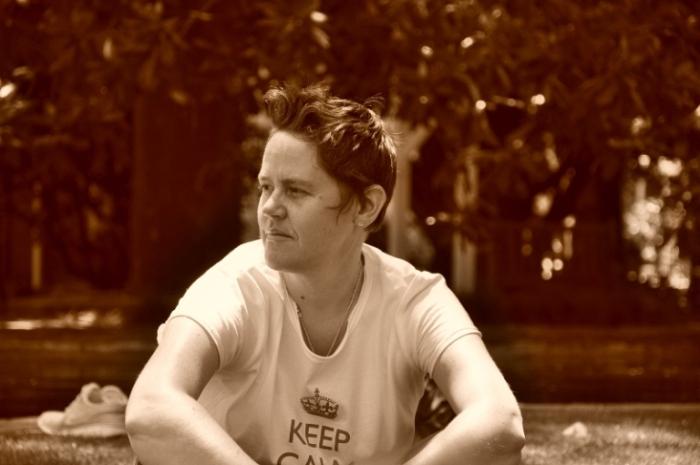
Sarah is Director of Goldsmiths Press and her research focuses on the future of publishing, digital media, smart media, questions of mediation and feminist science and technology studies. She has investigated the possibilities of life after new media (studies), and has engaged in debates on artificial life and other aspects of the convergence between biology and computer science. She also works on imaging technologies and the relationship between photography and the digital and, as a writer as well as acedemic, she explores the ‘fusion’ of science and literary fiction.
Teaching
Sarah Kember convenes MA Digital Media and teaches the option course for the MA Digital Media - Digital Media, Critical Perspectives. She also offers a masterclass on the online, non-assessed module After New Media, based on her book Life After New Media (MIT Press 2012).
Areas of supervision
Sarah has seen many PhD students through to the successful completion of their dissertations. Previous students include: Andre Favilla (digital photography and genetics); Sen Yin Li (representations of GM food in the press); Jonas Andersson (p2p file sharing); Eleanor Dare (intelligent/intra-active books) and Gavin Mackie (artificial life and evolutionary computer games). Current students include: Gabriela Mendez Cota (biotechnology and Mexican nationalism); Paolo Ruffino (independent video games); Ben Craggs (tissue culture and the re-materialisation of life); Natalie Dixon (affect and mobile phones); Phaedra Shanbaum (the digital interface in new media art) and Adam Bales (vernacular photography).
Kember, Sarah. 2013. Ambient Intelligent Photography. In: Martin Lister, ed. The Photographic Image in Digital Culture. Second Edition. London and New York: Routledge, pp. 1-21. ISBN 978-0415535298
Kember, Sarah. 2011. Face Re-Cognition. In: Gordon MacDonald, ed. Photoworks: Issue 17. Photoworks, pp. 50-55. ISBN 978-1903796344
Kember, Sarah. 2007. Cyberlife’s Creatures. In: David Bell and Barbara M Kennedy, eds. The Cybercultures Reader second edition. London: Routledge. ISBN 978-0415410670
Sarah Kember is a writer and academic. Her work incorporates new media, photography and feminist cultural approaches to science and technology. Publications include a novel and a short story The Optical Effects of Lightning (Wild Wolf Publishing, 2011) and ‘The Mysterious Case of Mr Charles D. Levy’ (Ether Books, 2010). Experimental work includes an edited open access electronic book entitled Astrobiology and the Search for Life on Mars (Open Humanities Press, 2011) and ‘Media, Mars and Metamorphosis’ (Culture Machine, Vol. 11). Her latest monograph, with Joanna Zylinska, is Life After New Media: Mediation as a Vital Process (MIT Press, 2012).
She co-edits the journals of photographies and Feminist Theory. Previous publications include: Virtual Anxiety. Photography, New Technologies and Subjectivity (Manchester University Press, 1998); Cyberfeminism and Artificial Life (Routledge, 2003) and the co-edited volume Inventive Life. Towards the New Vitalism (Sage, 2006). Current research includes a funded project on digital publishing and a feminist critique of smart media.