Goldsmiths logo
Imagebar

MFA in Curating

This two-part programme is designed to develop professional and academic excellence in the field of contemporary curatorial practice. The programme is designed for students who wish to take up the challenge of contemporary curating as an artistic, social and critical undertaking, and who wish to develop their professional practice in this area.

Student comment:
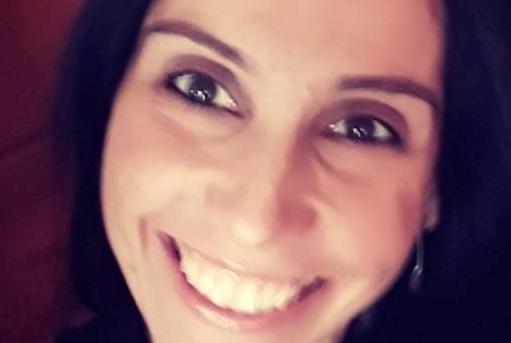
"I chose to undertake my MFA in Curating at Goldsmiths because of its world renowned curating course. I have been working with contemporary art for the last nine years and to come and do this course was exactly what I needed at this point of my career."

Luiza, MFA in Curating

Length:
2 years full-time; or 1 year full-time and 2 years part-time
Applying:

Due to the popularity of this programme we ask you for a deposit of £450 to secure any offer made to you after applying for the programme. The deposit will be credited against your tuition fees when you enrol.

Deadline: Thursday 1 December 2011 for entry the following September. Late applications may be considered only if there are vacancies.

If appropriate, your application can be accompanied by images showing examples of previous curatorial projects (it is not necessary to showcase your own art work). Please make sure that you clearly label any supporting material with your name and address. Goldsmiths cannot accept responsibility for any loss or damage. Please see Returning your work.

Make sure you refer to your work experience in your personal statement. If you have completed an internship, please be specific about what this entailed and how it is relevant to the programme. Also mention which curators/practioners have influenced you – we are looking for individuals with specific passions. It may be relevant to mention specific exhibitions or artworks that you have seen in person that were meaningful to you, and explain why, or discuss the art-specialist magazines or books that you have read. In summary, be prepared to discuss the specific elements (whether artworks, artists, art writing, philosophy, exhibitions, or more) that brought you to take a special interest in contemporary art curating.

Find out more about applying

Entrance requirements:

There is no preference for art/art history and students from a non-art background are welcome to apply. However, the course is run by the Department of Art, and students should consider themselves to be curating practitioners.

Applicants for Year One (Diploma stage): undergraduate degree of at least second class standard (or international equivalent) plus an element of professional experience (interning in a gallery or equivalent institution, curating own shows or degree shows etc).

Applicants for entry directly onto Year Two of the programme for either full-time or part-time routes must show through interview and, where appropriate, portfolio that they have established a professional practice and have already fulfilled the criteria demanded at the end of Year One of the programme through professional curatorial, academic or artistic experience.

Work experience is absolutely essential to demonstrate that you have a clear sense of current trends and activities in contemporary art. This should be demonstrated through your experience, and expanded upon in your personal statement (see 'Applying' section above). 

As this programme is driven by student-led seminars, it is essential that you are confident of your language skills. If your first language is not English, you normally need a minimum score of 7.0 in IELTS (including 7.0 in the written element) or equivalent. Find out more about our English Language requirements.

Funding:
AHRC
Careers:
Curators in galleries and museums; managers and directors in commercial galleries; independent curators; cultural policy makers, teachers and academics; writers and critics.
Skills:
Independent research and practice; public presentation; oral and written communication; project development; exhibition administration; concept development; collaboration; intellectual analysis; catalogue, essay and review writing; research organisation and presentation.
Fees:
Please see Tuition fees.
Further information:

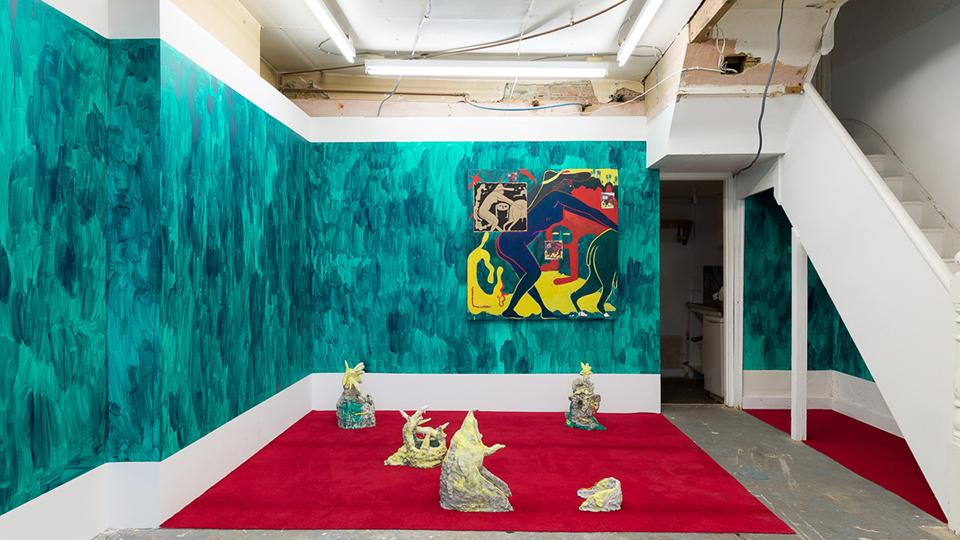
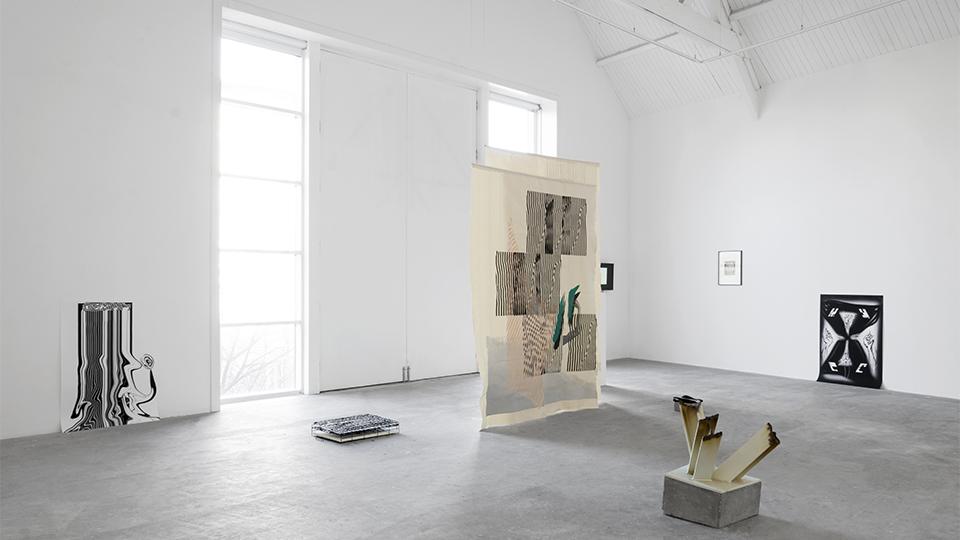
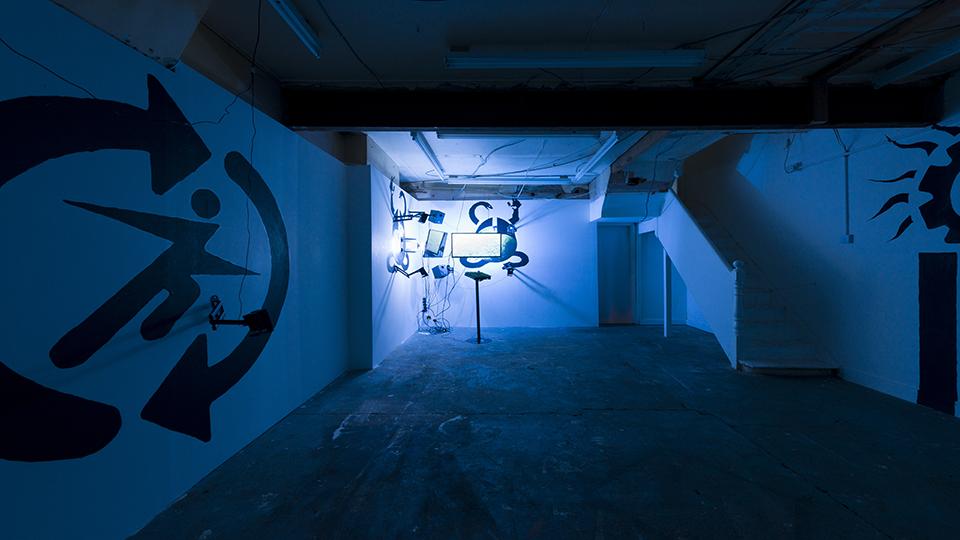
Why not visit one of our Postgraduate Art Open Days? You can also visit our Exhibitions and Events Archive

Contact the department:
Contact Helena Reckitt
About the department:
Art

Download a booklet [PDF, 837KB]


The programme draws on the international scope of contemporary arts practice at Goldsmiths and in London, and instigates debate about the relationship between that practice, current critical discourse and concepts of curating. It is designed for curators and those with related academic and practical experience who wish to achieve professional excellence in their practice, to innovate in the expanding field of curatorial practice.

MFA Curating at Goldsmiths focuses in-depth on aesthetic, social, political and philosophical questions that are brought to bear in any place or at any event in which contemporary art is situated. The programme is designed to provide a practice-led research context for students at any stage of their professional practice. It also enables you to experiment and innovate in the expanded field of curatorial pedagogy, to collaborate on an interdisciplinary basis and extend your and other students’ knowledge through this process.

Recent speakers

Recent speakers have included: Iwona Blazwick, Whitechapel Gallery, London; Francesco Bonami, MCA Chicago; Mark Godfrey, Tate Modern, London; Diedrich Diedrichsen, Academy of Fine Arts, Vienna; Boris Groys, Center for Art and Media Technology, Karlsruhe;  Matthew Higgs, White Columns, New York; Jens Hoffman, CCA Wattis Institute, San Francisco; Laura Hoptman, MoMA, New York; Anthony Huberman, Artist's Institute, New York; James Lingwood, Artangel, London; Gregor Muir, ICA, London; Scott Rothkopf, Whitney Museum of American Art, New York; Polly Staple, Chisenhale Gallery, London

What you study

In Year One, you are introduced to a series of curatorial concepts and practices through group analysis and guided research. There are also group seminars that look into significant ideas in philosophy and cultural theory to help you think broadly about your own practice. In Year Two, intensive workshops look in depth at a set of artistic and cultural themes chosen by the students. In Year Two you further develop independent curatorial research and practice, working either on your own ideas or with a London-based gallery or institution. The summer term of Year One acts as a transition to Year Two.

Year One

Curatorial Practice
This course is designed to provide support for, give guidance to, and encourage innovation of student-initiated curatorial ideas, their planning and implementation by staff and visiting tutor seminars, student-led seminars and tutorials. The student-directed work on this course leads towards the establishment of your own specific professional practice. Assessment is by Independent Research Project A (IRP-A).

Critical Studies
At this stage of the programme, Critical Studies is designed to develop your critical awareness of critical and conceptual issues in and around contemporary art through lectures and seminars, and to foster your original and innovative contribution of ideas. The course consists of lectures, seminars and review sessions. The lectures and seminars are designed to firstly develop your evaluation skills and secondly your skills for communicating ideas. Assessment is by Critical Studies essay.

Year Two

Curatorial Practice
This course provides you with an advanced learning environment in which to progress your professional practice to a level of excellence. Staff and visiting tutors work with individual students to encourage originality and innovation in the field of curating through the critical examination of your and others’ practice. On occasion, practising international curators and critics give guest lectures to the students.

In Year Two, presentation of the Independent Research Project B is expected to be of an advanced standard in keeping with the professional presentation of a project in public. In this way, Curatorial Practice in Year Two differs from Year One as you are now expected to achieve advanced standards of learning and are encouraged to take responsibility for your ideas with a sophisticated understanding of your professional pathway. Assessment is by Independent Research Project B (IRP-B).

Critical Studies
The curriculum for Critical Studies at this stage of the programme is much the same as for Year One. However, all elements of the Critical Studies course in Year Two are designed to be more demanding on your practical and critical understanding of advanced concepts of contemporary curating. In Year Two of the programme, you are expected to work more independently and, where appropriate, to integrate the skills you attained in Year One more fully in your written work. Assessment is by Catalogue Essay.

Year One and Year Two

Review sessions
You are expected to produce a written review of exhibitions or events that you have attended each month in a format suitable to the content of the work (for instance, a summary of a number of different exhibitions or a text that focuses on a particular theme). These are discussed in a group review session with a tutor. These sessions aim to produce publishable material.


If you are an international student and would like to study a 'tailor-made' programme (for up to a year), you may be interested in applying for an Associate Graduate Studentship.  

Register your interest

If you register your interest in this programme we will keep you informed about open days and send you relevant further information. If you subsequently decide to apply for this programme you will be able to use the same login details to apply.


Goldsmiths, University of London, New Cross, London, SE14 6NW, UK
Telephone: + 44 (0)20 7919 7171

Goldsmiths has charitable status

© 2012 Goldsmiths, University of London. Copyright and Disclaimer

Sitemap

Edit