MFA Fine Art
Content navigation menu
Why study MFA Fine Art at Goldsmiths
Attend a virtual event
Book your place to attend our upcoming virtual session to learn more about studying MFA Fine Art and Graduate Diploma in Art at Goldsmiths. The session is taking place on:
- Wednesday 24 June 2026 10 – 10.45am (BST)
Our MFA programme aims to strengthen your motivation, self-reflection and ambition as an emerging artist. We do this by subjecting art-making to intense critical scrutiny.
- We place a strong emphasis on student-centred learning in studio crits and personal tutorials. Tuition is directed by your art-making, its key concerns, and your leading ideas taken together.
- The programme promotes communication across a wide international cohort of artists, as well as across an open range of media. From this, artists learn how their work and ideas are understood from different social, artistic and intellectual contexts.
- While on the MFA you will continually engage with what it means to practise as an artist today, and the position taken by an art-practice in relation to art's complex history and its currency in wider social and cultural processes.
- We place great emphasis on how artists look to impact and challenge prevailing expectations of art, and whether their work does so.
- The structure and tuition of the programme are not divided by media. Our students engage with diverse media according to the needs of their practice, including painting, sculpture, printmaking, installation, performance, socially engaged practice, art writing, textiles, digital media, sound and video.
- This degree has been described as one of the most influential MFA programmes in the world.
Contact
If you have specific questions about the degree, contact John Chilver .
Length
2 years full-time, or 4 years part-time, or 3 years combined full-time and part-time
Fees
Home - full-time: £14300
Home - part-time: £5900
International - full-time: £32000
School
Subject

We are an Adobe Creative Campus. During your studies, you will be able to use Photoshop, Premiere Pro, Illustrator and more for free on your own devices.
Explore creative work by our graduating students at the Art Postgraduate Degree Show 2026
Watch videos about your course
What you'll study
The programme is divided into two parts:
Year One
Can be taken either full-time for one year (until late July) or part-time for two years (until late July in both years). This year seeks to establish the core concerns and ambitions of your art.
Year Two
Can be taken either full-time for one year (until late August) or part-time for two years (until late July, and then until late August in the final year). This stage of the programme enables you to address your ambitions for your art with an awareness of how it is situated.
Applicants who have already been awarded 120 credits from another suitably related postgraduate study may be able to apply for direct entry into Year Two of the programme on either a full or part-time basis. You may also take advantage of an exit point at the end of Year One of the programme and graduate with a Postgraduate Diploma in Fine Art. (The Postgraduate Diploma is not to be confused with the Goldsmiths Graduate Diploma in Art, which is a different programme.)
Assessment
The three examination elements for both Year One and Year Two are:
- Collection of tutorial reports
- Exhibition
- Critical Studies essay
All three elements must be passed to successfully complete each part of the programme. Each element of examination has both progression and final points of assessment.
Studio crits
Studio crits help you develop the confidence and ability to discuss your own work and the work of others, and to use the combined knowledge and experience of the group to assist in understanding and developing your own practice.
This element of the programme is student-led with tutors responding to the needs and concerns of the participants.
Studio crits are organised by groups and take place weekly. Each full-time student presents work for a crit twice in the year.
Tutorials
Discussion with tutors builds your understanding of the particular demands of your art practice.
You receive scheduled one-to-one tutorials with your Group Tutors and other staff from the study area. Two tutorials per term are scheduled with the core studio staff.
In addition, you are expected to select a number of Visiting Tutors relevant to your practice for tutorials. These tutors are chosen in consultation with your Group Tutor and cover a wide range of specialisms. The Visiting Tutors scheme allows you to invite artists, curators or other significant figures of your own choice to focus a conversation around your artwork.
You are expected to write a report immediately after each tutorial, summarising what took place and recording your considered responses to it. These reports contribute to your final assessment in each year.
Critical Studies
By the end of the programme you are expected to have established a clear articulation of the principal critical concerns and interests of your practice. This aim is supported by studio-based teaching and individualised discussions with your Critical Studies tutors, a crit devoted to the contextual research in which you locate your practice, and assessable essay writing.
Taught workshops
The workshops are offered in two phases in the first year: in each phase there is a choice of four staff-led, discussion-based sessions on a philosophical, theoretical or historical topic relevant to contemporary art practice, which may involve texts to be read in advance. Each student takes two workshops during the first year (students may apply to substitute part of this requirement with structured independent study).
Collaborative events
Student-led collaborative events, supported by staff and teaching assistants around a topic of mutual interest, are held during the second year. These will involve engagement with the professional art community, may take place outside Goldsmiths in collaboration with other institutions such as museums and galleries, and may culminate in an open event or publication.
Facilities
Students on the programme are based in dedicated postgraduate studio space in Lewisham Southwark College at Deptford Bridge.
Deptford is home to a burgeoning creative community with many art spaces and influences.
The postgraduate studios are a short walk from the art practice areas in New Cross. You may also choose to travel by bus between the two sites, which would incur a small travel cost.
Visit us
During the year we hold regular Postgraduate Art Open Days that we encourage you to attend if you can.
You can also explore our exhibitions, events and other work on the School of Art pages.
Careers
Graduates from the Goldsmiths MFA Fine Art establish themselves as artists of significance in the field of contemporary fine art. Many have won prizes and shown in exhibitions of international importance. They have also had work acquired by museums and national collections.
Upon completion of the MFA programme the majority of graduates continue with the critically informed art practices they have fostered at Goldsmiths and go on to contribute effectively to the development of contemporary fine art in whichever cultural location and working practice they are situated. These individual and collective undertakings importantly spur a 'tectonic' change in the concerns and critical competencies of contemporary fine art with respect to the cultures in which it takes place and which it addresses.
Some graduates of the programme proceed to research-level study in various fields of fine art, while others establish themselves as teachers in the subject area. Several have established reputations as writers on contemporary art, some in journals of national and international status. Others have gone on to teach on – and lead – fine art programmes
at universities.
See our list of recent MFA art alumni list.
Supporting your professional development
The programme supports students’ professional development with the following provisions:
- The Visiting Tutor programme allows students to make direct contact and build networks with established artists, curators, gallerists and writers
- The Writing for Artists workshops provide training to students for writing statements and applications
- Professional Development talks invite professional artists, curators and gallerists to discuss careers
- Goldsmiths CCA employs students as gallery assistants
- The Junior Fellow scheme employs graduates to provide experience of working within the School of Art
- The Exhibitions Hub supports current and recent students to make exhibitions that will help their transition into a professional art practice
Entry requirements
Applicants for Year One full-time and part-time (home students) Diploma stage
You must have or expect to be awarded an undergraduate degree of at least second class standard (or international equivalent), plus experience as an artist.
Applicants for entry directly onto Year Two full-time and Year Three part-time of the programme (home students) routes
You must already be in possession of 120 grade credits from another suitably related postgraduate study to apply for direct entry into Year Two of the programme on either a full or part-time basis.
Requirement for part-time study
You need to have your own studio space in which to work over the four years of the programme.
You may also be considered for the MFA Fine Art programme if you are not a graduate or if your undergraduate degree is in an unrelated field, but you have relevant experience and can show that you have the ability to work at postgraduate level.
International qualifications
We accept a wide range of international qualifications. Find out more about the qualifications we accept from around the world.
If English isn’t your first language, you will need an IELTS score (or equivalent English language qualification) of 6.5 with a 6.5 in writing and no element lower than 6.0 to study this programme. If you need assistance with your English language, we offer a range of courses that can help prepare you for postgraduate study.
Fees and funding
Annual tuition fees
These are the PG fees for students starting their programme in the 2026/2027 academic year.
- Home - full-time: £14300
- Home - part-time: £5900
- International - full-time: £32000
If your fees are not listed here, please check our postgraduate fees guidance or contact the Fees Office, who can also advise you about how to pay your fees.
It’s not currently possible for international students to study part-time under a student visa. If you think you might be eligible to study part-time while being on another visa type, please contact our Admissions Team for more information.
If you are looking to pay your fees please see our guide to making a payment.
Funding opportunities
Explore the Goldsmiths scholarships finder to find out what funding you may be eligible for.
If you are a UK student you may be eligible for a postgraduate loan.
Meanwhile our Careers Service can also offer advice on finding work during your studies.
Paying your fees
Find out about paying your tuition fees.
Additional costs
In addition to your tuition fees, you'll be responsible for any additional costs associated with your course, such as buying stationery and paying for photocopying. You can find out more about what you need to budget for on our study costs page.
There may also be specific additional costs associated with your programme. This can include things like paying for field trips or specialist materials for your assignments. Please check the programme specification for more information.
How to apply
You apply directly to Goldsmiths using our online application system.
To complete your application, you will need to have:
- Details of your academic qualifications
- The email address of your referee who we can request a reference from, or alternatively a copy of your academic reference
- Copies of your educational transcripts or certificates
- A personal statement
- Your digital portfolio
You'll be able to save your progress at any point and return to your application by logging in using your username/email and password.
Submitting your portfolio
We prefer that you send up to 20 images in a PDF file, movie clips or web links as your portfolio via our online application system. You will be asked to do this when you apply online. Please include information on the size, media, duration and year of works as appropriate.
Only complete applications together with portfolios can be considered. We examine portfolios, and may invite you to attend an interview. Interviews are carried out online.
When to apply
We accept applications from October for students wanting to start the following September.
Places are still available. We are accepting late applications after the deadline.
Application deadline: midnight on 31 January 2026.
Shortlisting will take place following the application deadline.
We encourage you to complete your application as early as possible, even if you haven't finished your current programme of study. It's very common to be offered a place that is conditional on you achieving a particular qualification.
If you're applying for funding, you may be subject to an earlier application deadline.
Further guidance
Read our guide to applying for a postgraduate degree at Goldsmiths.
Artists teaching studio practice include:
- Rehana Zaman
- John Chilver
- Sadie Murdoch
- Simon Martin
- Chooc Ly Tan
- Ayesha Hameed
- Ash Reed
- Andy Harper
- Jemima Stehli
- Nina Wakeford
- Maeve Brennan
- Hannah Catherine Jones
- Sonya Dyer
Staff teaching critical studies include:
- Becca Voelcker
- Ben Seymour
- Amy Ireland
The admissions tutor for this programme is John Chilver.
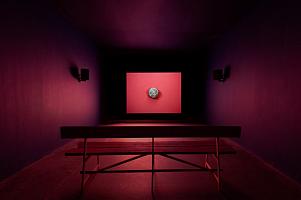
Top image credit: Tyler Eash, "and that lump at the back of your throat is all you know that's real". Goldsmiths MFA Fine Art Degree Show 2019.