Goldsmiths logo
Imagebar

BA (Hons) Anthropology

Providing a comprehensive introduction to the key issues, themes and problems that have shaped anthropological thought since the 19th century, this degree offers a thorough study of all kinds of human society and culture.

Course length:
3 years full-time or 4 years part-time.
UCAS:
L602
Applying:
Fees and funding:
Please see undergraduate tuition fees.
Contact the department:
Contact the Admissions Tutor, Dr Casey High.
Booklet:
Download a booklet [PDF, 415KB]

This programme emphasises the relevance of anthropology for understanding contemporary cultural issues. You will explore links between theoretical issues and ethnographic studies, enabling you to think critically about your own culture and society. We don't assume you have any knowledge of anthropology, and welcome applications from anyone with arts, social studies or science backgrounds. Teaching is through lectures, seminars and tutorials.

What you study

In the first two years, you concentrate on basic anthropological concepts - such as kinship, ritual, world systems, and development - and on methods of studying and analysing these, including the use of video, film, and written texts. You can also study two regions of the world in depth.

In your final year(s) you can specialise your studies by choosing a selection of option topics. Courses currently available enable you to investigate: the interrelationships of gender, sexuality and the body; international development from an anthropological perspective, including the imbalances in power relations, discourses, processes and institutions post-World War II; the anthropology of rights - from human rights to indigenous rights, animal rights to intellectual property rights, customary law to international humanitarian law; medical anthropology - from ideas about healing to considerations of social inequality; anthropological understandings of human-environment relations and their bearing on debates about environmentalism; representation and contemporary media, encompassing practical exploration of the techniques of videomaking/photography in relation to anthropological theories; key issues in the anthropology of art - such as conflicting definitions of art and aesthetics, and the politics inherent in the ownership and display of non-Western art; the changing use of different urban spaces, and how they are represented; theories of human-animal relations with regard to developments in technologies of exploitation; and psychological perspectives in anthropology. There's also the opportunity for individual project or dissertation work.

Assessment

Seen and unseen papers, extended essays, dissertations and coursework.

Register your interest

If you register your interest in this programme we will keep you informed about open days and send you relevant further information.

Equivalent GCE A-level qualifications

BTEC National
Diploma
Access
courses
Scottish
qualifications
European
Baccalaureate
International
Baccalaureate
Other
requirements
DDM 60 Credits including 45 at level 3 (with Merits in related modules) BBBBB (Higher)
BBB (Advanced Higher)
77% Pass with at least 33 points, with 6, 6, 5 at HL -

Courses and structure

Credits and levels of learning


Level 4

Introduction to Social Anthropology

This course acquaints you with some of social anthropology and its sub-fields’ (political anthropology, economic anthropology, anthropology of religion and kinship) main theories.

Beginning with the discipline of anthropology as a whole, both as it has developed historically, and as it has entered into the 21st century, it shows how examples from different cultures can be usefully compared. Illustrations are drawn from a wide range of sources, from traditional anthropological texts, clips from documentary films, through to some contemporary writings.

Ethnography of a Selected Region I

This course introduces you to the role of ethnography – the documenting and analysis of a particular society and culture or socio-cultural area through fieldwork. It focuses on linguistic and cultural groupings of a particular region, which varies from year to year, but will be Africa, Lowland South America, Europe or South Asia.

Anthropological Methods

This course offers an introduction to the history of anthropological theory and the changes in methodological practice over the last century.

Aspects of anthropological methods covered are: data collection techniques and implications of type and quality of data; participant observation and the techniques involved, its evolution and change; analytical approaches to primary data; reanalyses of secondary sources from various theoretical vantage points; restudies of the same area by more than one ethnographer, with relevant samples drawn from the ethnographic literature; the philosophy of science; value-free social science; interaction between observer and observed; perception and ‘fact’.

Ethnographic Film

This course aims to encourage a critical appreciation of ethnographic film, introducing some of the growing literature on visual anthropology, and raising general issues of representation in anthropology as a whole.

Anthropology in Practice

This course is an opportunity to investigate an issue or problem that has captured your imagination – an interest that you might want to develop as you progress further in your degree. It teaches you to formulate a research question, devise suitable methods, gather, organise and source data, and to construct an argument.

It introduces the range of tools and resources available to you, online and elsewhere, as you begin your career as an anthropologist. It will help you to develop an original anthropological perspective, supported by secondary data and literature, on a topic that is important to you.

Anthropology Today

What is anthropology’s role in public life? How have anthropologists, past and present, contributed to some of the most pressing debates of the day?

This course examines anthropology’s unique position and methodologies for exploring contemporary issues, such as environmental politics, new technologies, war, conflict, racism, cognition and the nature of social experience.

Anthropology in London

How is it possible to begin to understand something as complex as London from an anthropological perspective? Is there really any kind of stable entity or 'thing' we could begin to call 'London', or actually a plurality of 'Londons' – a multitude of different forms, some of which are connected in labyrinthine ways? Does it make any sense to try and make sense of London? What would an anthropology of London need to include? How would it go about collecting the relevant information?

These questions and others will be tackled through a range of field trips, sound walks, and practical documenting exercises, as well as lectures and screenings. This innovative course will take a series of direct experiences of London as the starting points for considering possible anthropological approaches to the city. It will explore the history of London at first-hand, look at its portrayal by artists, writers and filmmakers, and evaluate a range of anthropological ways of tackling its complexity.


Level 5

Anthropology of Religion
The course focuses on ‘classic’ theories and key anthropological texts on religion, magic, myth, ritual, morality, symbolism and belief.

Using ethnographic examples from various parts of the world, it looks at how religious identity is inscribed in the body, spatial and temporal orders, and at the relationship between religion and secularism, mass media and the internet, transnationalism, power and resistance.

Anthropology and the Visual 1

This course provides a critical introduction to the many ways anthropologists engage with the visual, from their use of visual methodologies and analysis of representations, to their ethnographic study of everyday visual forms.

Focusing on a wide range of visual media, from photography, museum exhibitions and popular representations on TV, to dress, body art, architecture and other everyday visual and material forms, the course raises issues about the significance of visibility, the politics of representation, the social life of visual and material forms and the relationship between seeing and other senses.

Politics, Economics and Social Change

Through ethnographic examples, this course investigates interactions between changing economic and political structures and how people organise their everyday lives in the world today.

Throughout the course you use key theorists such as Durkheim, Marx and Weber, who have contributed to anthropological debates on economy and society, as well as contemporary re-evaluations of these classic debates.

Ethnography of a Selected Region II

This course explores the ethnography of a specific region, which may change from year to year. Through detailed reading of ethnography, as well as films and other relevant media, major themes of anthropology such as identity, community, local and global politics, inequality and processes of social and economic change are explore.

Ethnography of (Post)-Socialism

This course introduces the main issues of the anthropology of socialism, beginning with the 1917 Revolution and ending by considering the effects of the turn to a market-based system, and the new political and cultural processes, and strategies for basic survival, which are graphically documented in ethnographies, films and other accounts of post-socialism.

General Principles in Anthropology

This course offers an intellectual history of the discipline of anthropology, focusing on how anthropologists have incorporated the work of key figures in social theory. It explores the writings of authors who endeavoured to theorise or understand ‘The Other’ prior to the establishment of the discipline.

While historical in its approach, however, the course is self-consciously not designed in a purely chronological fashion. Rather, the course allows you to see how disparate traditions developed in parallel and to explore the level of communication (or lack thereof) between sometimes distinct and sometimes interwoven intellectual genealogies.


Level 6

You take either an Individual Project (30 credits) examined by an 8,000-word dissertation or an Extended Individual Project (45 credits) examined by a 10,000-12,000-word dissertation.

Both of these courses are research projects of your own choosing and design, the topic to be agreed with the member of the department who acts as supervisor.

The balance of Level 6, up to 120 credits, is made up of the following courses:

[Please note: not all these Level 6 option courses are offered every year.]

Anthropology of Art

This course introduces some of the key issues in the anthropology of art. It begins with an examination of the contested concept of “art” in Western thought and questions its applicability in different cultural contexts.

The course covers such issues as conflicting definitions of art and aesthetics; modes of seeing within and across cultures; creativity, inspiration and the category of the artist; the body as art; issues of gender and ideology; the politics of the ownership and display of non-Western art works; imaging nationality and ethnicity through art; primitivism and the construction of the other.

Anthropology of Art II

An opportunity to pursue a short piece of original research on an aspect of the anthropology of art. Fieldwork in London is recommended. The course is run on a seminar/workshop model where you select your own topics and present them for discussion. Oral presentations replace essays as coursework requirements.

Anthropology of Development

This core course will enable you to explore the theoretical concepts underpinning development, the history of development and its institutions – from NGOs to the World Bank and IMF, while considering diverse case studies from around the world. You will also explore the historical role of anthropology’s involvement in development, as official mediators between ‘the West and the rest’ through imperial conquest, colonial administration and a post-war development industry.

As a central component of the course you will critically analyse current trends that have emerged to dominate the field of global political and economic interventions and/or policies – ‘participation and empowerment’, ‘gender awareness’, ’sustainable development’, ‘community development’, ‘NGOs’, and ‘environmental conservation’.

Anthropology and the Environment

The course examines anthropological understandings of human-environment relations and their bearing on public discourses of environmentalism.

It deals with: different ways of encountering biophysical surroundings across societies; European traditions of environmental thought and their impacts; management practices, colonialism, and cultural elaboration of the idea of nature; environmental social movements, identity politics and social justice in environmentalism.

Anthropology and Gender Theory

This course explores the inter-relationship of gender, sexuality and the body both within western cultures and western social theory, and in a range of  other cultural and historical contexts.

Emphasising the ways in which the body and gender have been produced/imagined differently in diverse times and places, it focuses on both classical and current anthropological topics: the status of the body – biological or cultural; decoration, modification and transformation of bodies; distinctions between sex and gender; alternative sex and gender systems; kinship, marriage and chosen families; new reproductive technologies; identity politics and queer theory; theories of performance/practice; violence, resistance and power politics.

Anthropology of Violence

This course examines a variety of anthropological approaches to the study of violence, ranging from evolutionary explanations for male aggression to studies of changing American attitudes toward terrorism in the aftermath of the 9/11 attacks. It looks critically at the theoretical, methodological and ethical questions raised in studies of violence through ethnographic case studies from around the world.

The course considers attempts to define violence as a concept in the social sciences and explores the possible causes, meanings, and uses of violent practices from a variety of different cultural contexts and perspectives. It gives particular attention to the political and economic conditions that promote war and other violent behaviour as well as specific cultural expressions within violent practices.

We will also discuss ethnographic descriptions of “peaceful societies” and examine the ways in which peace is made in the aftermath of conflict. In addition to the required and additional readings, the course will also include a number of films that coincide with weekly topics.  

Anthropology and the Visual 2

This course explores the role of visual representation in anthropology in terms of both the history of its use within the discipline, and also the potential it holds for new ways of working. It looks at work in a wide range of media – photography, film/video, performance – and the ways in which they might be used in an anthropological context, and this will involve looking at work from outside anthropology such as photojournalism and contemporary art, as well as the work of visual anthropologists.

Anthropology and the Visual: Production Course

This is a practice-based course in which you explore the techniques of video-making/photography and produce a short file or photographic project.

The Anthropology of Rights

This course encourages you to critically engage with the rights discourses that underpin development agendas in the contemporary world. You will consider the historical evolution of rights discourses, the institutions that have been established to uphold rights, the language of Human Rights found in international law, as well as the concept of rights as understood by development organisations, governments and multilaterals (such as the UN).

You will analyse the cross-cutting – and often competing – claims made in the name of, for example, gender and child rights, indigenous rights, intellectual property rights, animal and environmental rights, customary law and bioethics. You will therefore have the opportunity to explore the concept and discourses of rights in relation to numerous contemporary social issues (such as natural disasters, constitutional reform, war crimes tribunals, environmental disputes and gender politics), and consider the purchase of the rights concept (and its limitations) within development discourses and practices, as well as in relation to patterns of governance and social justice.

Gender Theory in Practice

This course will examine the growing literature on development with special reference to gender issues. We consider the historical effects of various forms of gender bias in the development of three regions: Africa, Latin America and the Indian subcontinent. You will address the legacy of colonialism on gender and examine recent development issues, which have had differential impact on men and women: the green revolution, migration, the HIV/AIDS pandemic, import-substitution, industrialisation and structural adjustment policies.

The course will also look at certain global issues including the structures of development policy, planning and implementation as well as urbanisation, feminisation of poverty, and the new International Division of Labour. The second part of this course consists of group presentations by students.

Health, Medicine and Social Power

An introduction to key areas of medical anthropology, ranging from ideas about healing to social inequality and the ‘new biology’. The course addresses issues of biomedicine in the UK alongside alternative therapies and explanations of health/illness in different parts of the world, and approaches to the political economy. Specific sessions include the application of medical anthropology, ‘new’ diseases and technologies.

History and Anthropology

Anthropology has for a long time had a troubled relation with history. Nineteenth century evolutionism was replaced by the insistence of synchronic, site-specific studies. But with time, history became an issue again: the growing interpenetration forced by colonialism, capitalism and the world wars questioned the radical cultural difference on which synchronic studies were based. Inevitably, history and historical change have become the heart of anthropological theory.

A number of questions and dichotomies on historical continuities and changes have emerged, both at a theoretical and at a more empirical level, like the relation of structure and agency, and the place of consciousness and historicity in relation to historical events; but also the formation of a global culture versus the persistence of local cultures and the meaning of ideas such as ‘modernity’, ‘Capitalism’ and the ‘West’.

Ideology and the Secular

Is Friedrich Nietzsche’s clarion call, ‘God is Dead’, still relevant in an increasingly reflexive cosmopolitan and pluralistic world? Starting with a critique of secularism as a self-evident category, this course seeks out ethnography that enriches our critical understandings of the misplaced distinction made between religious and secular domains.

In tracing the historical formation of the ‘secular’ - as a broad ideology with deep impact on the effects of the state on its subjects’ bodily dispositions, consciousness and desires - we approach anthropological questions of individual and social transformation through examining ethics, morality and the law in a variety of ‘secular’ contexts.

These contexts include, but are not limited to, anthropological considerations of the ideological premises of mass political movements such as Nazism and Bolshevism; the everyday Kemalist state in Turkey; the infrastructural power of fiscal authoritarianism; the family resemblances between multiculturalism, Indirect Rule, and apartheid; and the very idea of the human/Humanism in prescriptive social engineering organised through the state apparatus and executed in the name of freedom and equality.

Indian and Peasant Politics in Amazonia

This course looks at Amazonian societies from pre-history to the present – indigenous, peasant, colonial, developmentalist – and includes discussion of modern social movements (Landless Peoples Movement) as well as classic themes of Levi-Strauss's 'world on the wane', human ecology and extractivist economies.

Myth and Ritual

There was a time when myth and ritual were seen as products of the childhood of humankind, before Science came along and disenchanted everything, a time when people languished (or gloried, depending on one’s point of view) in a kind of poetic consciousness. Nowadays, anthropologists tend to assume myth and ritual are aspects of all human societies, our own included; what they can’t agree on however is why. What is it that myth and ritual actually do? Are they ways of resolving existential dilemmas? Or reflecting on the fact they can’t be resolved? Are they ways of establishing unquestionable authority? Forms of artistic self-expression? Media for political action? Or some combination of these?

This course will explore some of these questions, by way of (hopefully colourful and interesting) concrete case studies.

Urban Anthropology

As we enter the third millennium, the percentage of urban dwellers exceeds 50% of the world’s population. The sub-field of urban anthropology was born as ethnographers followed rural migrants to cities; but at the beginning of the 20th century, the emergence of anthropology as a professional discipline was intertwined with a fascination with the urban locus across a wide range of arts and social sciences.

Through historical and ethnographic perspectives this course considers the changing use and valorisation of different urban spaces at different times; how cities are represented; ideas of order and disorder, of public and domestic places, of control and resistance through carnival, informal economies and kinship networks. The course covers both third-world and Euro-American cities, and supplements theoretical discourses and ethnographies with films and novels.

Careers and employability

Our Anthropology programmes and courses aim to equip you with a range of specialist and transferable skills.

As part of your studies, seminars and course work, you will develop skills in communication (including public speaking, developing and presenting an argument, note taking, report writing), analytical thinking, awareness of social, political and cultural processes.

The particular set of skills associated with anthropology, including development of awareness of social and cultural difference, and learning to think ‘outside the box’, provides a good foundation for a number of career paths.

Our students have been successful in a range of areas, from postgraduate research and teaching in higher education, to film making and other media careers, journalism, and museum curating, to applied or advocacy work for NGOs and development agencies.

Our particular emphasis on public anthropology encourages our students to explore options in a range of practice-based and public sector career paths.

About the Department of Anthropology

Video: Click to play
What is Anthropology?

Anthropology is the study of social and cultural processes. It is a wide-ranging discipline that addresses politics, economics, religion, and knowledge among many areas of human social life. It overlaps with neighbouring disciplines such as sociology, history, and psychology, and draws on philosophy and critical theory in shaping new interpretations of contemporary life.

Anthropology is also distinctive. The discipline was originally associated with the study of small- scale societies, once considered ‘primitive’, but it has long had a broader vision, and incorporated research in cities and contemporary environments, as well as rural and tribal societies.

It remains a genuinely comparative discipline that reflects on universal issues – such as questions of power, ethnicity and gender identity – in diverse kinds of societies throughout the world.

Anthropology also has a distinctive method – that of intensive ethnographic fieldwork. While anthropologists use a range of techniques to gather and interpret social, cultural and historical information, ethnographic research that involves sustained participation in, and observation of, local social life is at the heart of the discipline.

It provides unique insight into local perceptions of global phenomena and the ramifications of global processes at the local level.

Why study Anthropology at Goldsmiths?

  • Anthropology at Goldsmiths is an exciting, multi-disciplinary department, with specialists in a variety of areas of research not undertaken in other Anthropology departments in the UK or abroad.
  • We are one of the most consistently innovative departments in Britain. Instrumental in the development of new fields and directions in the discipline, the department continues to be at the forefront of a number of areas, including visual anthropology, medical anthropology, the anthropology of development and rights, cultural politics, political economy, and the anthropology of media.
  • Anthropology at Goldsmiths has above all a contemporary orientation, and contributes both to the development of the academic discipline and to the world outside it, through policy- oriented research and advocacy in a range of areas. What you learn in the classroom will be relevant in a variety of public domains – in Britain and elsewhere – as all of our teaching refers to relevant contemporary social issues.
  • The department currently has 16 permanent members of teaching staff and three administrative staff. We have a large group of visiting tutors, and several research fellows working on a range of projects funded by bodies such as the Economic and Social Research Council, the Arts and Humanities Research Council, European Research Council, the Wellcome Trust, and the British Academy. We have approximately 250 undergraduate students, plus 80 Masters and 40 research postgraduate students.
  • We also have close links with other departments and research centres at Goldsmiths, including the Centre for Cultural Studies, the Centre for Urban and Community Research, the Centre for Balkan Studies, Sociology, Psychology, History, and Media and Communications, and the Community and Youth Work section of the Department of Professional and Community Education.
  • As a part of the University of London, Goldsmiths’ students have opportunities to attend seminars and courses throughout the University’s colleges and institutions, and can make use of the excellent library facilities at Senate House and fellow colleges.

We have wide ranging research links with other institutions, including: Institute for the Study of the Americas; Institute of Commonwealth Studies; Institute of Psychiatry, Kings College London; Royal Anthropological Institute; Imperial College School of Medicine; British Museum; National Maritime Museum; Horniman Museum; CNRS (in Paris); Federal University of Penambuco, Brazil; University of Nairobi; Medical Anthropology Unit at the School of Medicine, University of Oslo; Department of Sociology, University of Dar es Salaam; Department of Anthropology, University of Madras; Max Planck Institute for Social Anthropology, Germany; Centre for Women’s and Gender Research, Bergen; IDES (Instituto de Desarrollo Economico y Social), Buenos Aires; University of Brasilia; University of Bologna; Comenius University, Bratislava; University of Barcelona, University of Bucharest, and the Institute for Ethnic Studies, Ljubljana, Slovenia.

Our areas of specialisation include: the environment, peasantries, post-socialism, kinship, gender, animals, medicine health and the body, anthropology of science and biotechnology, visual anthropology, development and rights, representation, material and popular culture, cultural politics, neo-colonialisms, postcolonialisms, and history.

Staff research interests cover many geographical regions including Latin America, North America, Africa, the Pacific, Asia, and Europe, including Britain.

Student profiles

What our students say

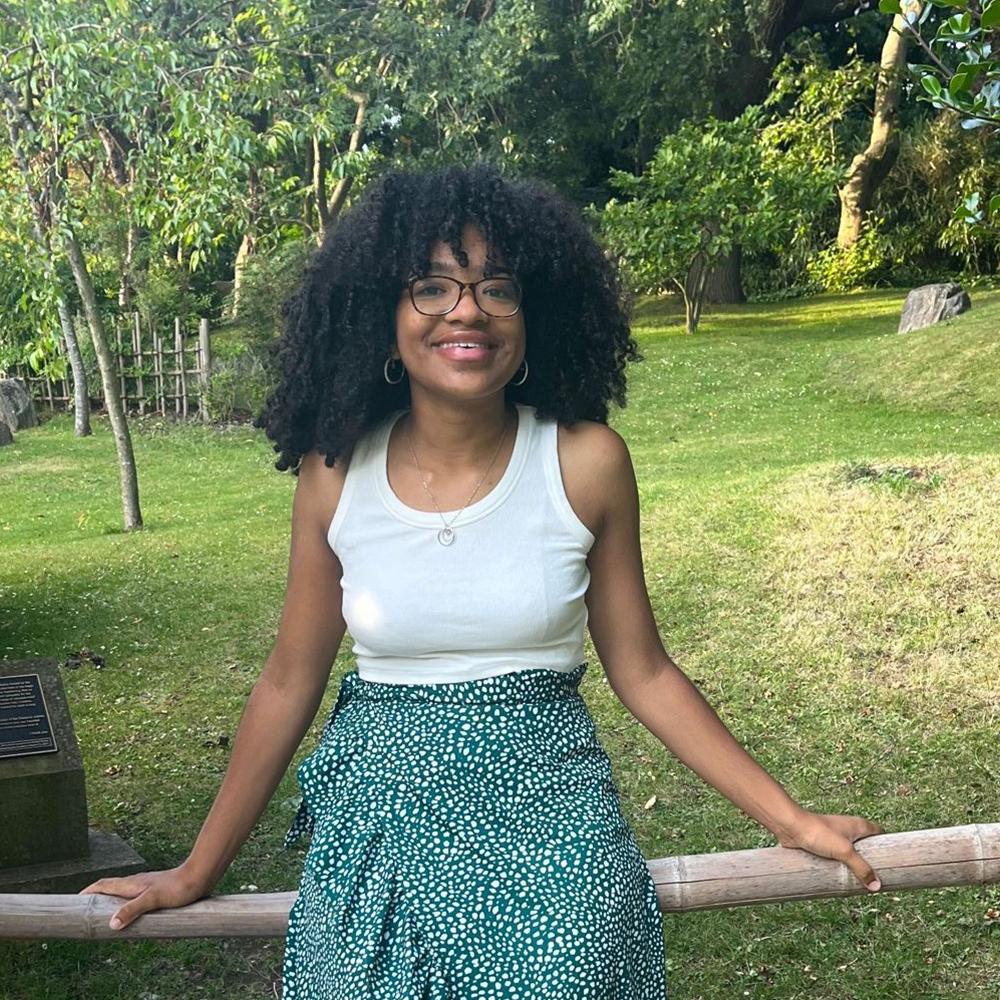
"Anthropology at Goldsmiths is one of the most thought-provoking degrees that anyone can undertake. Studying anthropology allows you to see thousands of different perspectives on trivial everyday life moments ranging from marriage rituals to different forms of greetings.

The course is rich in fascinating topics, which you can actively engage in and relate back to a contemporary context, which really helps you to understand the diversity that can be found in the world - especially in the cosmopolitan city of London!"

Megan, BA Anthropology


Goldsmiths, University of London, New Cross, London, SE14 6NW, UK
Telephone: + 44 (0)20 7919 7171

Goldsmiths has charitable status

© 2012 Goldsmiths, University of London. Copyright and Disclaimer

Sitemap

Edit