Emma Tarlo has conducted long term anthropological fieldwork in India and Britain as well as shorter multi-cited fieldwork in China, Myanmar and the USA. She specialises in the anthropology of material culture with reference to dress, fashion, textiles, the body and hair in trans-cultural contexts. She is also interested in urban anthropology and the relationship between history and anthropology. Her work engages with issues of colonialism, nationalism, diasporic identities, aesthetics, memory, religious revivalism, stigma, creativity and questions of representation and materiality. She is particularly interested in the relationship between visual, material and narrative forms and in developing new modes of ethnographic writing and exhibition making.
Emma Tarlo is keen to widen the reach and appeal of anthropology and has contributed to numerous public discussions about dress, social diversity, fashion and hair such as BBC Radio 4's Women's Hour, Thinking Allowed, BBC world service and NPR channels in the United States. Her recent book, 'Entanglement: The Secret Lives of Hair' (Oneworld) won the Victor Turner Prize for Ethnographic Writing 2017. She is currently developing two exhibitions in connection with her research on the global trade in human hair. Emma Tarlo is currently Director of Research in the Department of Anthropology.
Emma Tarlo has recently been interviewed by Stefanie Sinclair (Open University) about attitudes among British Muslims towards veiling, fashion and the commercialisation of the hijab. The audio interviews are available for listening or download from the Open University or iTunes, and will feature in an Open University course entitled 'Why is religion contoversial?'
Tarlo, Emma. 2016. Les Cheveux des Autres. In: Anne-Christine Taylor-Descola; Emmanuel Grimaud; Denis Vidal and Thierry Dufrene, eds. Persona: Etrangement humain. Paris: Actes Sud, pp. 153-156. ISBN 978-2-330-03801-4
Tarlo, Emma. 2013. “Dress and the South Asian Diaspora”. In: David Washbrook and Joya Chatterji, eds. Routledge Handbook of the South Asian Diaspora. London: Routledge, pp. 363-373. ISBN 978-0415480109
Tarlo, Emma. 2011. “Fashion”. In: Alan Banard and Jonathan Spencer, eds. Encyclopedia of Social and Cultural Anthropology (revised edition). London: Routledge. ISBN 978-0415809368
Tarlo, Emma. 2010. Multicultural muslim fashions. In: C Breward; R Crill and P Crang, eds. British Asian Style Fashion & Textiles / Past & Present. London: V&A Publications. ISBN 9781851776191
Tarlo, Emma. 2010. The South Asian Twist in British Muslim Fashion. In: Christopher Breward; Philip Crang and Rosemary Crill, eds. British Asian Style: fashion & textiles / past & present. London: V&A, pp. 58-67. ISBN 9781 85177 619 1
Jefferies, Janis K. and Tarlo, Emma. 2013. 'Material Witness'. In: Training workshops with Dr Emma Tarlo (Department of Anthropology) for PhD researchers in visual and material culture. Courtauld, University of Kent and Goldsmiths, United Kingdom.
Much of Emma Tarlo’s work focuses on the body as a cultural artifact and on the role played by dress in social, political, cultural, religious and aesthetic life in India and Britain. Her book, Clothing Matters (1996) explored the decisive role played by dress in the assertion and maintenance of colonial authority in late19th century India and in the development and spread of Gandhian inspired nationalism in the 1920’s and 30’s. It also examined how tensions concerning gender, caste, class and religion continued to be played out through dress in rural and urban India in the late 1980's and early 1990's when she was conducting fieldwork in rural Gujarat and Delhi.
Emma's later research on dress focused on the growth of visibly Muslim dress in Britain and Europe and on the emergence of Islamic and modest fashion. Her book, Visibly Muslim: Fashion, Politics, Faith (Berg 2010) explored how issues of religious conviction, emotion, materiality, life history, politics and sociality combine in the clothing choices of young Muslims in London and are articulated through the emergence of new forms of Islamic fashion. These themes also feature in her book, Islamic Fashion and Anti-fashion: New Perspectives from Europe and America (co-edited with Annelies Moors, Bloomsbury 2013) which examines how the relationship between Islam and fashion takes on different inflections in different spaces in relation to migration histories, regimes of secularism and both global and national politics. The research also traces some of the new networks emerging over the internet and the role played by modest fashion in bringing women from different religious backgrounds into online dialogue.
The Politics of Urban Space
Another significant strand of Emma Tarlo’s work concerns the politics of urban space. In the mid to late 1990s, she lived in Delhi for 3 years and was involved in collective and individual research about the city, focusing in particular on the lives and narratives of people who had been displaced through the massive "slum clearance" and "family planning" drives of the mid-1970s. The research which was archival, visual and ethnographic explored the relationship between official histories, archival records, local narratives and lived experiences and is published in her book, Unsettling Memories: Narratives of the Emergency (2003) which can also be read as an anthropological investigation and critique of state practices and their consequences.
Hair
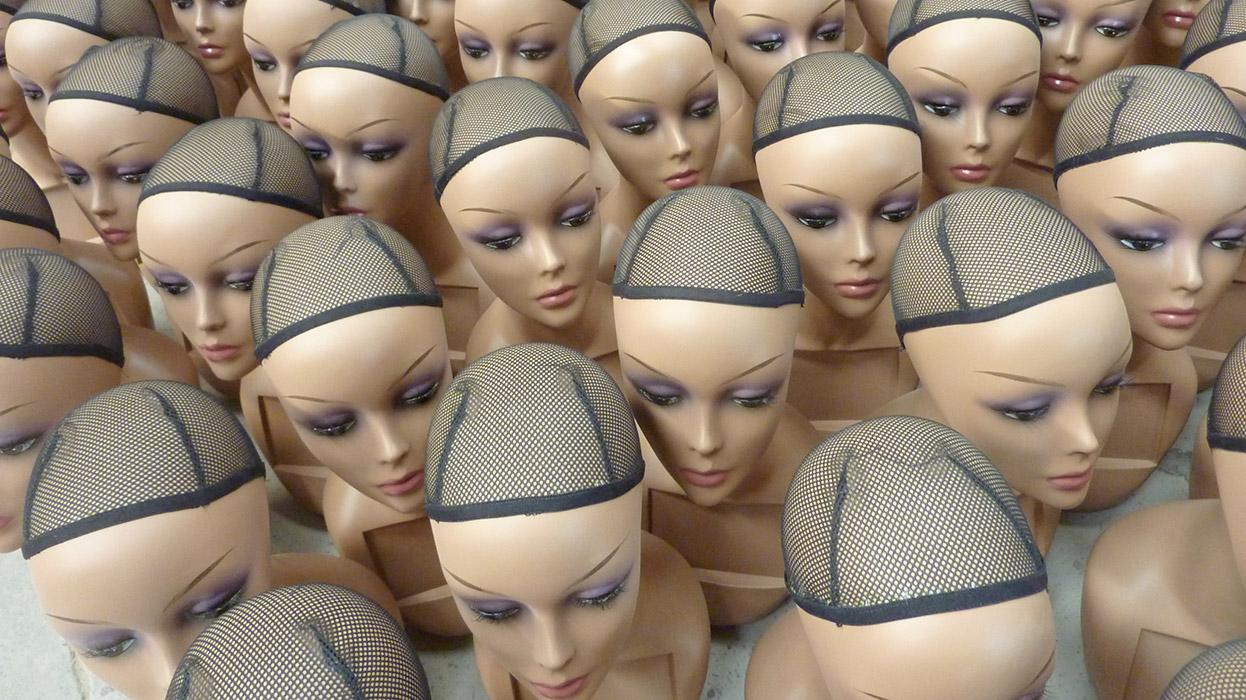
Emma Tarlo’s long-term interests in the body, identity, aesthetics, materiality and trans-cultural enmeshment come together in her most recent research into the global trade in human hair. This project traced the journeys of hair around the world, tracing the choreography of the trade and the diverse social and cultural meanings invested in hair as it passes from head to head. The research was funded by the Leverhulme Trust (September 2013-2016). Emma Tarlo's book, Entanglement: The Secret Lives of Hair is currently being translated into Chinese and Korean.
Future Projects
Emma Tarlo intends to continue conducting research on hair. She is also interested in developing research on the lives of people who leave orthodox religious communities and on the complexities of the relationship between the religious and secular in contemporary life.
Recent Collective Research Projects
2007-09 - Islamic Fashion in Europe: The Politics of Presence This NORFACE-funded research project, directed by Annelies Moors, formed part of the NORFACE Programme The Re-emergence of Religion as a social force in Europe?
2010-11 - Modest Fashion and Internet Retail This AHRC–funded project, directed by Reina Lewis, formed part of the AHRC Religion and Society programme.

.jpg)