- Understanding Consciousness: An Interview Velmans, Max and Bright, Richard. 2015. Understanding Consciousness: An Interview. Interalia Magazine: Special Issue on "With Consciousness in Mind (part 2)"(12),
- What makes a conscious process conscious? Velmans, Max. 2014. What makes a conscious process conscious? Behavioral and Brain Sciences, 37(1), pp. 43-44. ISSN 0140-525X
- Do advances in neuropsychological studies of consciousness demonstrate it to be just a state or function of the brain? A review of Stanislas Dehaene. Consciousness and the Brain: Deciphering how the Brain Codes our Thoughts Velmans, Max. 2014. Do advances in neuropsychological studies of consciousness demonstrate it to be just a state or function of the brain? A review of Stanislas Dehaene. Consciousness and the Brain: Deciphering how the Brain Codes our Thoughts. Journal of Consciousness Studies, 21(11-12), pp. 178-195. ISSN 1355-8250
- A review of Donald D. Price and James J. Barrell (2012) Inner Experience and Neuroscience: Merging both Perspectives Velmans, Max. 2013. A review of Donald D. Price and James J. Barrell (2012) Inner Experience and Neuroscience: Merging both Perspectives. Journal of Consciousness Studies, 20(5-6), pp. 208-214. ISSN 1355-8250
- The evolution of consciousness Velmans, Max. 2012. The evolution of consciousness. Contemporary Social Science, 7(2), pp. 117-138. ISSN 2158-2041
- Reflexive Monism: psychophysical relations among mind, matter and consciousness Velmans, Max. 2012. Reflexive Monism: psychophysical relations among mind, matter and consciousness. Journal of Consciousness Studies, 19(9-10), pp. 143-165. ISSN 1355-8250
- Introduction to Monist Alternatives to Physicalism Velmans, Max and Nagasawa, Yujin. 2012. Introduction to Monist Alternatives to Physicalism. Journal of Consciousness Studies, 19(9-10), pp. 7-18. ISSN 1355-8250
- Violence, the fragile ego, and the peaceful self Velmans, Max. 2012. Violence, the fragile ego, and the peaceful self. GITAM Journal of Gandhian Studies, 1(1), pp. 111-121. ISSN 2249-2240
- Can evolutionary theory explain the existence of consciousness? A review of N. Humphrey, 2010, Soul Dust: The Magic of Consciousness Velmans, Max. 2011. Can evolutionary theory explain the existence of consciousness? A review of N. Humphrey, 2010, Soul Dust: The Magic of Consciousness. Journal of Consciousness Studies, 18(11-12), pp. 243-254. ISSN 1355-8250
- A brief note on how phenomenal objects relate to objects themselves Velmans, Max. 2011. A brief note on how phenomenal objects relate to objects themselves. Journal of Consciousness Studies, 18(11-12), pp. 199-202. ISSN 1355-8250
- Understanding Consciousness: A collaborative attempt to elucidate contemporary theories Pereira Jr, Alfredo; Edwards, J.C.W.; Nunn, C; Trehub, A and Velmans, Max. 2010. Understanding Consciousness: A collaborative attempt to elucidate contemporary theories. Journal of Consciousness Studies, 17(5-6), pp. 213-219. ISSN 1355-8250
- Unconscious priming of a no-go response Hughes, Gethin; Velmans, Max and De Fockert, J. W.. 2009. Unconscious priming of a no-go response. Psychophysiology, 46(6), pp. 1258-1269. ISSN 0048-5772
- How to define consciousness—And how not to define consciousness Velmans, Max. 2009. How to define consciousness—And how not to define consciousness. Journal of Consciousness Studies, 16(5), pp. 139-156. ISSN 1355-8250
- The co-evolution of matter and consciousness Velmans, Max. 2008. The co-evolution of matter and consciousness. Synthesis Philosophica, 22(2), pp. 273-282. ISSN 0352-7875
- Reflexive monism Velmans, Max. 2008. Reflexive monism. Journal of Consciousness Studies, 15(2), pp. 5-50. ISSN 1355-8250
- Where experiences are: Dualist, reductionist, enactive and reflexive accounts of phenomenal consciousness Velmans, Max. 2007. Where experiences are: Dualist, reductionist, enactive and reflexive accounts of phenomenal consciousness. Phenomenology and the Cognitive Sciences, 6(4), pp. 547-563. ISSN 1568-7759
- ERP evidence for successful voluntary avoidance of conscious recollection Bergström, Zara M.; Velmans, Max; De Fockert, J. W. and Richardson-Klavehn, Alan. 2007. ERP evidence for successful voluntary avoidance of conscious recollection. Brain Research, 1151, pp. 119-133. ISSN 0006-8993
- How experienced phenomena relate to things themselves: Kant, Husserl, Hoche, and reflexive monism Velmans, Max. 2007. How experienced phenomena relate to things themselves: Kant, Husserl, Hoche, and reflexive monism. Phenomenology and the Cognitive Sciences, 6(3), pp. 411-423. ISSN 1568-7759
- A natural account of phenomenal consciousness Velmans, Max. 2007. A natural account of phenomenal consciousness. NeuroQuantology, 3(3), pp. 164-179.
- Heterophenomenology versus critical phenomenology Velmans, Max. 2006. Heterophenomenology versus critical phenomenology. Phenomenology and the Cognitive Sciences, 6(1-2), pp. 221-230. ISSN 1568-7759
- Are we out of our minds? Velmans, Max. 2005. Are we out of our minds? Journal of Consciousness Studies, 12(6), pp. 109-116. ISSN 1355-8250
- Why conscious free will both is and isn’t an illusion Velmans, Max. 2004. Why conscious free will both is and isn’t an illusion. Behavioral and Brain Sciences, 27(5), p. 677. ISSN 0140-525X
- Is the brain in the world, or the world in the brain? Velmans, Max. 2003. Is the brain in the world, or the world in the brain? Behavioral and Brain Sciences, 26(4), pp. 427-429. ISSN 0140-525X
- Preconscious free will Velmans, Max. 2003. Preconscious free will. Journal of Consciousness Studies, 10(12), pp. 42-61. ISSN 1355-8250
- Could phenomenal consciousness function as a cognitive unconscious? Velmans, Max. 2002. Could phenomenal consciousness function as a cognitive unconscious? Behavioral and Brain Sciences, 25(3), pp. 357-358. ISSN 0140-525X
- How Could Conscious Experiences Affect Brains? Velmans, Max. 2002. How Could Conscious Experiences Affect Brains? Journal of Consciousness Studies, 9(11), pp. 3-29. ISSN 1355-8250
- Making sense of causal interactions between consciousness and brain Velmans, Max. 2002. Making sense of causal interactions between consciousness and brain. Journal of Consciousness Studies, 9(11), pp. 69-95. ISSN 1355-8250
- When perception becomes conscious Velmans, Max. 1999. When perception becomes conscious. British Journal of Psychology, 90(4), pp. 543-566. ISSN 0007-1269
- Intersubjective science Velmans, Max. 1999. Intersubjective science. Journal of Consciousness Studies, 6(2-3), pp. 299-306. ISSN 1355-8250
- Neural activation, information, and phenomenal consciousness Velmans, Max. 1999. Neural activation, information, and phenomenal consciousness. Behavioral and Brain Sciences, 22(1), pp. 172-173. ISSN 0140-525X
- Consciousness and the “causal paradox.” Velmans, Max. 1996. Consciousness and the “causal paradox.”. Behavioral and Brain Sciences, 19(3), pp. 538-542. ISSN 0140-525X
- The limits of neuropsychological models of consciousness Velmans, Max. 1995. The limits of neuropsychological models of consciousness. Behavioral and Brain Sciences, 18(4), pp. 702-703. ISSN 0140-525X
- The relation of consciousness to the material world Velmans, Max. 1995. The relation of consciousness to the material world. Journal of Consciousness Studies, 2(3), pp. 255-265. ISSN 1355-8250
- Consciousness, causality and complementarity Velmans, Max. 1993. Consciousness, causality and complementarity. Behavioral and Brain Sciences, 16(2), pp. 409-416. ISSN 0140-525X
- Common-sense, functional theories, and knowledge of the mind Velmans, Max. 1993. Common-sense, functional theories, and knowledge of the mind. Behavioral and Brain Sciences, 16(1), pp. 85-86. ISSN 0140-525X
- Encoding strategy dynamics: When relationships between words determine strategy use McDougal, Sine and Velmans, Max. 1993. Encoding strategy dynamics: When relationships between words determine strategy use. British Journal of Psychology, 84(2), pp. 227-248. ISSN 0007-1269
- A view of consciousness from the fringe Velmans, Max. 1993. A view of consciousness from the fringe. Consciousness and Cognition, 2(3), pp. 137-141. ISSN 1053-8100
- Is consciousness integrated? Velmans, Max. 1992. Is consciousness integrated? Behavioral and Brain Sciences, 15(2), pp. 229-230. ISSN 0140-525X
- Consciousness from a first-person perspective Velmans, Max. 1991. Consciousness from a first-person perspective. Behavioral and Brain Sciences, 14(4), pp. 702-726. ISSN 0140-525X
- Is human information processing conscious? Velmans, Max. 1991. Is human information processing conscious? Behavioral and Brain Sciences, 14(4), pp. 651-669. ISSN 0140-525X
- Is the mind conscious, functional, or both? Velmans, Max. 1990. Is the mind conscious, functional, or both? Behavioral and Brain Sciences, 13(4), pp. 629-630. ISSN 0140-525X
- Consciousness, brain, and the physical world Velmans, Max. 1990. Consciousness, brain, and the physical world. Philosophical Psychology, 3(1), pp. 77-99. ISSN 0951-5089
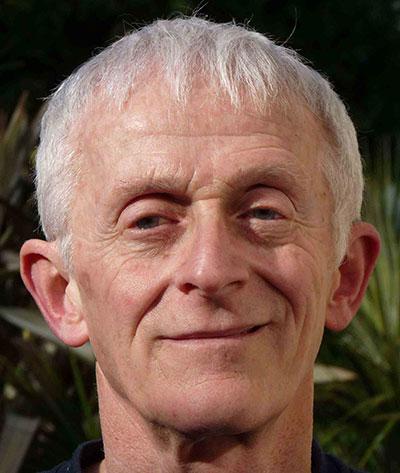
Professor Max Velmans
Max’s research is in consciousness studies, particularly integrating philosophy and psychology in clinical practice.
Staff details
Position
Emeritus Professor
School
Subject
Overview
Max is Emeritus Professor (BSc PhD CPsychol FBPsS FAcSS) of Psychology at Goldsmiths, currently focusing on Consciousness Studies, to which he has made extensive contributions through teaching, administration, and research. He has been a Fulbright Scholar at UC Berkeley (1984), a Visiting Professor at the Universities of Westminster and Plymouth, and National Visiting Professor for 2010-2011 of the Indian Council of Philosophical Research, Government of India. His main book, Understanding Consciousness, was shortlisted for the BPS book prize in 2001 and 2002 and listed as the year 2000 milestone in Psychology by Psychologie Heute in 2024. He has over 130 publications in this area (over 100 on-line at Research Gate and Academia.edu."
Grants and Awards
Max has received grants to support his earlier research on deafness rehabilitation from The National Research and Development Corporation, the Department of Health and Social Security, the Medical Research Council, the British Technology Group, and his later research on consciousness from ESRC, the Fetzer Institute (USA), the Templeton Foundation (USA), and the Hari Prasad Shastri Charitable Trust.
Public Engagement and Knowledge Exchange
Max has given over 150 invited papers nationally and internationally, around 120 of which have been keynote addresses or plenary papers at conferences, workshops or symposia on consciousness, some of which have been open to the public, as well given invited papers in many overseas departments and institutions.
His earlier hearing aid research was exhibited at the Royal Society, UC Berkeley, and at exhibitions sponsored by RNID, The Institute of Laryngology and Otology, and the National Society for Deaf Children. Documentaries of this research have also been made by the Central Office of Information (for overseas distribution), BBC1, programmes on Radio 2, BBC World Service, and reports in the press. His work on Consciousness has also been featured in discussions and/or radio interviews, including BBC4 and World Service, along with various YouTube films, Wikipedia, and reports on many sites on the World Wide Web.
In 1997 Max co-founded the Consciousness and Experiential Psychology Section of the BPS and has organised or helped to organise many conferences, workshops and symposia on consciousness, including international ones sponsored by the CIBA foundation (London), the Fetzer Institute (USA) and the Templeton Foundation (USA). From 2006 onwards he also founded Totnes Consciousness Café with visiting speakers at monthly meetings in Totnes, where he now lives.
He is on the Editorial Advisory Board of the Journal of Consciousness Studies, The Psychology of Consciousness: Theory, Research and Practice (American Psychological Association), Phenomenology and the Cognitive Sciences, NeuroPsychoanalysis, and Journal of Parapsychology.
Publications and research outputs
Book
- Towards a Deeper Understanding of Consciousness: Selected works of Max Velmans Velmans, Max. 2017. Towards a Deeper Understanding of Consciousness: Selected works of Max Velmans. Andover, Oxon: Routledge. ISBN 9781138699441
- Understanding Consciousness: Second Edition Velmans, Max. 2009. Understanding Consciousness: Second Edition. Hove, East Sussex: Routledge. ISBN 9780415425162
- How Could Conscious Experiences Affect Brains? Velmans, Max. 2002. How Could Conscious Experiences Affect Brains? Exeter: Imprint Academic. ISBN 9780907845393
Edited Book
- Consciousness (Critical Concepts in Psychology), (4 volumes) Velmans, Max, ed. 2018. Consciousness (Critical Concepts in Psychology), (4 volumes). Abingdon: Routledge. ISBN 9781138848634
- Consciousness (Critical Concepts in Psychology), Volume 4: New Directions: Psychogenesis, Transformations of Consciousness, and Non-reductive, Integrative Theories Velmans, Max, ed. 2018. Consciousness (Critical Concepts in Psychology), Volume 4: New Directions: Psychogenesis, Transformations of Consciousness, and Non-reductive, Integrative Theories. Abingdon: Routledge. ISBN 9781138848672
- Consciousness (Critical Concepts in Psychology), Volume 3: Cognitive and Neuropsychological Approaches the Study of Consciousness, Part 2 Velmans, Max, ed. 2018. Consciousness (Critical Concepts in Psychology), Volume 3: Cognitive and Neuropsychological Approaches the Study of Consciousness, Part 2. Abingdon: Routledge. ISBN 9781138848665
Book Section
- The Co-Evolution of Energy/Matter and Consciousness Velmans, Max. 2027. The Co-Evolution of Energy/Matter and Consciousness. In: Zdravko Radman, ed. Embodied Minds Evolving: From Animals to AI. New York: Palgrave Macmillan. ISBN 9783032368089
- The Basic Principles of an Integrative, Intersubjective Science of Consciousness Velmans, Max. 2026. The Basic Principles of an Integrative, Intersubjective Science of Consciousness. In: J Wagemann; C Tewes; U Weger and T Sparby, eds. First-Person Science of Consciousness. Theory, Method, Application. Cambridge: Cambridge University Press.
- Is the Universe Conscious? Reflexive Monism and the Ground of Being Velmans, Max. 2021. Is the Universe Conscious? Reflexive Monism and the Ground of Being. In: Edward Kelly and Paul Marshall, eds. Consciousness Unbound: Liberating Mind from the Tyranny of Materialism. Lanham, Maryland: Rowman & Littlefield, pp. 175-228. ISBN 9781538139424
Article
- A Reflexive, Psychophysical Universe Velmans, Max. 2026. A Reflexive, Psychophysical Universe. Mind and Matter, ISSN 1611-8812
- Functional theories can describe many features of conscious phenomenology but cannot account for its existence Velmans, Max. 2022. Functional theories can describe many features of conscious phenomenology but cannot account for its existence. Behavioral and Brain Sciences, 45, e62. ISSN 0140-525X
- How to investigate perceptual projection: A commentary on Perereira, Jr. "The Projective Theory of Consciousness: from Neuroscience to Philosophical Psychology" Velmans, Max. 2018. How to investigate perceptual projection: A commentary on Perereira, Jr. "The Projective Theory of Consciousness: from Neuroscience to Philosophical Psychology". Trans/Form/Ação, Marília, Edição Especial, 41, pp. 233-242. ISSN 0101-3173
Digital
- Heterophenomenology versus critical phenomenology: A dialogue with Dan Dennett (on-line debate) Velmans, Max. 2001. Heterophenomenology versus critical phenomenology: A dialogue with Dan Dennett (on-line debate).
Report
- Guidelines for Minimum Standards of Ethical Approval in Psychological Research Velmans, Max; Morrison-Coulthart, Lisa; Colley, Ann; Foot, Hugh; Foreman, Nigel; Kent, Gerry; Kwiatkowski, Richard and Sloboda, John. 2004. Guidelines for Minimum Standards of Ethical Approval in Psychological Research. Manual. The British Psychological Society, Leicester.
Research Interests
Max's work introduces and develops reflexive monism, a novel resolution of the “hard problems” of consciousness that provides a framework for a non-reductionist science of consciousness.
- consciousness
- mind/body interactions
- philosophy of psychology
- integrating philosophy, cognitive psychology, neuropsychology and mind/body interactions in clinical practice.
- the relation of brain to experience
- conscious versus unconscious processing
- the nature of subjectivity, intersubjectivity and objectivity
- how to avoid both dualism and reductionism
- the problems of free will
For a review and discussion of some of my published research go to My Selected Publications