Integrated Degree Psychology (including Foundation Year)
Content navigation menu
Why study the Integrated Degree in Psychology at Goldsmiths
If you have any questions about Integrated Degree in Psychology at Goldsmiths, you can meet online with Programme Lead, Gordon Wright.
This psychology programme is an alternative entry route for students without the formal academic profile to enter degree-level study directly.
- The programme is ideal if you're interested in psychology and its many applications, and want to boost your academic profile and progress to the full-time BSc Psychology degree.
- There are no formal entry requirements, you just need to demonstrate a lively interest in the world of psychology.
- We will help you develop your undergraduate academic skills, while also teaching you the foundations of psychological theory and research.
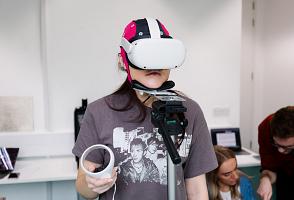
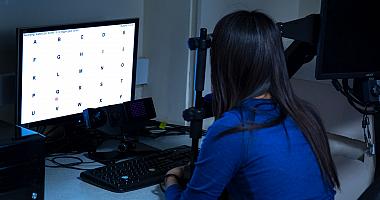
- We have excellent specialist and general-purpose research laboratories, including an EEG suite for brain research, an infant lab, and a visual perception and attention laboratory.
- If you successfully achieve the progression requirements of the Foundation Year, you can continue with the three-year BSc Psychology degree.
- Goldsmiths undergraduate psychology degrees are accredited by the British Psychological Society (BPS), so you can be assured of the very best education and training. BPS-accredited programmes are highly valued by employers and give students a route to full BPS membership.
- Students from our undergraduate degrees progress into a broad range of careers in areas like clinical psychology, occupational psychology, market research, advertising, media psychology, criminal/forensic psychology, consultancy, and research psychology.
Contact
If you have specific questions about the degree, contact Gordon Wright
UCAS code
C801
Length
1 year full-time followed by 3 years full-time (undergraduate degree)
Fees
Home - full-time: £9535
International - full-time: £23000
School
Subject

Our undergraduate psychology degrees are accredited by the British Psychological Society as conferring eligibility for Graduate Membership of the Society and also the Graduate Basis for Chartered Membership, which is the first step towards becoming a Chartered Psychologist.
What you'll study
The programme focuses on introductory psychology and the different approaches psychology has adopted theoretically and in research.
You will take the compulsory modules listed below:
- Social and Developmental Psychology – 30 credits
- Psychology and Life – 30 credits
- Psychobiology and Cognitive Psychology – 30 credits
- Research Methods and Experimental Design – 30 credits
There are also opportunities to get involved with work happening in our specialist and general-purpose research laboratories.
Teaching style
This programme is mainly taught through scheduled learning – for example, through a mixture of lectures and sessions involving group tasks and discussions. Sessions will generally be supplemented by additional reading texts and notes in the form of handouts.
How you'll be assessed
You’ll be assessed by a variety of methods that are likely to include:
- Essay assignments
- Unseen examination
- Research report
- Multiple choice test
Learn industry-standard digital skills
We are an Adobe Creative Campus. During your studies, you will be able to use Photoshop, Premiere Pro, Illustrator and more for free on your own devices.

What our students say

Careers
Students from our undergraduate psychology degrees go on to a broad range of careers and future study in areas including:
- Clinical psychology
- Occupational psychology
- Market research
- Advertising
- Media psychology
- Criminal/forensic psychology
- Consultancy
- Research psychology
You can find out more about career options after graduating on our psychology careers page.
Our full degrees are accredited by the British Psychological Society (BPS), which means that alumni are eligible for graduate basis for Chartership with the BPS – vital if you want a career as a psychologist in the future.
Skills
The Integrated Degree in Psychology will:
- Introduce you to the scope and complexity of the study of psychology
- Provide you with a knowledge of theoretical approaches to psychology
- Develop your academic study skills
Throughout the degree you will receive a thorough training in:
- The design and evaluation of empirical research
- Statistical analysis
- Hands-on lab skills
- The use of specialist psychology-relevant software
In addition, you'll develop the following transferable skills:
- Critical thinking and analytical skills
- The ability to look at issues from different perspectives
- Data and information processing skills
- Reflection skills
- Self motivation
- Planning and organisation skills
- Oral and written communication skills
Entry requirements
The programme is primarily aimed at learners who may not have formal entry qualifications for undergraduate study. You'll need to demonstrate that you have an interest in and aptitude for the subject in your personal statement.
Admission is by application to UCAS, interview and a short piece of written work.
International qualifications
We accept a wide range of international qualifications. Find out more about the qualifications we accept from around the world.
If English isn’t your first language, you will need an IELTS score (or equivalent English language qualification) of 6.0 with a 6.0 in writing and no element lower than 5.5 to study this programme. If you need assistance with your English language, we offer a range of courses that can help prepare you for degree-level study.
Selection process
We exercise flexibility where entry requirements are concerned, and make offers based on your enthusiasm and commitment to your subject, as shown by your application and personal statement, qualifications, experience and reference.
We frequently interview mature applicants (over 21) or those with alternative qualifications, and have a long tradition of encouraging students from all social backgrounds to study at our university.
Fees and funding
Annual tuition fees
These are the UG fees for students starting their programme in the 2026/2027 academic year.
- Home - full-time: £9790
- International - full-time: £23000
If your fees are not listed here, please check our undergraduate fees guidance or contact the Fees Office, who can also advise you about how to pay your fees.
It’s not currently possible for international students to study part-time if you require a Student Visa, however this is currently being reviewed and will be confirmed in the new year. Please read our visa guidance in the interim for more information. If you think you might be eligible to study part-time while being on another visa type, please contact our Admissions Team for more information.
If you are looking to pay your fees please see our guide to making a payment.
Funding opportunities
We offer a wide range of scholarships and bursaries, and our Careers Service can also offer advice on finding work during your studies. Find out more about funding your studies with us.
Additional costs
In addition to your tuition fees, you'll be responsible for any additional costs associated with your course, such as buying stationery and paying for photocopying. You can find out more about what you need to budget for on our study costs page.
There may also be specific additional costs associated with your programme. This can include things like paying for field trips or specialist materials for your assignments. Please check the programme specification for more information.