Support as Identity by Ksenia Lebedeva
This project by BA Design student Ksenia Lebedeva reimagines the forearm crutch as an object of self-expression.
Ksenia was inspired by research into emotional attachment, identity and the effects of standardisation. The idea for the project came from Ksenia's conversations with her grandmother about her experiences of growing up using mobility aids in the Soviet Union. She explains, "the project began by exploring the importance of attachment to the objects that we wear and interact with."
With my grandmother's input, I became interested in the limitations that standardised objects can pose.
Ksenia Lebedeva, BA Design
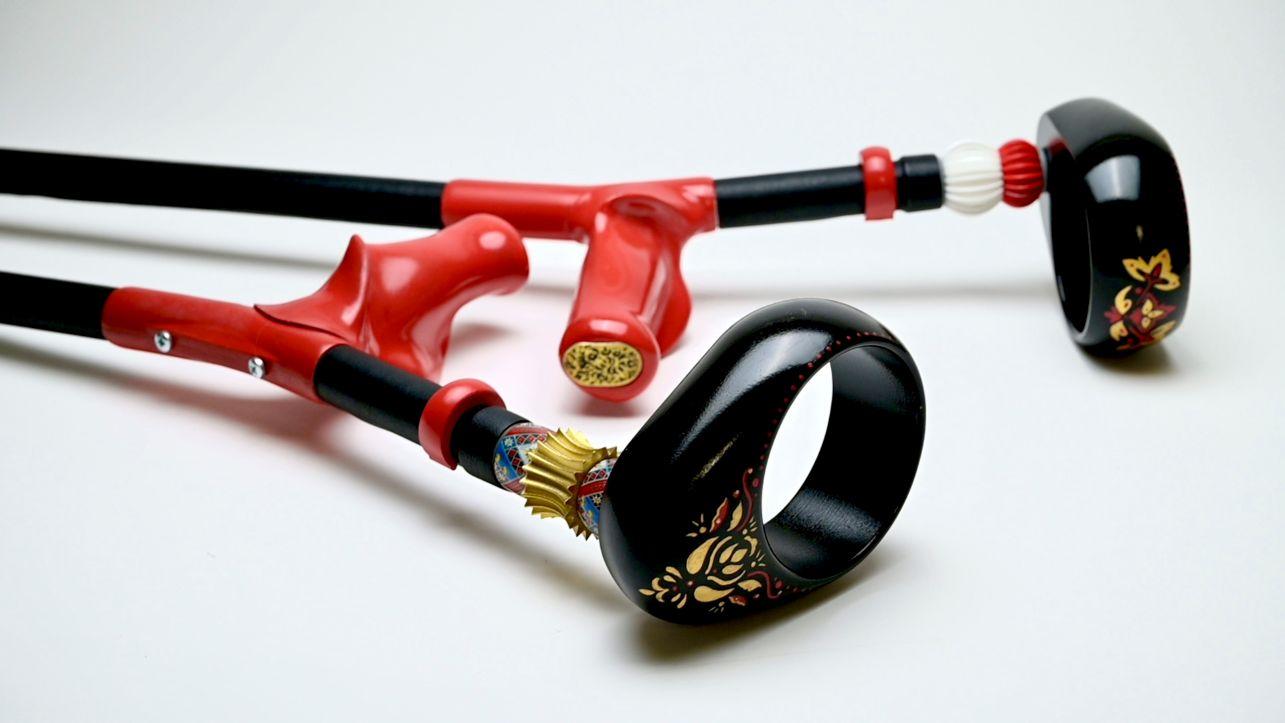
Focusing on medical devices, Ksenia became interested in how clinical, uniform designs can disconnect users from their identity, and in exploring ideas around decoration and personal expression. “This led me to focus on mobility aids, specifically crutches, and explore how they could become tools for self-expression rather than symbols of limitation through customisation, adornment and personalisation,” Ksenia explained.
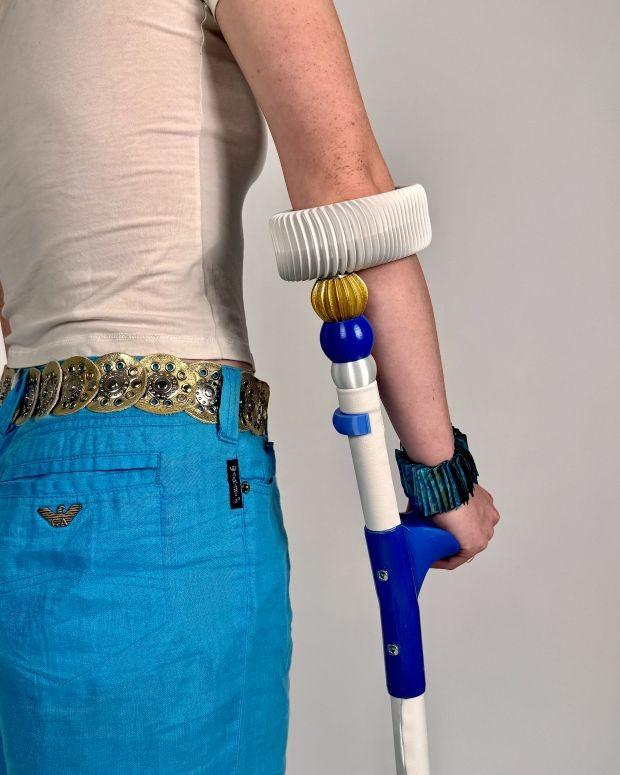
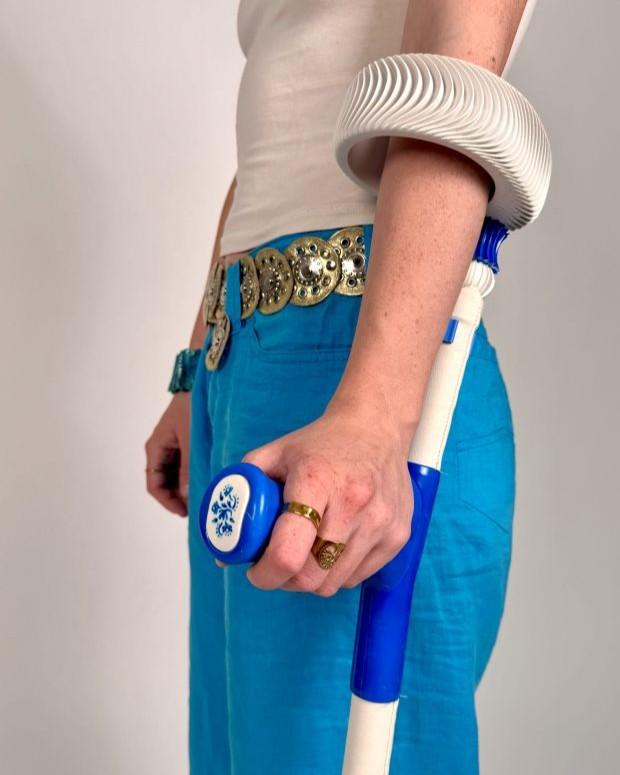
The crutch system Ksenia has designed includes interchangeable threaded beads which both act as height adjustment and offer customisation options. It was important that the customisation wasn’t simply an add-on but built into the design, challenging the standardised nature of existing mobility aids by encouraging personalisation.
She developed three crutch designs using the same modular framework. One design draws on Russian Khokhloma folk art while another is inspired by Gzhel blue-and-white ceramics, reflecting her grandmother’s personal history. The third does not have specific cultural reference point, but uses colour playfully, resulting in a versatile design. Through the three versions, she shows how the same functional structure can be adapted for different forms of self-expression.
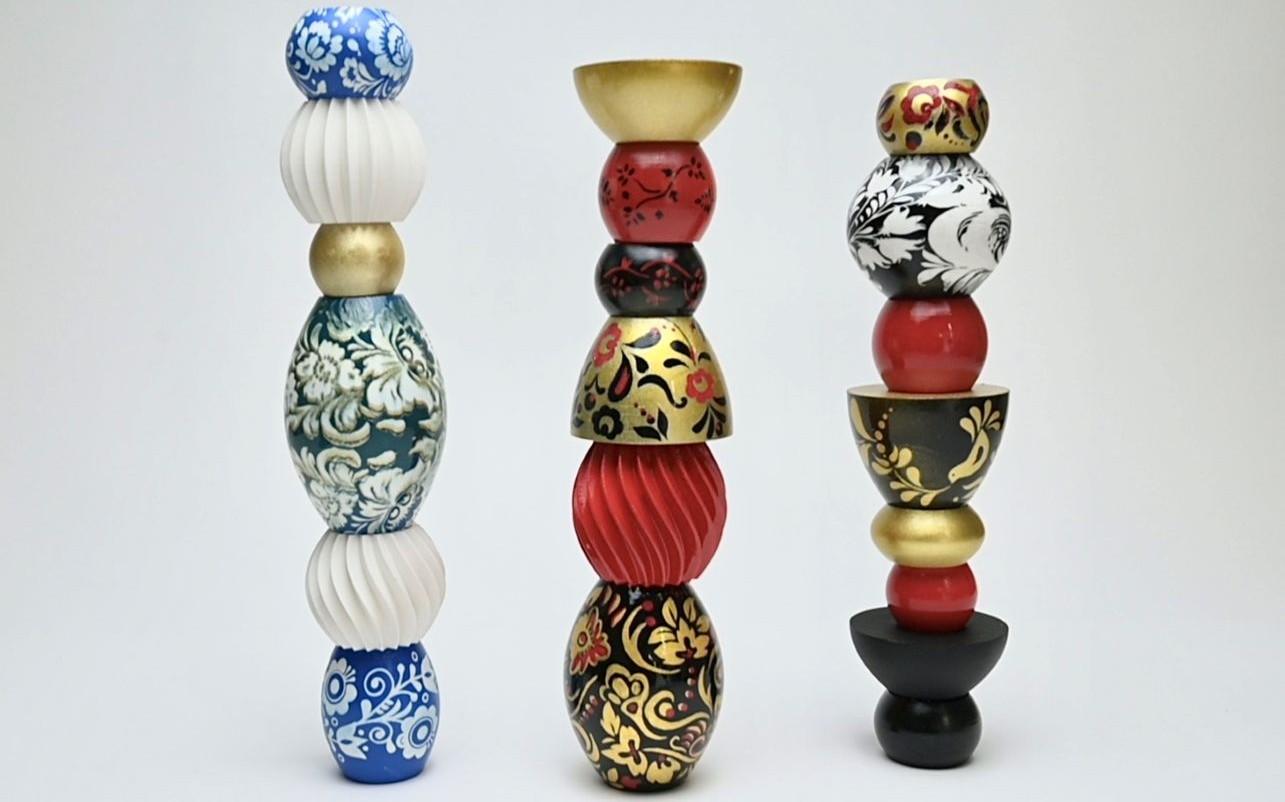
Ksenia learned new skills through the process of developing her project, including technical skills like using Rhino to 3D print and working with clay to prototype. She also found that it helped her develop her ability to think conceptually, and work with users’ preferences in mind without losing her own design approach.
“I hope the project encourages people to think about the emotional impact of standardised objects, particularly those worn on the body," Ksenia added.
The project asks audiences to consider how design can influence identity, self-expression and wellbeing, and whether assistive devices should be valued for more than just their functionality.
Ksenia Lebedeva, BA Design
.jpg)