Research in Visual Cultures
In this section
Article
We understand visual culture as the intersection of visual forms with social, philosophical, political, and aesthetic concerns.
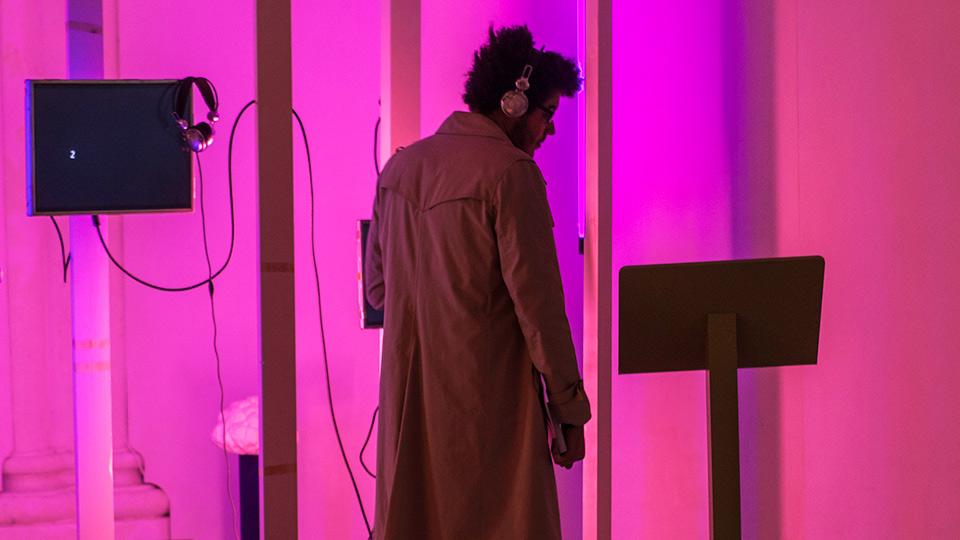
We research contemporary art within an expanded field, which includes popular culture; spatial, performative, and aural practices; cultural institutions and new technologies.
Formed in the 2004-2005 academic year, Visual Cultures at Goldsmiths quickly built an international reputation for innovative and intellectually rigorous enquiry into contemporary art and culture. Today, Goldsmiths continues to be one of the world’s leading destinations for the study of visual culture, developing groundbreaking research to address new challenges in a changing world. Our research is guided by four key principles:
-
Decentering, decolonizing: Our work questions how importance has been attributed to cultural artefacts. We develop anti-racist, feminist, queer, anti-ableist and decolonial approaches to art and visual cultures from around the world. We also look to popular culture, visual forms within everyday life, and local cultural initiatives.
-
Philosophical depth: We bring a rigorous, sustained engagement with philosophy and critical theory to our study of visual culture. In our work concepts are as important as images, and we deal with the latter in a creative and critical manner.
-
Political approaches to aesthetics: We view visual culture as inherently political. Our work examines the relationships between politics and culture, and questions distributions of power within society.
-
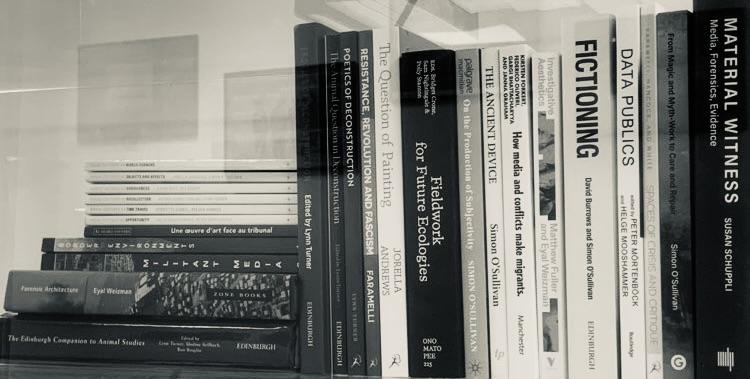
Experimentation and innovation: Experimental approaches to research are central to what we do. Our research outputs span theory, experimental writing, performance, art practice, exhibition-making, event-making, and collaborative community-based work, among others. We have developed new approaches to the study of visual culture (for instance, investigative aesthetics, advanced practices, forensic architecture, and fictioning), and work across disciplines.
Many staff and students are affiliated with one or more of the research clusters below:
Situated Knowledges
Our work in this cluster explores the performativity of subjectivities and affects within a wide range of cultural practices and registers, including performance art, live art, moving image works, and everyday life. We draw from and develop the manifold histories, politics and philosophies of anti-racist, anti-ableist, decolonial, feminist, queer, and trans scholarship. Our work critically investigates the making of race, gender, sexuality, subjectivity, and embodiment. We attend to this making – or 'poesis' – by exploring art, performance, or moving image works, by the ethics through which we encounter one another, or through the practices, styles or genres understood as aesthetic forms.
Spatial Practices and Architecture
Our work within this cluster is delivered through the Centre for Research Architecture, please review their specific PhD application guidelines.
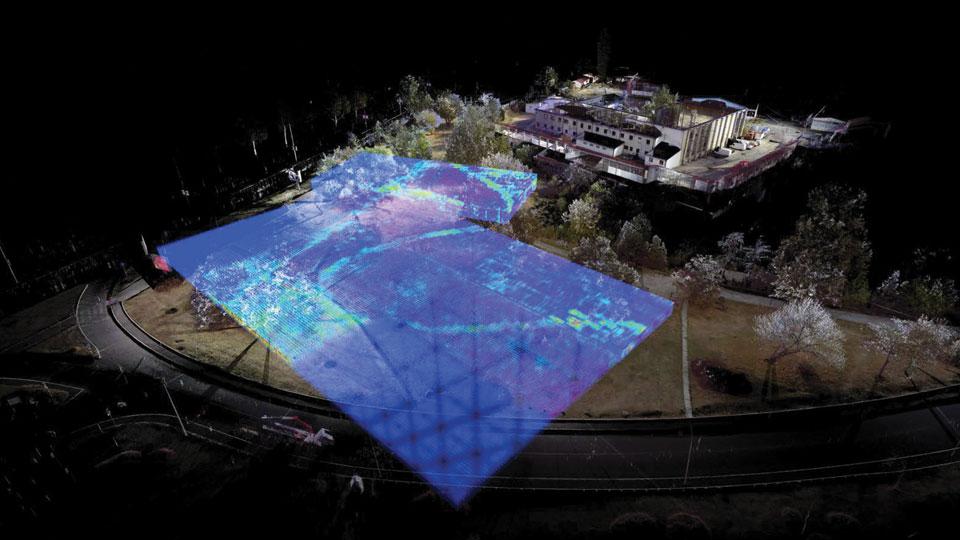
Research conducted within this context explores the intersections between legal frames, territorial divisions, environmental conditions, technoscience and aesthetic regimes as they express themselves within spatial and political contexts. We conduct our research using various investigative methods but in particular through on-the-ground field-work combined with the use of digital tools for data visualisation, media mapping, terrain modelling and remote sensing. In conjunction with our longstanding activist concerns around human rights and state violence, current research also focuses on ‘radical ecologies’ and ‘data scapes’.
Planetary Aesthetics and Ecologies
In this research cluster, we explore visual practices and interventions that address unavoidable questions concerning climate change, environmental crises, ecological sustainability, human and non-human geographies, ‘the animal question’ and sociologies of everyday life. We approach tthese themes by taking an interdisciplinary view of the arts and sciences. Our wide and rapidly growing field within the humanities and post-humanities has allowed us to explore and rethink accepted cartographies, technological investments in environmental ethics and awareness, the legality and politics of the lived environment, the nature/culture dialectic within art history and, fundamentally, globalisation and climate change in the Anthropocene. We are active participants in the Critical Ecologies research stream and the Centre for Art and Ecology at Goldsmiths.
Digital Visual Cultures
In this research cluster, we investigate the relationships between art, media, and visual culture. Our researchers examine the impact of a wide variety of media on artistic production. This ranges from the mass media that defined modernism – film, television, the radio, and print media – through to the digital media – computation, devices, algorithms, data, and artificial intelligence – that impact culture today. We are just as interested in the aesthetics and politics of ‘popular,’ ‘low,’ and ephemeral forms of digital culture, as we are in the intersections between technology and contemporary art. We investigate the entanglements of visual technologies, politics, and power, and have particular interests in the financialization and assetization of digital culture, digital labour and digital image production, how digital technology reproduces racism and inequality, and how gender and sexuality are transmuted by media and technology.
Curatorial and Institutional Practices
Our work in this cluster considers the assembly and display of artistic practices, institutional and social analyses, and critical epistemology. We pay attention to the ways in which curatorial practices are shaped by institutional and social contexts and to how, in turn, they come to shape knowledge. As such, we regard the curatorial as a place from which to investigate museum histories, past and present exhibition practices, and the dispersal of curatorial activity away from the institutions that grounded it historically and onto the open platforms of social engagements and public assembly, as well as its relation to the law and legal institutions.
Acknowledging the contemporary global proliferation of curatorial activity, our research goes beyond tracking contemporary curating activity in the form of exhibition-making. Instead, we think the curatorial in terms of its potential to rewrite power relations and cultural values within public culture, as well as a mode of philosophical thought in itself.
Radical Archives: Memory, Narrative, Care
Focusing on memory, residual cultures, counter-history, and resistance, this cluster investigates how archives—both official and unofficial—shape visual and other narratives, including the written, digital, and lived. Our work explores our relationship to the past—both near and distant—and our imaginaries of possible futures, as well as how we inherit, forget, or disrupt dominant histories, including those of art. Colleagues have particular research interests in various conceptions of the archive and narrative, as well as in historical trauma, the legacies of colonialism, schizoanalysis, precarity, ableism, and institutional psychiatry. In this moment of crisis and institutional collapse, our turn to care—broadly understood—is framed as both personal and explicitly political. A key concern of the cluster is the form this work of care and radical archiving takes: from philosophical analysis to fabulation and fictioning, and from historical research to storytelling and self-narration.