MFA Curating
Content navigation menu
Why study MFA Curating at Goldsmiths
The MFA Curating at Goldsmiths is designed for students who wish to take up the challenge of artistic, social and critical curating with a contemporary approach to the subject. It also helps students to develop their professional practice.
- You’ll work in a practice-led research environment alongside fellow aspiring curators and producers, practitioners at an early stage of their professional development, and those looking for a shift in their art career.
- You’ll get to explore curating contemporary art from many different angles, including aesthetic, social, political and philosophical enquiries, practices and discourses relevant to present-day culture.
- You’ll learn about the history of curation through the study of the genealogies of curating as a discipline, but this degree is firmly focused on contemporary curatorial and art practices, and the future of curation.
- You’ll be offered a toolbox of knowledge, ranging from theoretical concepts to the practicalities of working with artists and project management.
- Our student-centred approach helps develop independent, articulate, confident, self-motivated, knowledgeable producers who support each other’s learning and development.
- The key principes of the programme are interdisciplinarity, collaboration and critical thinking, along with practices of listening, attention and accountability towards the human and non-human worlds. These principles will help you develop methods and a work ethos relevant to the area of practice you want to pursue and refine.
- Whether exhibition-making, public programming, commissioning social or public projects, or working with artists and practitioners from other disciplines, this degree will give you the skills and confidence to take your next steps into the professional world of curating.
- MFA Curating works in close connection with Goldsmiths CCA, a vibrant platform for international contemporary art and exhibition making.
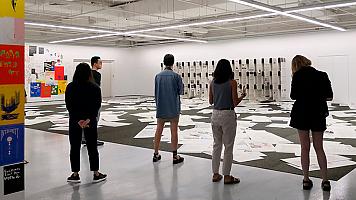
- We organise exhibition and gallery tours in London and further afield, invite international artists to introduce their practice, and facilitate collaborations between MFA Curating and other programmes within the School of Art, allowing for a unique dialogue between artists and curators.
- This is a leading programme in its field. It’s recognised worldwide for producing highly qualified curators and arts professionals, as well as those pursuing further academic study at PhD level. We are ranked in the top 25 in the world for art and design (QS WUR by Subject 2024).
Contact
If you have specific questions about the degree, contact Paul Clinton .
Length
2 years full-time or 4 years part-time
Fees
Home - full-time: £11800
Home - part-time: £5900
International - full-time: £27500
School
Subject

We are an Adobe Creative Campus. During your studies, you will be able to use Photoshop, Premiere Pro, Illustrator and more for free on your own devices.
Develop your practice
The MFA gives you the chance to develop your practice through professional experience. You’ll have the opportunity to apply to work with organisations including Cubitt, Gasworks, Forma, Artangel, Mimosa House and our close collaborator Goldsmiths Centre for Contemporary Art to develop curatorial projects.
Such placement opportunities and internships with the likes of Tate Modern, the Government Art Collection and Peer Gallery will underpin your learning and give you the practical skills you need for your future career.
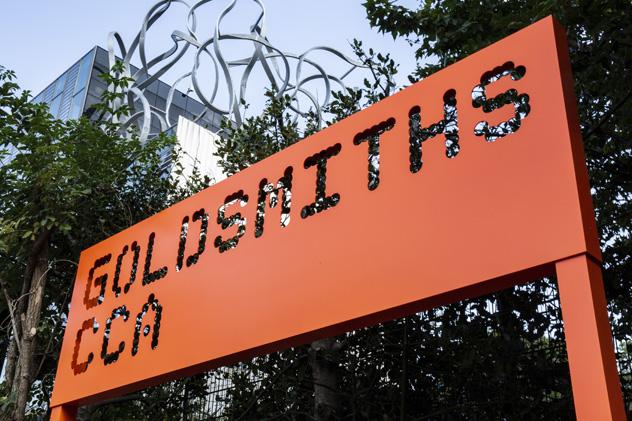
Goldsmiths has its very own public art gallery on campus, where you can experience world-class exhibitions and engage with a public events programme.

As an MFA Curating student at Goldsmiths you'll be able to access placement and internship opportunities with the likes of Tate Modern.
Opportunities for dialogue and collaborations
Based in our world-renowned School of Art, the MFA Curating allows for dialogue and potential collaborations with emerging practitioners about contemporary and future practice, and the most pressing concerns of our day.
MFA Curating students work in close proximity to postgraduate art students, in particular MA Art and Ecology, MFA Fine Art, and MA Artists' Film & Moving Image. Beyond its close association with CCA Goldsmiths, the programme offers connections with Goldsmiths’ Centre for Art and Ecology and the Art Research Garden.
We also run a Cross Campus Collaborations Project, aiming to create spaces for experimentation and student-led responses to Goldsmiths’ collections and communities. This project enables students to work with the Constance Howard Gallery & Textile Collection, The Women’s Art Library’s Special Collection, the Art Research Garden with MA Art & Ecology artists, and MA Performance Making students, developing short and medium-term displays on campus.
Junior Fellowships
Upon graduation, alumni are eligible to apply for one of three Junior Fellowships, designed to further your professional development. Currently we offer two fellowship to work with the MFA Curating course itself, taking part in the delivery of an academic programme, and one fellowship based at Goldsmiths CCA, supporting the delivery of exhibitions and public programmes.
What you'll study
The MFA Curating is a two-part programme, giving you you the freedom to experiment and innovate in the expanded and interdisciplinary field of curatorial practice.
Year one
You'll develop an Independent Research Project with the guidance of tutors.
You’ll also be introduced to current curatorial concepts and practices through group critique and guided research. You’ll explore significant ideas in curatorial history, contemporary art and curating, philosophy and cultural theory to help you think broadly about your own practice.
You’ll also gain a practical understanding from site visits and writing classes.
The year is made up of the following modules:
- Curatorial Practice I
- Critical Studies I
Year two
You’ll develop a second Independent Research Project and continue to receive group and individual tutorials.
This year your teaching is mainly delivered in the form of monthly intensive student-led workshops, which look in-depth at current artistic and cultural themes drawn from students’ interests.
The year is made up of the following modules:
- Curatorial Practice II
- Critical Studies II
Teaching on the MFA
Teaching on this programme is dynamic. You’ll expand your artistic and curatorial knowledge through ongoing conversations in the form of seminars, collective research, presentations, tutorials and reading groups.
As well as being taught by leading academics from the School of Art, you’ll also learn from some of the art world’s most influential professionals through our visiting lecture and guest speaker programmes.
Careers
Recent employers
Our graduates find employment in a range of leading arts-based organisations and sectors. Recent graduates have gone on to work in international museums, commercial galleries, art fairs, magazines, alternative spaces and not-for-profit organisations. Recent employers of our MFA Curating students and graduates include:
Public sector
- Tate Britain, London
- Tate Modern, London
- National Portrait Gallery, London
- Guggenheim Museum, New York
- Documenta, Kassel
- Venice Biennale
- Athens Biennial
- Sydney Biennale
- Portikus, Frankfurt
- Witte de With, Rotterdam
- FRAC Lorraine, Metz
- Hayward Gallery, London
- Hayward Touring Exhibitions, London
- Japan House London
- Museo d’Arte Moderna, Bologna
- Museum of Contemporary Art and Design: MCAD, Manila
- Modern Art Oxford
- London Olympic Park (art sector)
- Artists Space, New York
- Henry Moore Institute, Leeds
- Art on the Underground, London
- Art Space, Auckland, New Zealand
- Austrian Cultural Foundation. London
- Romanian Cultural Institute, London
- Rooftop Institute, Hong Kong
- Seoul Museum of Art (SEMA), Seoul
- Spike Island, Bristol
- Nottingham Contemporary, Nottingham
- Werker Collective, Amsterdam
- Korean Cultural Center, Washington DC
- Studio Voltaire, London
- Ikon Gallery, Birmingham
Private sector
- YDP, London
- Richard Saltoun Gallery, London
- Minor Attractions Art Fair, London
- Bloomberg Space, London
- Christie’s, Amsterdam
- Deitch Projects, New York
- Deste Foundation, Athens
- Frith Street Gallery, London
- Haunch of Venison, Berlin
- Kadist Art Foundation, Paris
- Kate MacGarry Gallery, London
- Kurimanzutto, Mexico City
- Lisson Gallery, London
- Matt’s Gallery, London
- David Roberts Collection, London
- White Cube Gallery, London
- Vienna Art Fair, Vienna
Publications
- Artforum, New York
- Frieze, London
- Flash Art International, Milan
- Afterall, London
Other projects and enterprises
Some of our graduates have founded their own projects and galleries. Among these are:
- Lu Jie, Founder and Director, Long March Space, Beijing (number 95 in Art Review Power 100 List 2009)
- Sarah Wang, Founding Director of the Creative Intelligence Agency, London
- Zhang Wei, Founder and Director, Vitamin Creative Space, Guangzhou
Other careers
Other graduates choose employment as:
- Artists’ studio managers
- Managers and directors of commercial galleries
- Arts education programmers
- Museum public talks and events organisers
- Independent curators
- Cultural policymakers
- Gallery archivists
- Teachers and academics
- Writers and critics
- Editors
- Registrars
Skills
Through the course of the MFA you'll develop key skills in:
- Independent research and practice
- Public presentation
- Oral and written communication
- Project development
- Exhibition administration
- Concept development
- Collaboration
- Intellectual analysis
- Catalogue, essay and review writing
- Research organisation and presentation
What our students say

Facilities
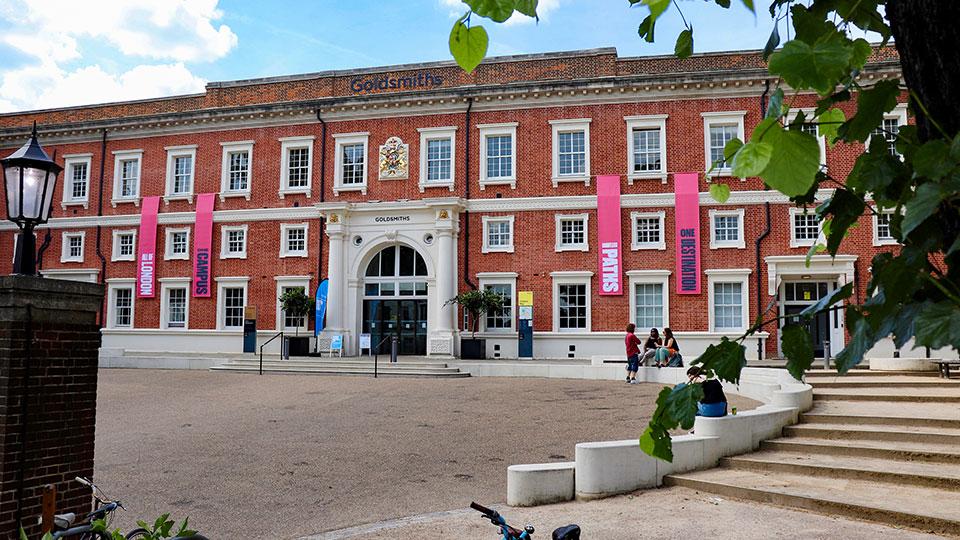
Students studying this programme are based in dedicated postgraduate studio space in the Laurie Grove Baths, at the centre of the campus, right next to Goldsmiths CCA.
Visit us
During the year we hold regular Postgraduate Art Open Days that we encourage you to attend if you can.
You can also explore our exhibitions, events and other work on the School of Art pages.
Entry requirements
Applicants for Year One
You must have or expect to be awarded an undergraduate degree of at least second class standard (or international equivalent), plus an element of professional experience (interning in a gallery or equivalent institution, curating your own shows or degree shows etc). This experience is absolutely essential to demonstrate that you have a clear sense of current trends and activities in contemporary art. This experience should be expanded upon in your personal statement.
There's no preference for art/art history and students from a non-art background are welcome to apply. However, the course is run by the School of Art, and students should consider themselves to be curating practitioners.
Applicants for entry directly onto Year Two
You must have already completed and passed the coursework of one year for an equivalent Masters programme in Curating. You must also show through interview and (where appropriate) portfolio that you have established a professional practice. This experience should be expanded upon in your personal statement.
International qualifications
We accept a wide range of international qualifications. Find out more about the qualifications we accept from around the world.
If English isn’t your first language, you will need an IELTS score (or equivalent English language qualification) of 6.5 with a 6.5 in writing and no element lower than 6.0 to study this programme. If you need assistance with your English language, we offer a range of courses that can help prepare you for postgraduate study.
Fees and funding
Annual tuition fees
These are the PG fees for students starting their programme in the 2026/2027 academic year.
- Home - full-time: £11800
- Home - part-time: £5900
- International - full-time: £27500
If your fees are not listed here, please check our postgraduate fees guidance or contact the Fees Office, who can also advise you about how to pay your fees.
It’s not currently possible for international students to study part-time under a student visa. If you think you might be eligible to study part-time while being on another visa type, please contact our Admissions Team for more information.
If you are looking to pay your fees please see our guide to making a payment.
Funding opportunities
Explore the Goldsmiths scholarships finder to find out what funding you may be eligible for.
If you are a UK student you may be eligible for a postgraduate loan.
Meanwhile our Careers Service can also offer advice on finding work during your studies.
Paying your fees
Find out about paying your tuition fees.
Additional costs
In addition to your tuition fees, you'll be responsible for any additional costs associated with your course, such as buying stationery and paying for photocopying. You can find out more about what you need to budget for on our study costs page.
There may also be specific additional costs associated with your programme. This can include things like paying for field trips or specialist materials for your assignments. Please check the programme specification for more information.
How to apply
You apply directly to Goldsmiths using our online application system.
To complete your application, you will need to have:
- Details of your academic qualifications
- The email address of your referee who we can request a reference from, or alternatively a copy of your academic reference
- Copies of your educational transcripts or certificates
- A personal statement
If appropriate, your application can be accompanied by images showing examples of previous curatorial projects (it's not necessary to showcase your own art work). You can upload images or link to your online portfolio in your application.
Professional/work experience
Make sure you refer to your work experience in your personal statement.
If you have completed an internship, please be specific about what this entailed and how it is relevant to the programme. Also mention which curators/practioners have influenced you – we are looking for individuals with specific passions. It may be relevant to mention specific exhibitions or artworks that you have seen in person that were meaningful to you (and explain why), or discuss the art-specialist magazines or books that you have read.
In summary, be prepared to discuss the specific elements (whether artworks, artists, art writing, philosophy, exhibitions, or more) that brought you to take a special interest in contemporary art curating.
When to apply
You can apply all year round but there is a deadline of 26 January for entry for the following September.
Admissions interviews predominantly take place from January to April in the year of academic enrolment. In unusual circumstances, late or early applicants will be considered. Please contact the School of Art for details.
We encourage you to complete your application as early as possible, even if you haven't finished your current programme of study. It's very common to be offered a place that is conditional on you achieving a particular qualification.
If you're applying for funding, you may be subject to an earlier application deadline.
Further guidance
You'll be able to save your progress at any point and return to your application by logging in using your username/email and password.
Read our guide to applying for a postgraduate degree at Goldsmiths.
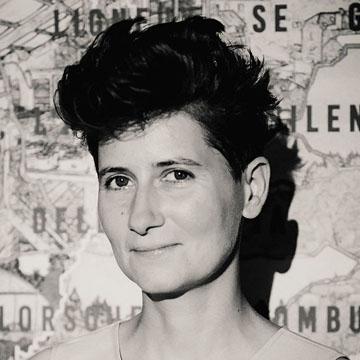
You will also be taught by:
- Helena Reckitt, Reader in Curating
- Paul Clinton, Lecturer in Curating
- Chris Hammond, Lecturer in Curating
- Kirsty Ogg, Lecturer in Curating
- Professor Andrew Renton, Professor of Curating
- Dr Irene Revell, Lecturer in Curating