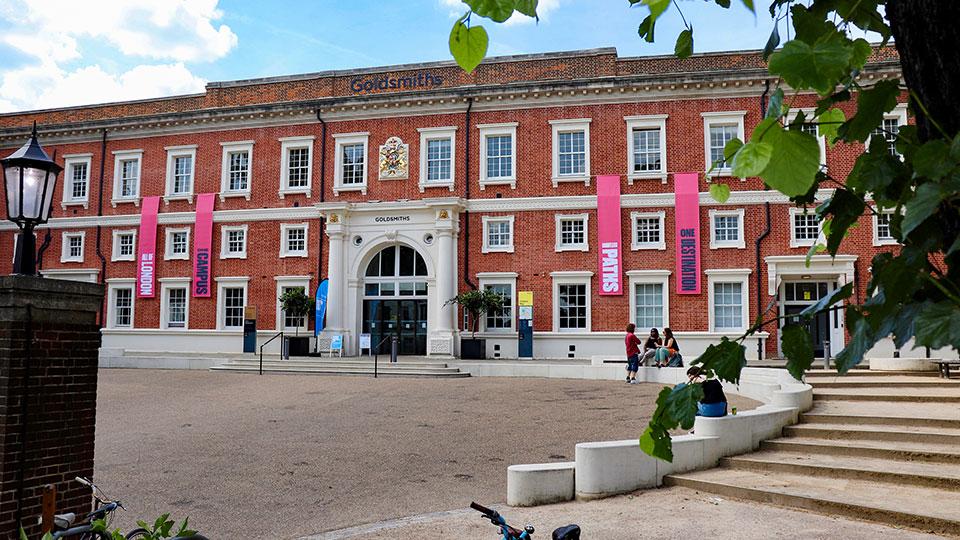
Foundation Year Computing
Content navigation menu
Why study the Foundation Year in Computing at Goldsmiths
Our Foundation Year in Computing is an alternative entry route for students without the formal academic profile to enter degree-level study directly.
- We will help you develop your undergraduate academic skills, while also teaching you the foundations of programming, problem solving and maths.
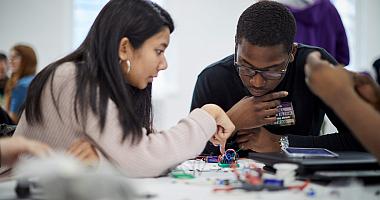
- Teaching on the programme is strongly focused on practical work in real-world situations, so you'll develop excellent technical and interpersonal skills that will enhance your employability.
- You don’t need to know how to code before you start. You'll begin by creating simple software programs, before gradually building your expertise.
- Your practical work will be underpinned by theory ranging from problem-solving strategies to professional software development models.
- You’ll benefit from Goldsmiths’ unique interdisciplinary approach to teaching computing. You'll explore how computing interacts with the arts, humanities and social sciences.
- When you successfully complete the Foundation Year, you’ll be eligible to progress onto one of the following undergraduate computing degrees: BSc Computer Science and its pathways, BSc Business Computing (Entrepreneurship), or BSc Creative Computing.
Contact
If you have specific questions about the degree, contact Betty Fyn-Sydney
UCAS
Length
1 year full-time or 2 years part-time (Foundation) followed by 3 years full-time (undergraduate degree)
Study mode
In-person
Online
Fees
Home - full-time: £9790
Home - part-time: £4895
International - full-time: £23000
School
Subjects
Computer Science and AI
Creative Technology

We are an Adobe Creative Campus. During your studies, you will be able to use Photoshop, Premiere Pro, Illustrator and more for free on your own devices.
Watch videos about your course
What you'll study
The Foundation Year is designed to prepare you for undergraduate study in computing. During the year you'll:
- Learn the foundations of how to program a computer
- Work on practical examples of computing applications
- Learn to develop simple software programs, which gradually increase in complexity
- Develop your mathematical and problem-solving skills
- Enhance your general study skills
The Foundation Year includes four integrated units of study:
| Module title | Credits |
|---|---|
| Studying Computers | 30 credits |
| Foundations of Problem Solving | 30 credits |
| Foundations of Programming | 30 credits |
| Foundations of Mathematics for Computing | 30 credits |
Teaching style
This programme is taught through a mixture of lectures, tutorials, workshops and laboratory sessions. You’ll also be expected to undertake a significant amount of independent study.
How you'll be assessed
You’ll be assessed by a variety of methods, depending on your modules. These may include coursework, examinations, group work and projects.
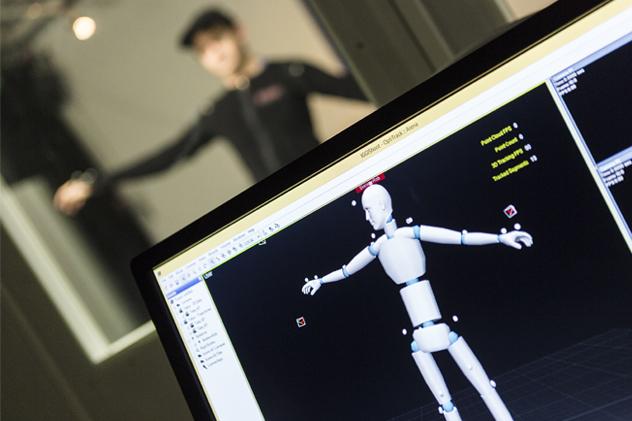
Computing facilities at Goldsmiths include a VR lab equipped with a full multi-camera motion capture studio, similar to that used in the making of Avatar and The Last of Us.
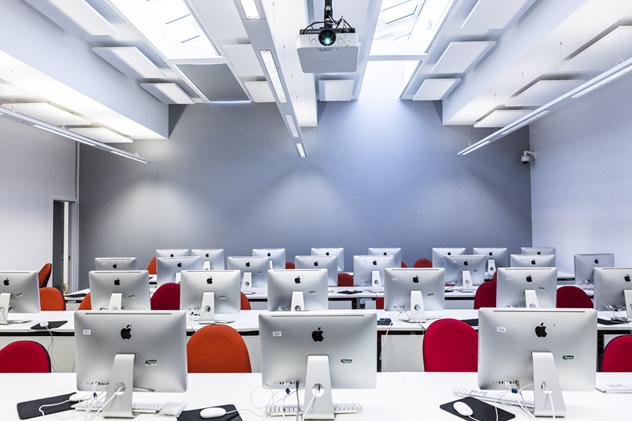
The Goldsmiths computer suites are equipped with more than 200 iMacs running Windows 10 and MacOS in parallel.
Careers
The explosive and ever-growing use of technology in business and commerce means that there are a whole range of different career possibilities for computing graduates.
In terms of job opportunities and salaries, the IT sector is well ahead of most other industrial and commercial sectors.
Where do Goldsmiths computing graduates work?
Some of the recent graduate-level careers for computing alumni have included:
- Application programmer
- Mobile app developer
- Web developer
- Video game developer
- Film special effects and post-production
- Computer music/sound engineer
- Interface designer
- Systems analyst
- Database manager
Employers include:
The pace of change in the computing sector is rapid, and you may be pursuing careers and using digital methods we cannot yet imagine. You can read more about possible career options after you graduate on our computing careers page.
Skills
The Foundation Year prepares you with the skills and knowledge necessary for studies in computing. If you successfully complete the Foundation Year and are admitted to one of our undergraduate degrees you'll benefit from technical skills and opportunities including:
- A strong understanding of how to design, develop and apply software in all areas of business and industry
- An awarenesss of the fundamentals of computing (hardware, software, architecture and operating systems)
- An understanding of programming languages
- A clear sense of the issues involved in building and maintaining reliable software for the sophisticated demands of today's market and for the software industry as it develops throughout the 21st century
- An understanding of the social context and visual design aspects of software development together with the technical skills of programming
Our degrees have a large proportion of practical work in which you must deliver software projects, both individually and in groups. This mirrors as closely as possible a real world work environment. These projects develop your technical skills but also require you to tackle the broader aspects of the software development process, such as understanding users' needs and requirements and the design of interfaces on a number of platforms – from web pages to smartphones.
You'll also gain skills in teamwork, creative thinking, report writing, time management and organisation, presenting reasoned arguments to a range of audiences, and retrieval of information – all of which are sought by graduate employers.
Industrial placement year
Many of our degree programmes include an optional Industrial Placement Year between the second and third year of study. This offers you the invaluable opportunity to develop the practical skills and real-world experience that is sought after by employers. You're supported throughout your placement year by a placement tutor, who provides you with guidance and liaises between you and your employer.
Entry requirements
There are no specific formal entry qualifications for this programme, and we will consider all relevant qualifications and related experience you may have.
You will be required to submit a personal statement with your application. This is your opportunity to demonstrate your interest in the subject you’ve applied for. Your referees are also welcome to include any relevant contextual comments around your academic achievements. We’ll look at all these things when making a decision on your application.
International qualifications
We also accept a wide range of international qualifications. Find out more about the qualifications we accept from around the world.
If English isn’t your first language, you will need an IELTS score (or equivalent English language qualification) of 6.0 with no element lower than 5.5 to study this programme. If you need assistance with your English language, we offer a range of courses that can help prepare you for degree-level study.
Fees and funding
Annual tuition fees
These are the UG fees for students starting their programme in the 2026/2027 academic year.
- Home - full-time: £9790
- Home - part-time: £4895
- International - full-time: £23000
If your fees are not listed here, please check our undergraduate fees guidance or contact the Fees Office, who can also advise you about how to pay your fees.
It’s not currently possible for international students to study part-time if you require a Student Visa, however this is currently being reviewed and will be confirmed in the new year. Please read our visa guidance in the interim for more information. If you think you might be eligible to study part-time while being on another visa type, please contact our Admissions Team for more information.
If you are looking to pay your fees please see our guide to making a payment.
Funding opportunities
We offer a wide range of scholarships and bursaries, and our Careers Service can also offer advice on finding work during your studies. Find out more about funding your studies with us.
Additional costs
In addition to your tuition fees, you'll be responsible for any additional costs associated with your course, such as buying stationery and paying for photocopying. You can find out more about what you need to budget for on our study costs page.
There may also be specific additional costs associated with your programme. This can include things like paying for field trips or specialist materials for your assignments. Please check the programme specification for more information.