MA Theatre, Performance and Participation
Content navigation menu
Why study MA Theatre, Performance and Participation at Goldsmiths
This interdisciplinary MA is for performance makers, researchers, facilitators and writers who want to use performance to respond to the most urgent social, political and ecological issues of our times.
The MA Theatre, Performance & Participation programme allows you to specialise in one of four pathways while working and learning across disciplines:
- Performance Makers & Theatre Artists
- Applied Theatre & Participatory Artists
- Writers & Dramaturgs
- Cultural Producers & Critical Researchers
This programme equips you with the skills, networks and resilience to contribute to, build and reimagine artistic and cultural structures in theatre, performance and participation.
It is designed for socially aware, critically curious and innovative artists, facilitators and researchers that want to develop their creative practice, theoretical analysis, and new forms of collaboration and activism.
You will:
- expand your understanding of the contexts and politics shaping performance, while critically engaging with your role and approach as an artist, collaborator and/or researcher
- experiment with different ways of making or using performance and develop an innovative, socially responsive practice
- delve deeply into knowledge and skills related to your specific discipline
- develop, realise and reflect on an independent project, engaging with material of personal and professional interest
Contact
If you have specific questions about the degree, contact Dr Katja Hilevaara , Dr Molly McPhee .
Length
1 year full-time or 2 years part-time
Entry requirements
You should have (or expect to be awarded) an undergraduate degree of at least 2:2 standard in a relevant subject. You might also be considered if you have relevant experience and can show you have the ability to work at postgraduate level.
Fees
Home - full-time: £11800
International - full-time: £22000
School
Subject
What you'll study
Practice and theory are continually intertwined through workshops, seminars and independent study.
In Autumn and Spring terms, you will have classes two days a week. In the Summer term, you will have taught classes for the first three weeks and then will be engaged in independent projects with tutorials and supervision arranged at times to suit you.
You'll study the following compulsory modules:
| Module title | Credits |
|---|---|
| Catalysts & Foundations | 30 credits |
| Modes & Forms | 30 credits |
| Professional Specialisms | 60 credits |
| Creative Research Project | 60 credits |
Note about optional modules (if available): The above is indicative of the typical modules offered, but is not intended to be construed or relied on as a definitive list of what might be available in any given year. The module content and availability is subject to change.
Teaching
You will be taught on campus through face-to-face teaching led by leading researchers, practitioners, technicians and designers. We believe learning should happen in and through a range of contexts that facilitate a wide variety of styles of learning.
This includes practical sessions, seminars, scenographic labs, tutorials, student-led and/or independent workshops and rehearsals, industry placements, study trips, as well as opportunities for guided and peer-assisted learning, especially in production development. In addition, there are numerous enrichment opportunities woven throughout the degree, including alumni networking in leading creative fields.
How you'll be assessed
You will be assessed through a wide variety of methods, including group performances and presentations, essays, practical projects, creative portfolios, digital submissions, reflective logs, seminar presentations and independent research projects.
Facilities
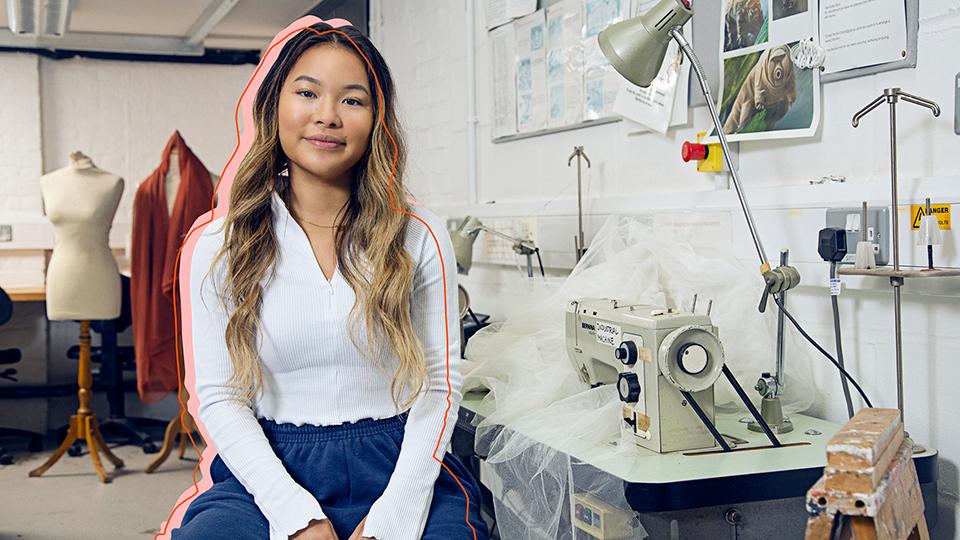
We deliver teaching in five theatre studios as well as the fully equipped George Wood Theatre. Further facilities include a recording booth, media editing suite, scenographic workshops, and a costume design studio.
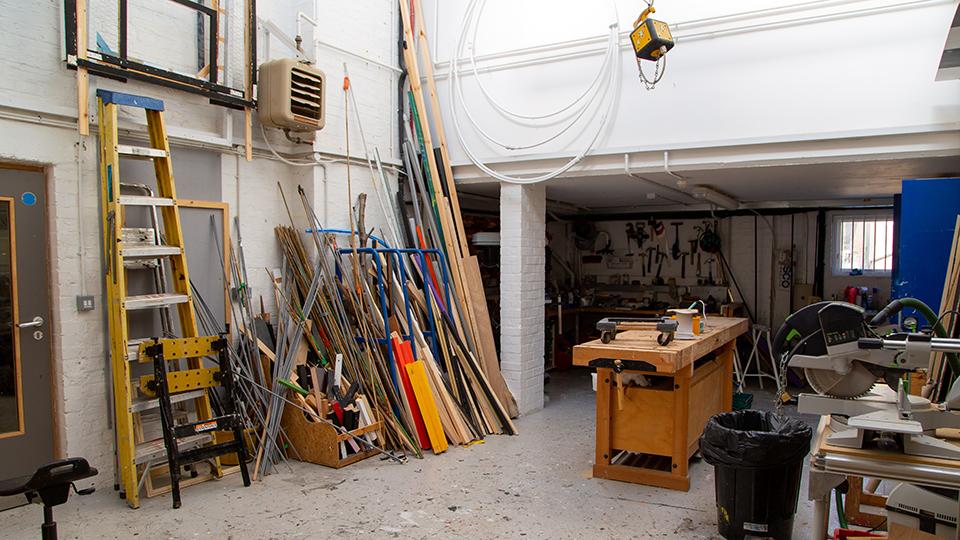
Set construction workshop
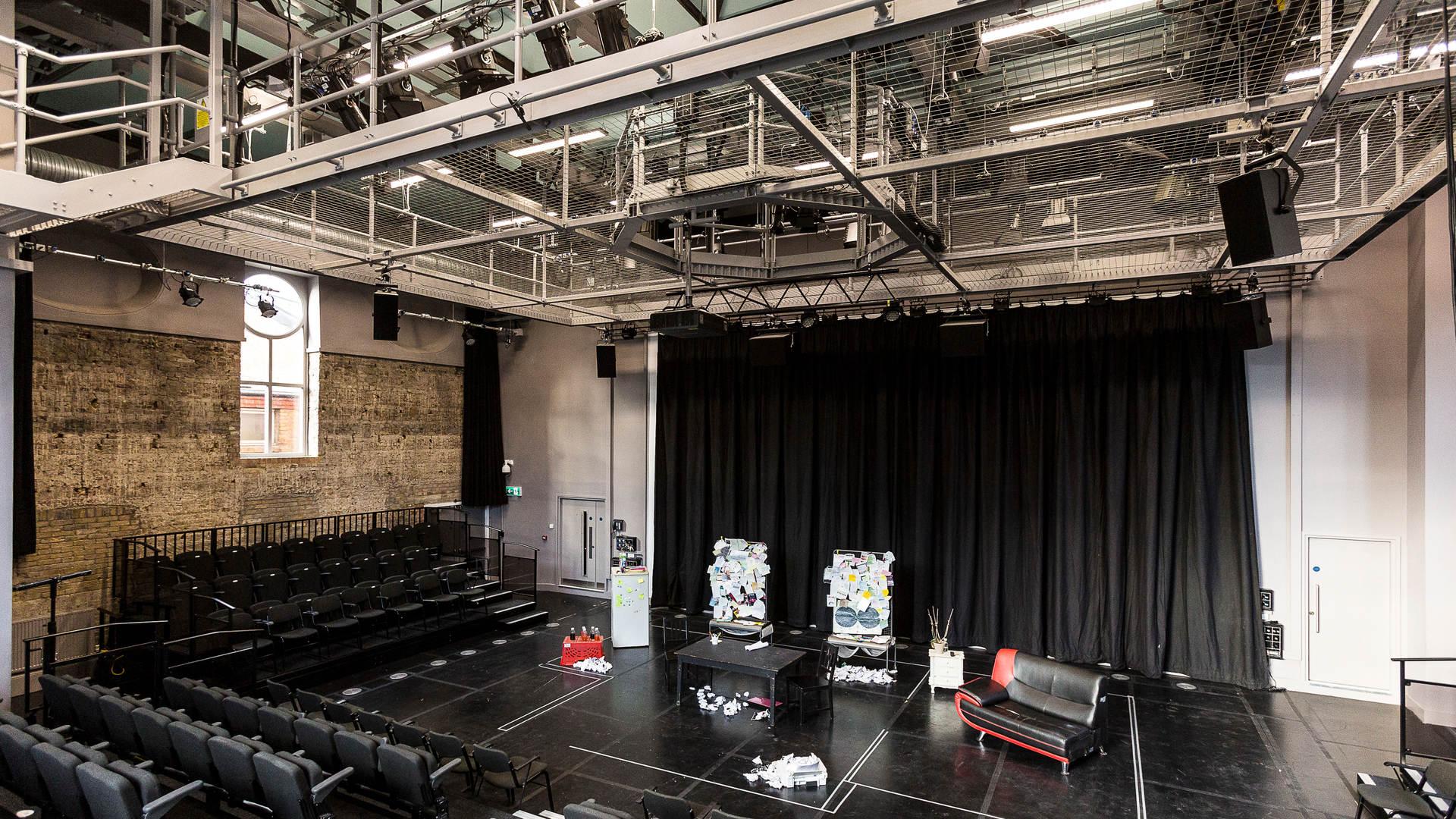
George Wood Theatre
Fees and funding
Annual tuition fees
These are the PG fees for students starting their programme in the 2026/2027 academic year.
- Home - full-time: £11800
- International - full-time: £22000
If your fees are not listed here, please check our postgraduate fees guidance or contact the Fees Office, who can also advise you about how to pay your fees.
It’s not currently possible for international students to study part-time under a student visa. If you think you might be eligible to study part-time while being on another visa type, please contact our Admissions Team for more information.
If you are looking to pay your fees please see our guide to making a payment.
Funding opportunities
Find out more about postgraduate fees and explore funding opportunities. If you're applying for funding, you may be subject to an application deadline.
Additional costs
In addition to your tuition fees, you'll be responsible for any additional costs associated with your course, such as buying stationery and paying for photocopying. You can find out more about what you need to budget for on our study costs page.
There may also be specific additional costs associated with your programme. This can include things like paying for field trips or specialist materials for your assignments, as well as theatre tickets. Please check the MA Theatre, Performance and Participation (PDF) programme specification for more information.
Entry requirements
We welcome candidates to the programme who are interested in exploring their own creative practice in theatre and performance, and who demonstrate a competence for independent research and a keenness to work collaboratively.
Qualifications
You should have (or expect to be awarded) an undergraduate degree of at least second class standard in a relevant/related subject.
You might also be considered for this programme if you aren’t a graduate or your degree is in an unrelated field, but have relevant experience and can show that you have the ability to work at postgraduate level.
International qualifications
We accept a wide range of international qualifications. Find out more about the qualifications we accept from around the world.
If English isn’t your first language, you will need an IELTS score (or equivalent English language qualification) of 6.5 with a 6.5 in writing and no element lower than 6.0 to study this programme. If you need assistance with your English language, we offer a range of courses that can help prepare you for postgraduate-level study.
How to apply
Apply directly to Goldsmiths using our online application system
Before submitting your application you’ll need to have:
- Details of your academic qualifications
- The email address of your referee who we can request a reference from, or alternatively a copy of your academic reference
- Copies of your educational transcripts or certificates
- A personal statement – this can either be uploaded as a Word Document or PDF, or completed online. Please see our guidance on writing a postgraduate statement
You'll be able to save your progress at any point and return to your application by logging in using your username/email and password.
When to apply
We encourage you to complete your application as early as possible, even if you haven't finished your current programme of study. It's very common to be offered a place that is conditional on you achieving a particular qualification. Late applications will only be considered if there are spaces available.
Find out more about applying.
Careers
Where this degree can take you
- Performance writers and dramaturgs
- Performers, directors and choreographers
- Setting up independent community and participatory companies
- Working as freelance drama workshop directors and facilitators
- Theatre work with elders
- Creative work in schools and pupil referral units
- Cross-arts projects in a range of educational, community and social contexts
- Museum education
- Theatre in prisons and with at-risk-youth
- Study towards PhD qualification
- Educating in schools, colleges and universities
- Literary management and script development
- Setting up theatre companies
- Leading, innovating and developing within cultural organisations
- Curating, programming and producing experimental performance events
- Directing arts venues
Our alumni
- Tania el Khoury is a Live Artist, Director of Centre for Human Rights and Arts and Distinguished Artist in Residence and Associate Professor at Bard College, New York. She is the recipient of the Creative Capital Award, Herb Alpert Award in the Arts, Soros Art Fellowship, the Bessie Outstanding Production Award, the International Live Art Prize, the Total Theatre Innovation Award, and the Arches Brick Award. She served as a member of the ANTI Festival Advisory Board and is currently serving on the Advisory Board of The Centre for Art and the Political Imaginary.
- Nomakhwezi Becker is a South African–German interdisciplinary artist and facilitator working across theatre, poetry, and storytelling. Her work has been platformed at the Barbican Centre, Southbank Centre, Westminster Abbey, Translationale Berlin, Poetry Africa, and the National Arts Festival (Ovation Award, 2019). She has been a member of Projekt Europa: Projekt Empower cohort 2025, Barbican Young Poets (’24 & ’25), Camden People’s Theatre Starting Blocks 2025, and High Rise New Gens 2024.
- Ang Xiao Ting is a Singapore-based freelance theatre practitioner - actor, director, programmer and dramaturg. Her works have been shown in: Australia, Japan, Shanghai, Taiwan, Canada, Sharjah (UAE) and the U.K. She is an Associate Artist with The Theatre Practice and Programmer for Practice Tuckshop. Her Eco-Theatre work has been featured on publications such as Vogue and she has been invited to speak on numerous international platforms, such as the Prague Quadrennial, Asia Pacific Arts Centres Conference, as well as internationally-renowned institutions such as University of the Arts (Singapore) and National Institute of Dramatic Arts (NIDA, Australia). She was also featured on the Robb Report list of 'Thought Leaders of 2024'.
- Nabilah Said is a Singapore-based playwright, editor, and artist who works with text as material across different forms. Her play ANGKAT (2019) won Best Original Script at Singapore’s Life Theatre Awards and is a text of study in the National University of Singapore. Her play Inside Voices (2019) won the Outstanding New Work award at VAULT Festival, London, and was published by Nick Hern Books. She is currently under commission of Malthouse Theatre in Melbourne. Nabilah is a former arts correspondent and editor and has developed a voice as a cultural commentator in Singapore and Southeast Asia.
- Somebody Jones is a Los Angeles playwright/dramaturg currently working in London whose work celebrates and champions Black culture with all its charms and complexities. Somebody is currently a part of Soho Theatre Writer’s lab and an Artistic Associate with Nouveau Riche. She was shortlisted for the Alfred Fagon Award (2021) and a finalist for the Women’s Prize for Playwriting (2022). Her verbatim work Black Women Dating White Men recently had a successful season at The Drayton Arms Theatre, and she has been commissioned by the Bush Theatre.
- Juliet Gilkes Romero is Writer in Residence at the National Theatre 2022/2023 attached to the New Works Department. She is recipient of the Alfred Fagon award for Best New Play 2020 and received the Roland Rees Bursary 2019 and the BBC World Service Alexander Onassis Research Bursary. Her plays include: The Gift filmed for Jermyn Street Theatre’s 15 Heroines of Greek Tragedy season 2020. The Whip performed at the RSC’s Swan Theatre 2020, Day of The Living performed at The Other Place as part of RSC’s Mischief Festival 2018, At The Gates of Gaza, Birmingham Repertory Theatre & tour, winner of Writer’s Guild Great Britain Best Play Award 2009
- Arielle M. John is an artist, educator, poet, social activist and healer based in Trinidad. She has performed across the Carribean, the United States and the United Kingdom, including at the Cheltenham Literature Festival and the International Brave New Voices Poetry Slam Festival. She published her second chapbook of poetry in 2019. Her work has been described as medicine for Atlantic peoples and including practices in community-building, eco-theology and decolonization as a lifestyle. She founded Blue Oracle Healing Arts in 2020 and leads a number of nonprofit organizations in Trinidad and Tobago, including Girl Be Heard TT, the Sacred Spirit Sisterhood and BE Entertainment.
- Phoebe Patey-Ferguson is a Lecturer at Rose Bruford College, researcher, writer, producer and live artist. They specialise in the social contexts of contemporary performance, with a focus on queer and trans practices in festivals and nightlife, and their work examines how subcultural and countercultural practices by marginalised artists generate community, resist assimilationist narrative and embrace radical creative methodologies. They are currently co-research lead for The Night Club, an international queer performance research network, and co-Chair of the Board for Duckie. They have worked extensively as a producer and cultural administrator, delivering international festivals of experimental performance with such organisations as LIFT, In Between Time and Vogue Fabrics Dalston.
- Maria Luisa Vergara is a Public Policies consultant, performer and academic based in Santiago, Chilé. Her work centres on the development of research for the creative, cultural, and digital sectors in Chilé, and includes the design, evaluation and measurement of public policies to tackle poverty and social injustice. She is currently Social Director at Olivo, a non-profit foundation that supports civil society organizations working in the fields of Education, Culture and Public Space, and previoulsy worked as a cabinet advisor and researcher at the Ministry for Social Development and the Ministry of Education. She also leads course on Microeconomics at Pontificia Universidad Católica de Chilé and Universidad Diego Portales.
You will also be taught by:
.jpg)