Computing lecturer contributes to album marking Daphne Oram centenary
Primary page content
Dr Eleonora Oreggia from the School of Computing is contributing to a special album and performance at the Barbican celebrating the work of pioneering electronic musician Daphne Oram.
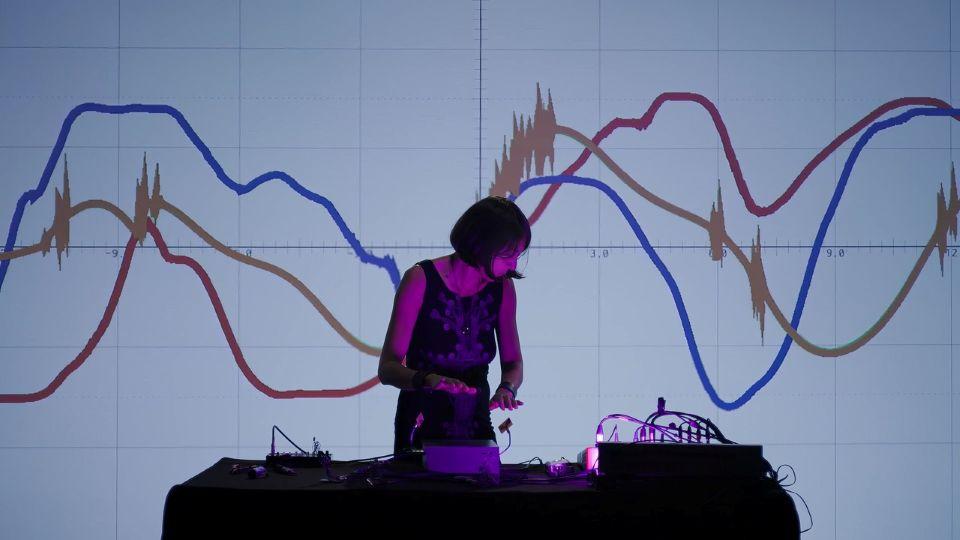
Dr Eleonora Oreggia performing with the REBUS instrument (photo credit: still from video by Mind the Film)
Next month, the Barbican will host ‘An Ode to Oram,’ a concert marking 100 years since the birth of Daphne Oram. Oram (1925 – 2003) was a trailblazer in electronic music, co-founding the BBC Radiophonic workshop, inventing her own instrument - based on the Oramics technique - and composing.
Dr Eleonora Oreggia, Lecturer in Electronic Music, Computing and Technology, will be performing under her artist monicker xname. Alongside the concert, artists were invited to contribute to a special ten-track compilation album, responding to samples from Daphne Oram’s archive (which is housed at Goldsmiths).
Daphne Oram was following a dream. She was approaching things in a completely different way to everyone else at her time. Not just in the music she made, but in creating new tools.
Dr Eleonora Oreggia, School of Computing
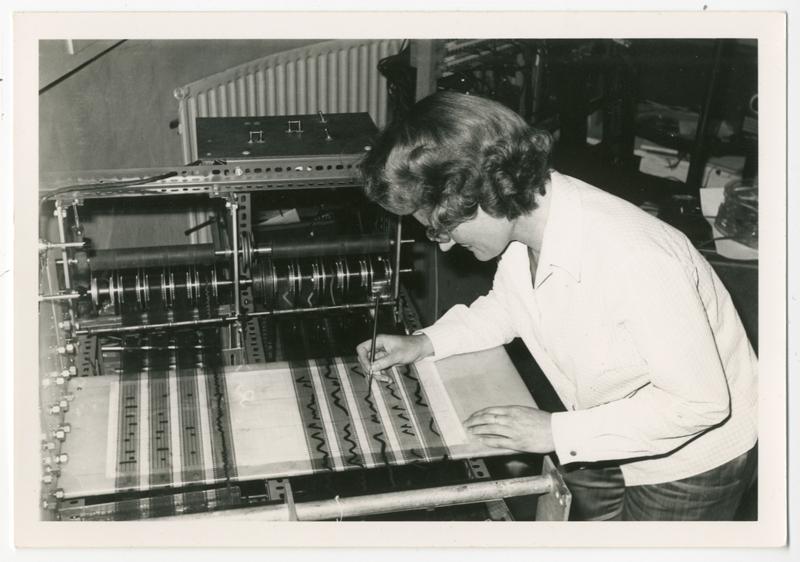
Photograph of Daphne Oram at the Oramics Machine in Tower Folly (Daphne Oram Collection, Special Collections & Archives, Goldsmiths, University of London)
Dr Oreggia’s contribution to the album is called SEANCE, and features her invention, the REBUS instrument – an instrument which resembles the theremin but uses electromagnetic waves.
In 2024, Dr Oreggia received an Oram Award, which recognises her innovation in sound and music related technology.
Speaking about why Oram’s legacy is important, Dr Oreggia said: “Daphne Oram was one of the first women working in electronic music, for me she is like a guide, and I really liked her approach to technology.
“For thousands of years, the main voices, in all fields, have been the voices of men. Therefore, a lot of technologies have been developed in a way that mirrors this masculine approach. But Daphne Oram did not emulate a male approach to technology: in fact, she wanted to make a musical instrument that had something “human”, envisioning the possibility of drawing electronic sounds. She intertwined poetry, imagination and metaphysics with reflections around mathematics and technology, and really thought about inventions through personal experiences and feelings.”
REBUS - an instrument which uses electromagnetic waves
In this video Dr Eleonora Oreggia presents her instrument REBUS, an electromagnetic musical machine which can be played by plucking electromagnetic waves, and explains the roots of her invention in the practice of making music with lights, which she explored for over ten years with the performance Phantasmata.
This film was made possible by the Early Career Research Fund, Goldsmiths University of London. Video by Mind the Film.
Find out more about the Daphne Oram archive, which is housed in Goldsmiths Special Collections and Archives, and the Goldsmiths Electronic Music Studios.