Simple changes make streaming TV easier for older viewers
Primary page content
Making simple changes to streaming television set-ups can reduce problems for older viewers by half, research from a Goldsmiths spin-off company shows.
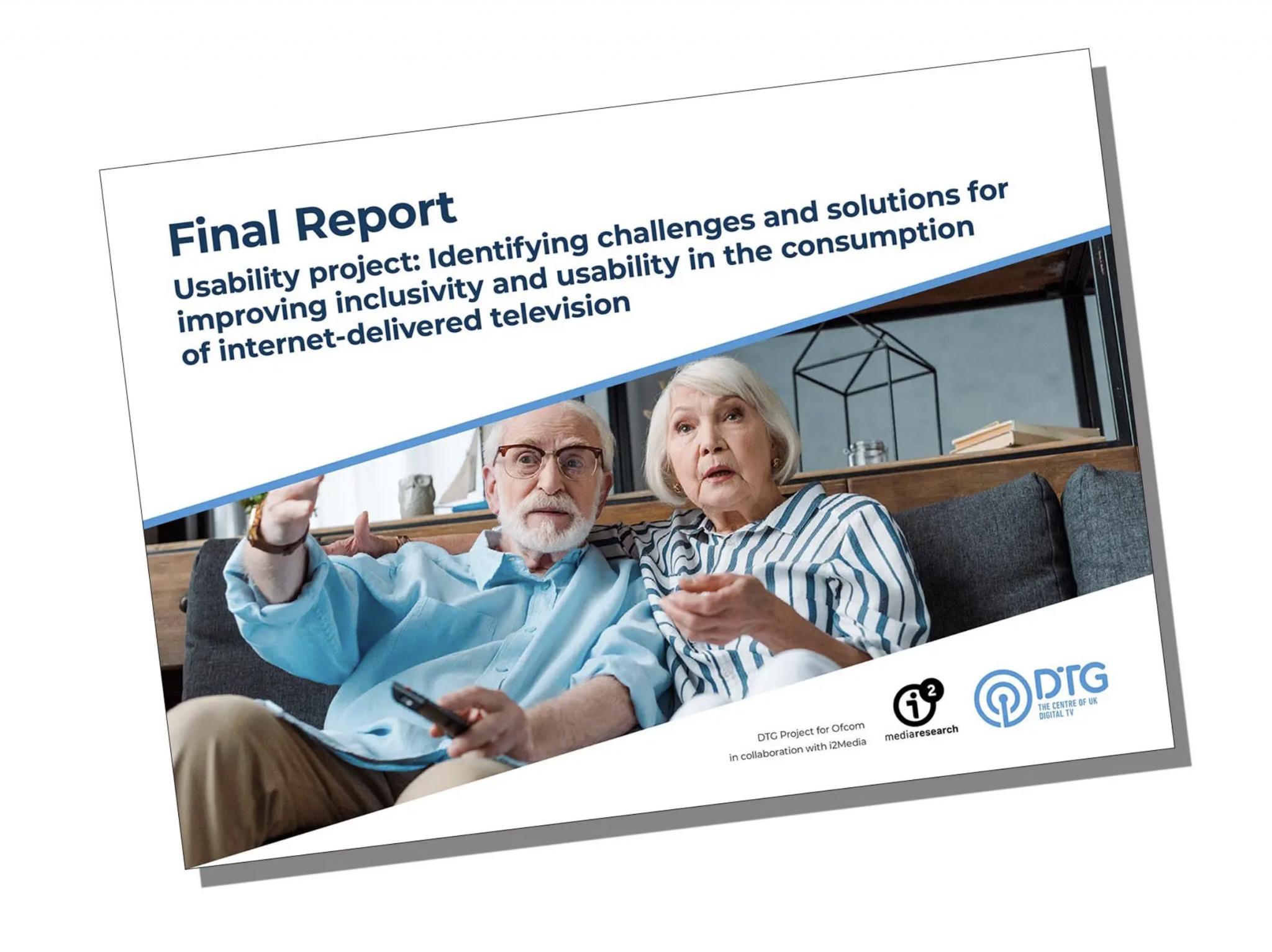
The new study, Inclusivity and Visibility in Internet Delivered Television
Small design modifications can overcome the problems older viewers experience, according to the new research commissioned by Ofcom and conducted by Goldsmiths' i2 media research team in collaboration with the Digital Television Group (DTG).
The study entitled "Identifying challenges and solutions for improving inclusivity and usability in the consumption of internet-delivered television" put participants aged 65 and over through real-world testing scenarios run by i2 media.
These looked across major IPTV (Internet Protocol Television) platforms which deliver television content over the internet rather than traditional cable or satellite networks. The study observed how participants completed everyday tasks like finding live channels, signing into apps, and searching for content.
The research reveals that voice search, when supported with minimal guidance, consistently outperformed traditional electronic programme guides, pointing to untapped potential for confidence-building tools that already exist in most platforms.
Navigation via logical channel numbering (LCN) proved universally accessible across all participant groups, confirming its value as a simple but powerful inclusion enabler that platforms often overlook.
Participants consistently identified cluttered home screens, inconsistent menu structures, complex sign-in processes and poor remote-control design as the primary barriers preventing them from accessing content they wanted to watch.
A prototype "TV Simple Screen" overlay developed by DTG achieved the most dramatic improvements reducing usability barriers by almost half across the tested scenarios, with the greatest gains among participants with lower digital confidence.
Our study demonstrates that usability sits at the heart of how people connect with television. By adopting these recommendations, manufacturers, platforms and broadcasters can reduce barriers, increase confidence, and deliver innovations with genuine social and commercial impact.
Professor Jonathan Freeman, Managing Director of i2 media and Professor of Psychology at Goldsmiths
The findings challenge assumptions that accessibility issues affect only the current older generation. Without intervention, the same usability barriers will confront future audiences as they age, creating a growing challenge for platforms, manufacturers and broadcasters.
The study provides a clear evidence base for practical solutions that industry can implement immediately, moving beyond identifying problems to testing what actually works.
Based on the testing results, the study recommends:
- Embed inclusive design principles directly into mainstream product development
- Simplify navigation with uncluttered home screens and consistent menu structures
- Improve hardware accessibility through better remote-control ergonomics and clearer terminology
- Establish industry standards with best-practice guidelines refreshed annually
DTG Chief Executive Richard Lindsay-Davies said: "Television is more than entertainment, it is companionship, information, and independence. This research proves that small, thoughtful changes can have a transformative effect on confidence and usability. Inclusive design doesn't just support older viewers – it benefits everyone."