Lecture theatre dedicated to Linton Kwesi Johnson
Primary page content
Goldsmiths has honoured one of its most prominent graduates by dedicating a lecture theatre to poet and activist Linton Kwesi Johnson (LKJ).
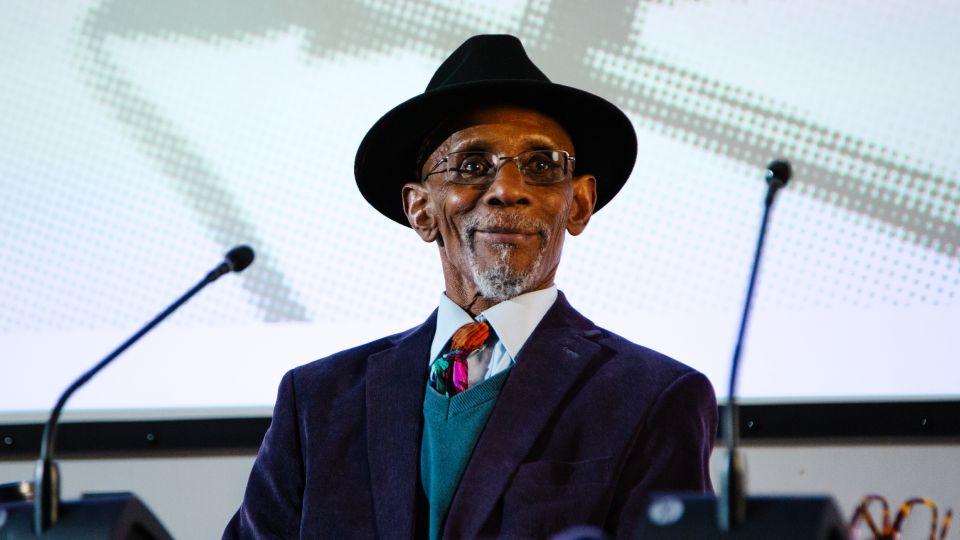
Linton Kwesi Johnson CD, Honorary Fellow and alumnus
LKJ was joined by students, alumni, artists, and community members at an evening to mark the dedication and celebrate his legacy and a life that has shaped the cultural and political fabric of Britain for over five decades.
Goldsmiths named the lecture theatre in the Professor Stuart Hall Building theatre as part of our 120th anniversary celebrations. The act of recognition is more than a tribute and is a statement that education and creativity can challenge injustice and keep memory alive.
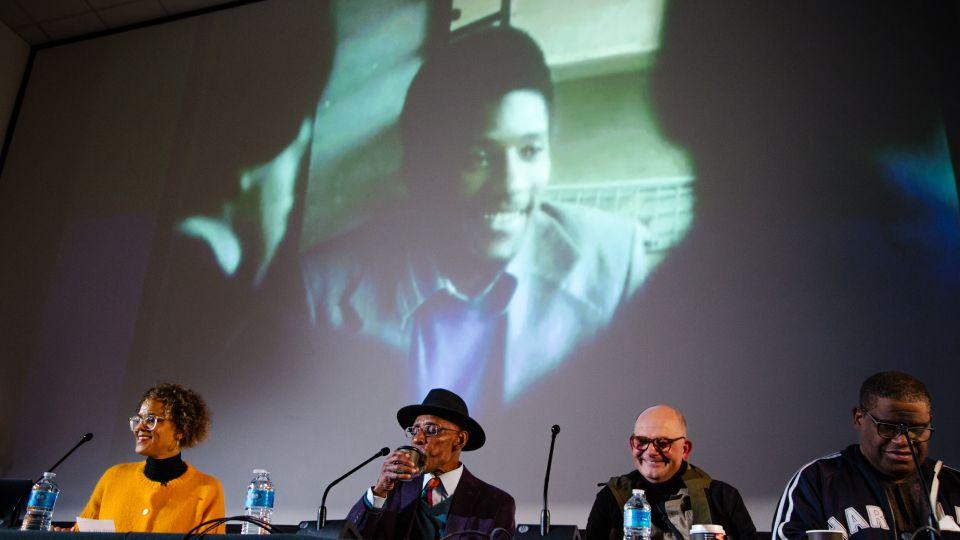
Linton Kwesi Johnson seated at the panel table during the dedication event, with Dr Omega Douglas, Professor Les Back and Gary Younge.
A voice that changed the conversation
When LKJ arrived at Goldsmiths in the 1970s to study sociology, the college was known for its laid-back atmosphere and vibrant intellectual life. “When I was a sociology undergraduate there were only a few black students here. I felt at ease in a friendly learning environment. That was really cool,” he recalled.
He told the sold-out audience: “In spite of many challenges Goldsmiths has not only retained its reputation for academic excellence, it has also kept its cool. I would like to thank my alma mater for doing me the great honour of in the naming of the lecture theatre.”
Goldsmiths helped nurture a voice that would go on to pioneer “reggae-poetry” a fusion of verse and rhythm that spoke to the realities of racism, migration, and resistance and often involved collaboration with dub producer and musician Dennis Bovell who like LKJ holds an Honorary Fellowship from Goldsmiths.
This work became a soundtrack to struggle, confronting state power and amplifying the voices of the marginalised. Linton was the first Black poet published in the Penguin Modern Classics series, and his work remains a cornerstone of Black British cultural life.
.jpg)
Rofeda Bougaga, a New Cross Fire bursary holder, reads from Linton Kwesi Johnson’s poetry during the event, underscoring the living connection between his words and Goldsmiths’ ongoing commitment to memory, justice, and care.
‘We shall never forget’: memory and the New Cross Fire
The dedication took place in the week before the 45th anniversary of the New Cross Fire, the tragedy on 18 January 1981 that claimed 14 young Black lives.
At the dedication, LKJ spoke with passion about the tragedy and his ongoing mission to ensure its memory never fades. He said: “In my poem the New Crass Massakah I tried to capture the mood of the moment and I’ve been telling the story at every opportunity – poetry readings, reggae concerts, for over 40 years. As one of the posters read on the Black people’s day of action: we shall never forget."
LKJ also talked about the significance of Goldsmiths’ decision to reflect his role in continuing to tell the story, saying: “As we approach the 45th anniversary of the New Cross Massacre, Goldsmiths has decided to memorialise a tragedy of historic significance, a turning point of the Black experience in Britain that happened right here on its own doorstep.
This act of memorialising puts paid to the notion that Goldsmiths is just another ivory tower.
Linton Kwesi Johnson CD
The tragedy led to an uprising in Black activism leading to the Black People’s Day of Action in March 1981. The dedication evening reunited organisers and attendees of this historic event, and LKJ also remembered those who fought for justice but are no longer with us: John La Rose, Darcus Howe and Dr Aggrey Burke.
.jpg)
Linton Kwesi Johnson seated at the panel table during the dedication event, reflecting on a lifetime of work that has shaped Black British cultural and political consciousness.
An evening of voices
The event was chaired by Dr Omega Douglas, whose thoughtful guidance brought together voices across generations.
Students performed the following works by LKJ:
- Inglan is a Bitch (1979) read by Rofeda Bougaga
- Sonny’s Lettah (1979) read by Seyi Keyamo
- Seasons of the Heart (1998) read by JoJo Mukeza
- New Word Hawdah (1998) read by Faisa Mohamed
Rofeda is a New Cross Fire bursary holder, embodying the living connection between past and present.
Two Sides of Silence (1980) was read by Professor Joan Anim-Addo. Journalist Gary Younge and Professor Les Back explored his influence as an artist and public intellectual.
.jpg)
Deputy Vice-Chancellor Annabel Kiernan presents a commemorative plaque during the dedication of the Linton Kwesi Johnson Lecture Theatre at Goldsmiths
Deputy Vice-Chancellor Professor Annabel Kiernan presented LKJ with a commemorative plaque, thanking him for a lifetime of words.
Your work has shaped generations of students, artists and activists, at Goldsmiths and beyond; it continues to remind us that poetry can be a force for truth, memory, and justice.
Professor Annabel Kiernan, Deputy Vice-Chancellor
A commitment beyond a name
As Goldsmiths marks 120 years since we welcomed our first students as a University, the Linton Kwesi Johnson Lecture Theatre stands as more than bricks and mortar.
It is a space that carries a story, a story of language and resistance, of solidarity and care. It reminds us that education is not neutral, and that voices like Linton’s will always matter at Goldsmiths.
Find out more about our lecture theatre dedications and the stories behind them.
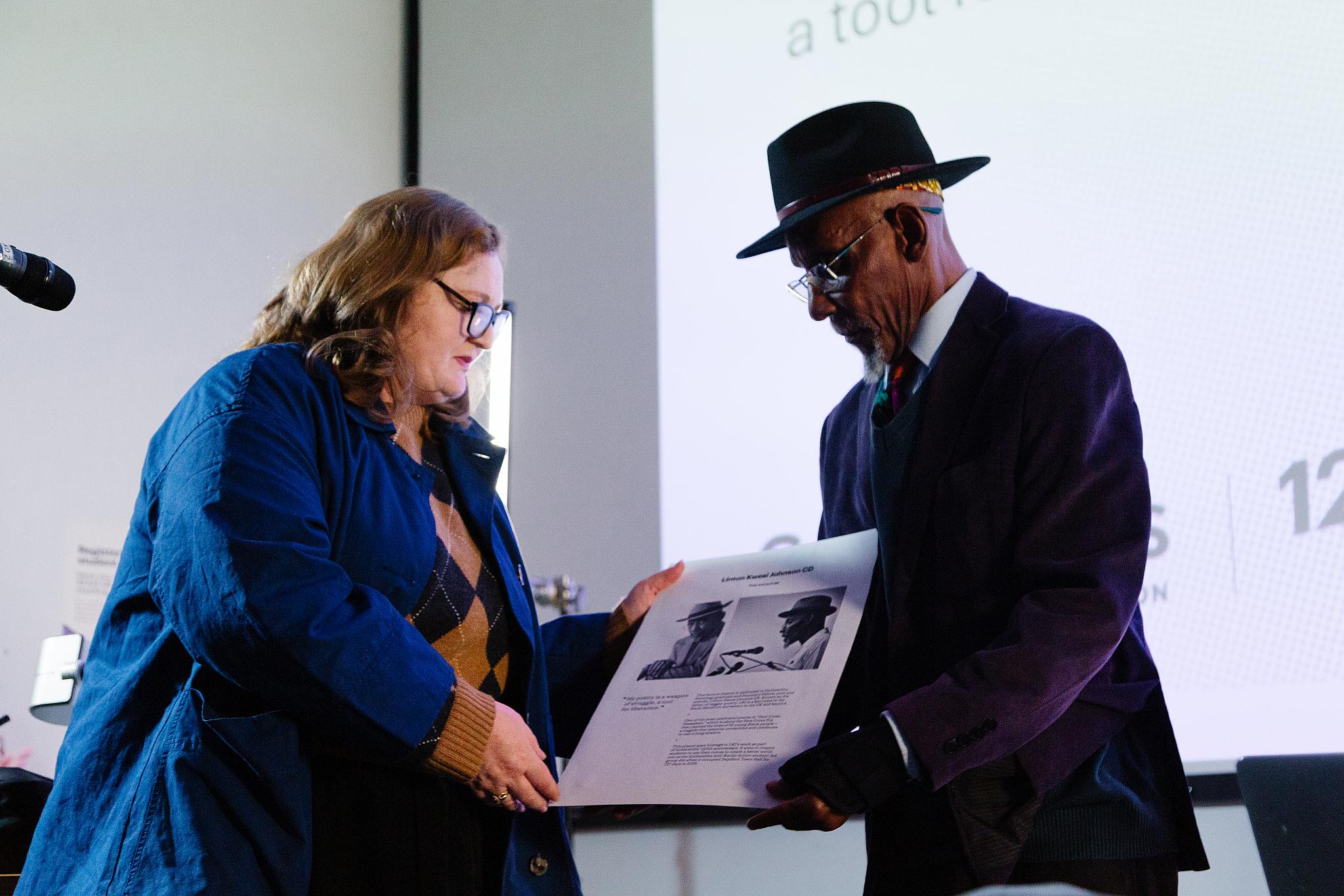
Deputy Vice-Chancellor, Prof Annabel Kiernan presents LKJ with a commemorative plaque
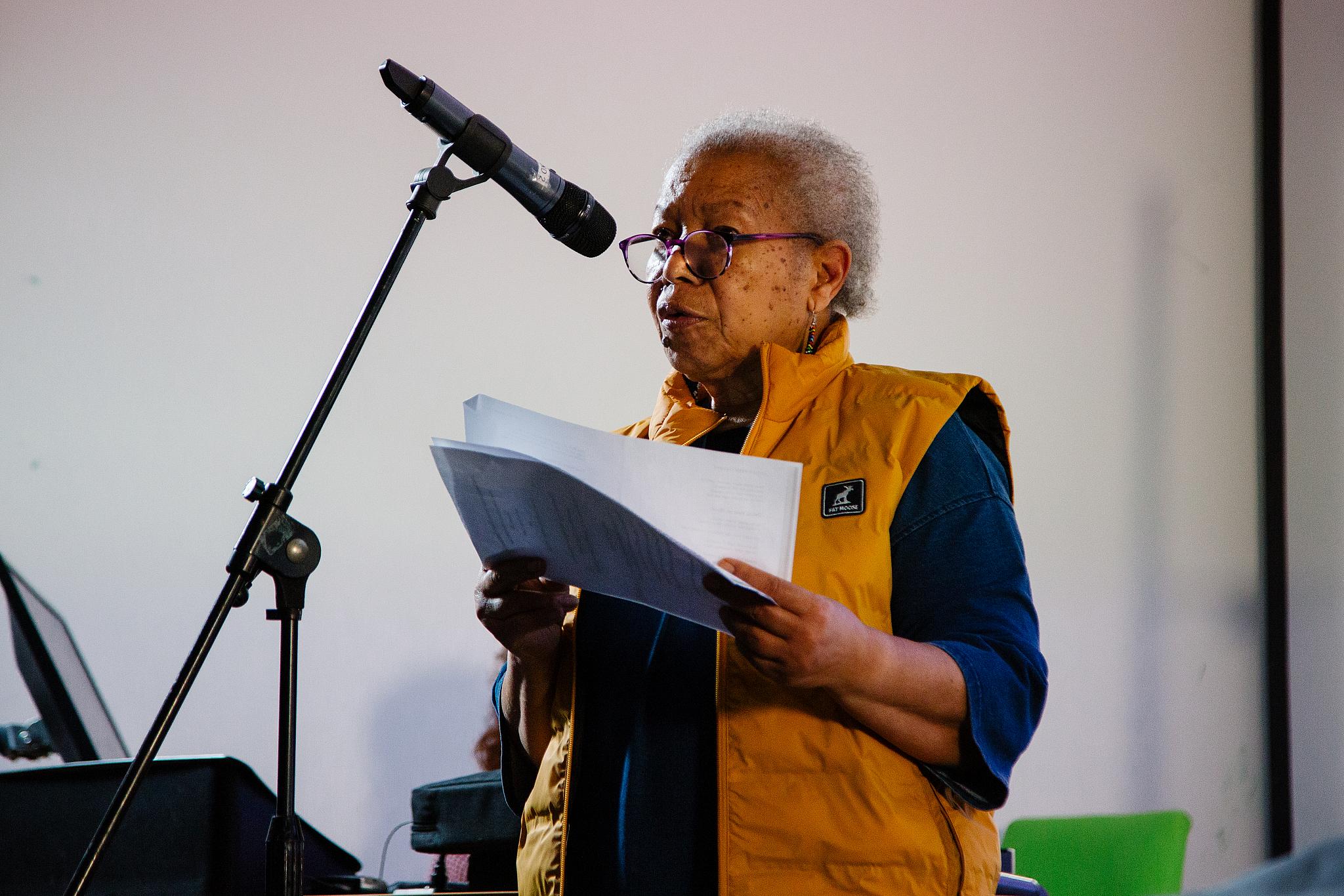
Two Sides of Silence (1980) was read by Professor Joan Anim-Addo
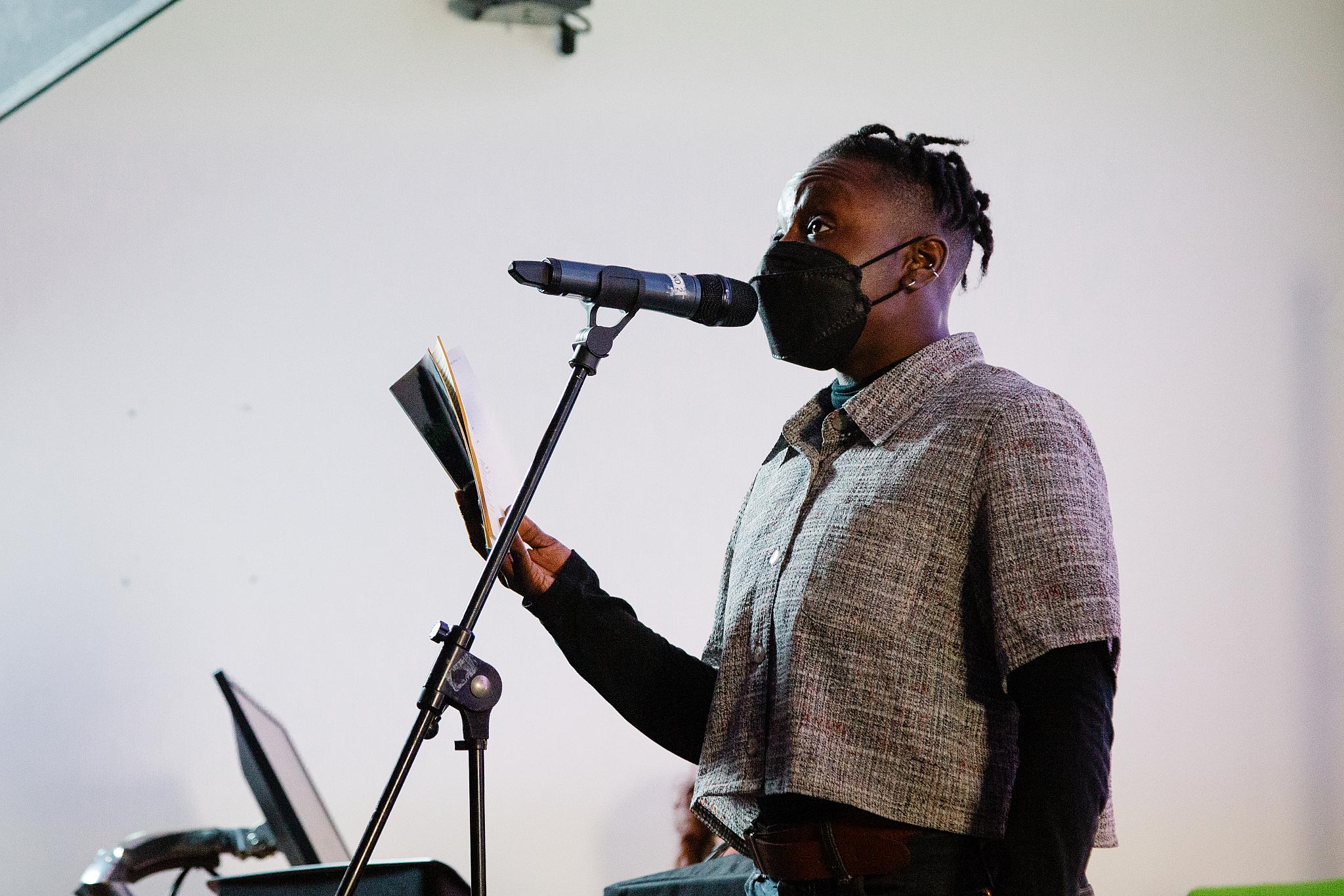
Sonny’s Lettah (1979) read by Seyi Keyamo
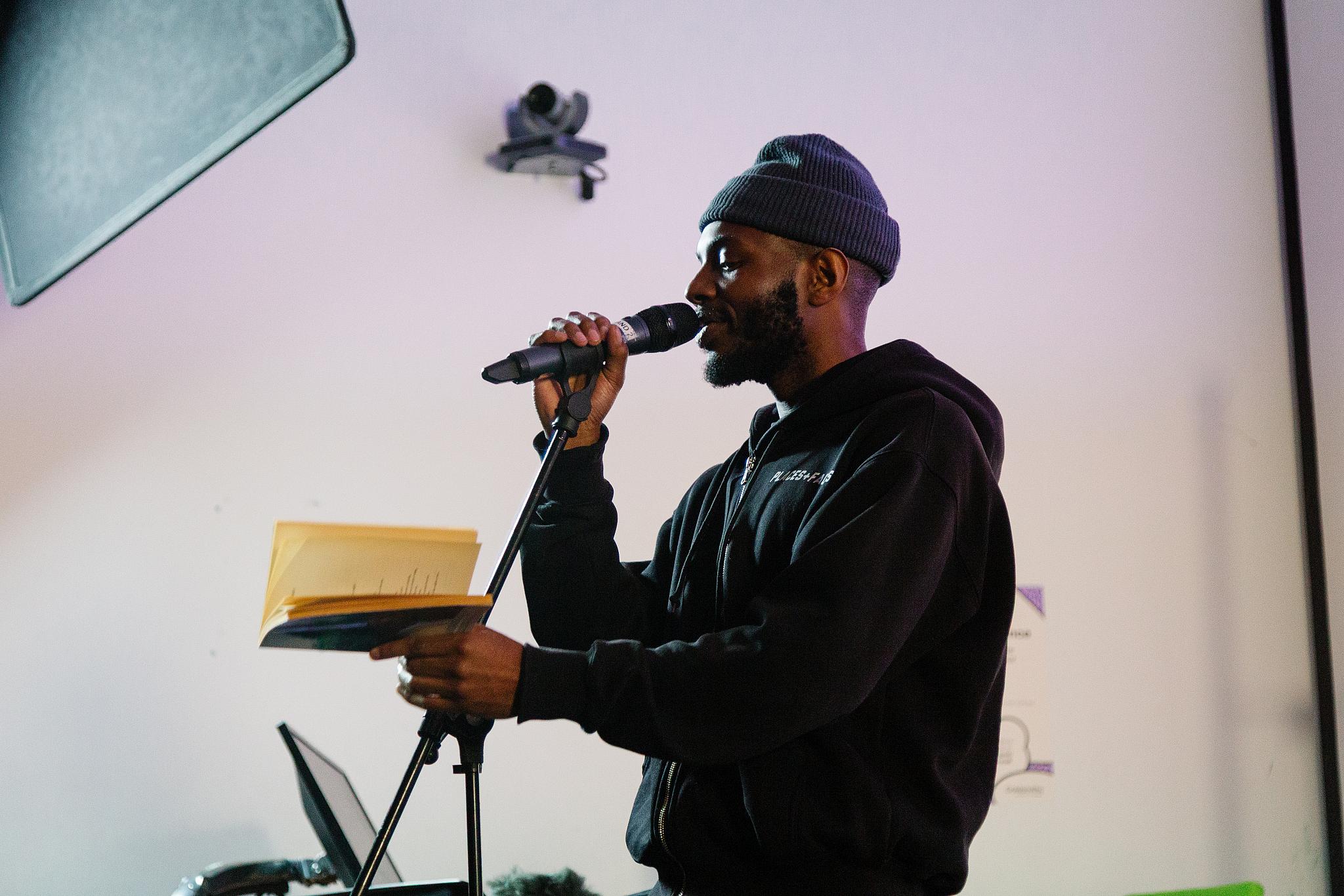
Seasons of the Heart (1998) read by JoJo Mukeza
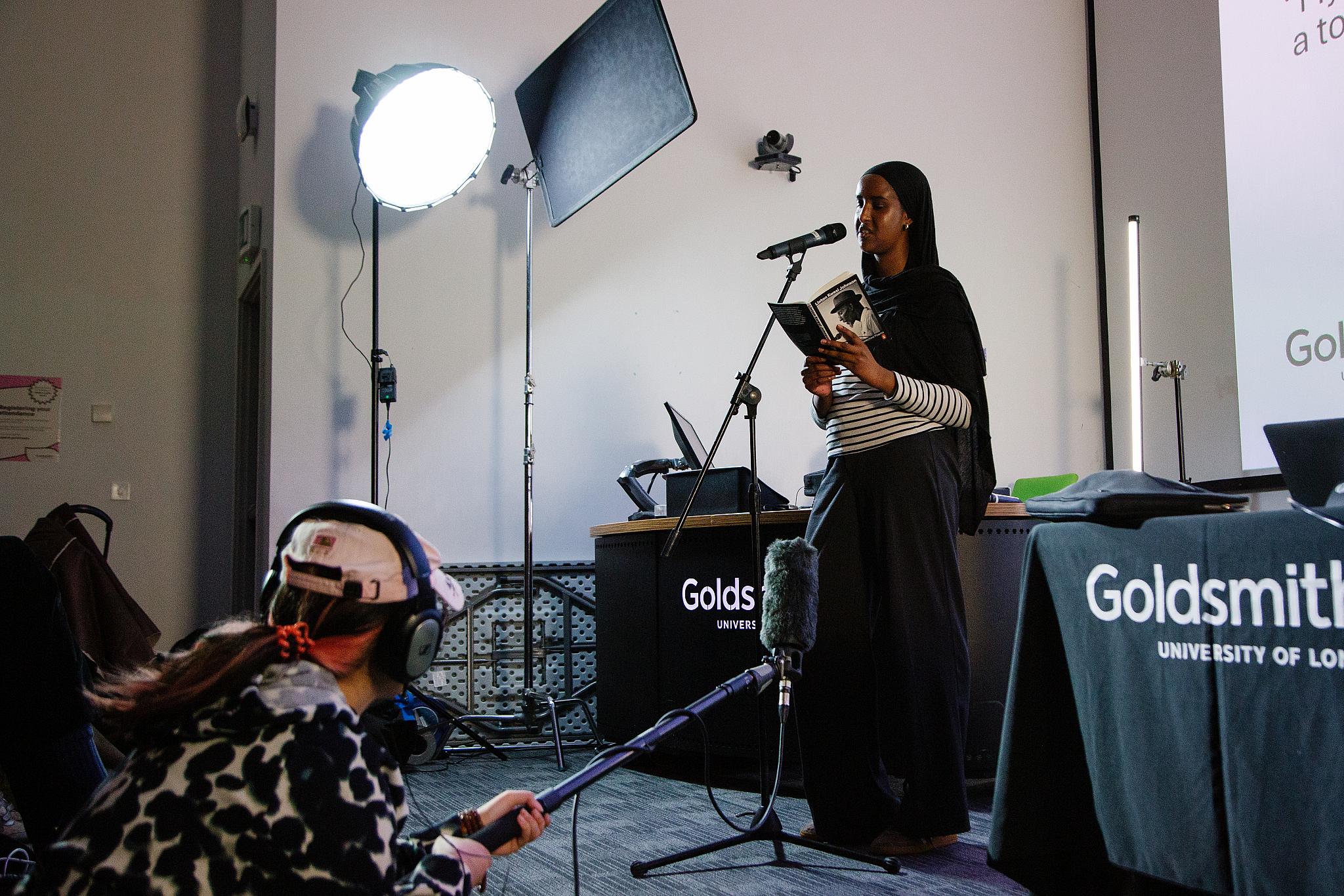
New Word Hawdah (1998) read by Faisa Mohamed
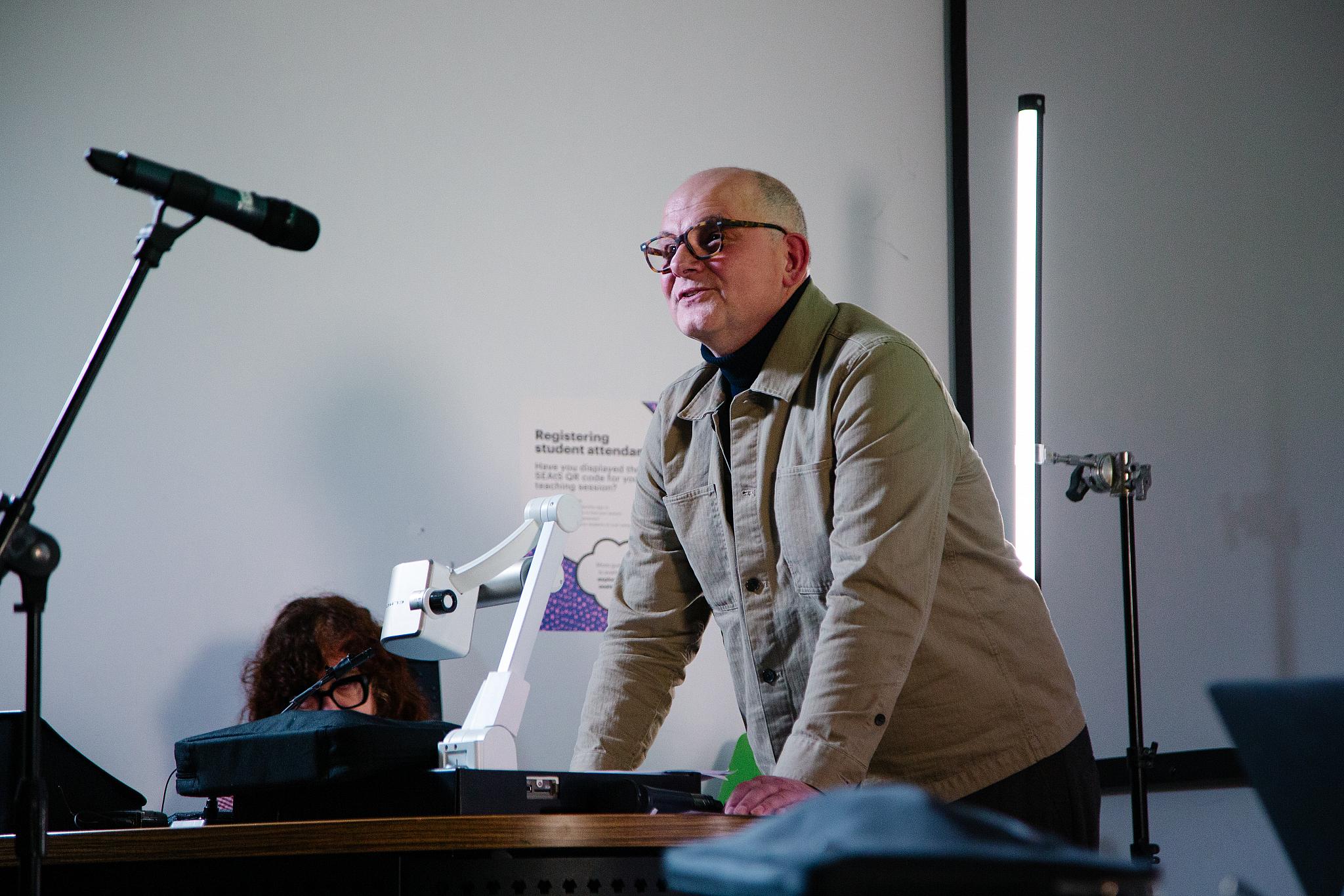
Professor Les Back
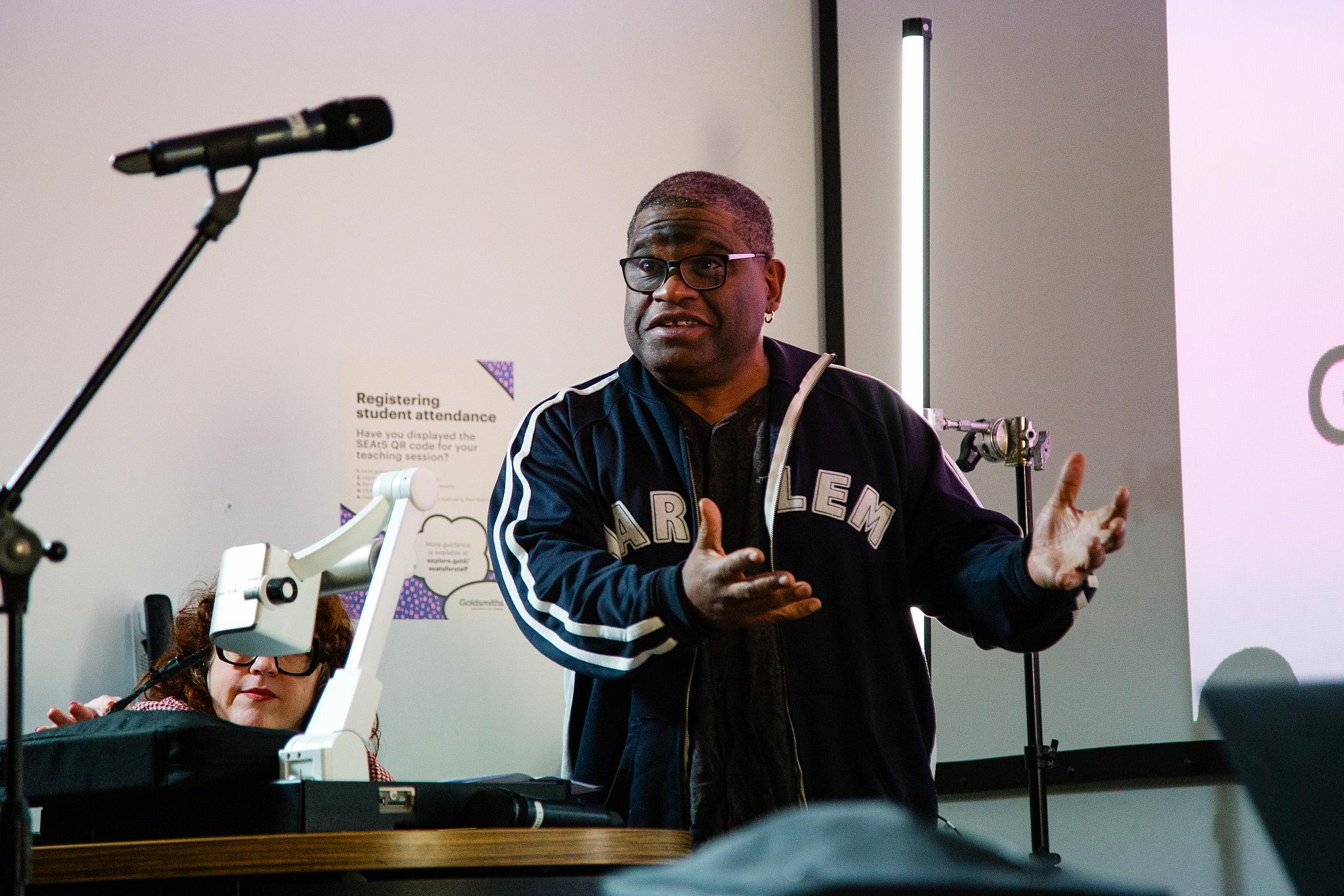
Gary Younge
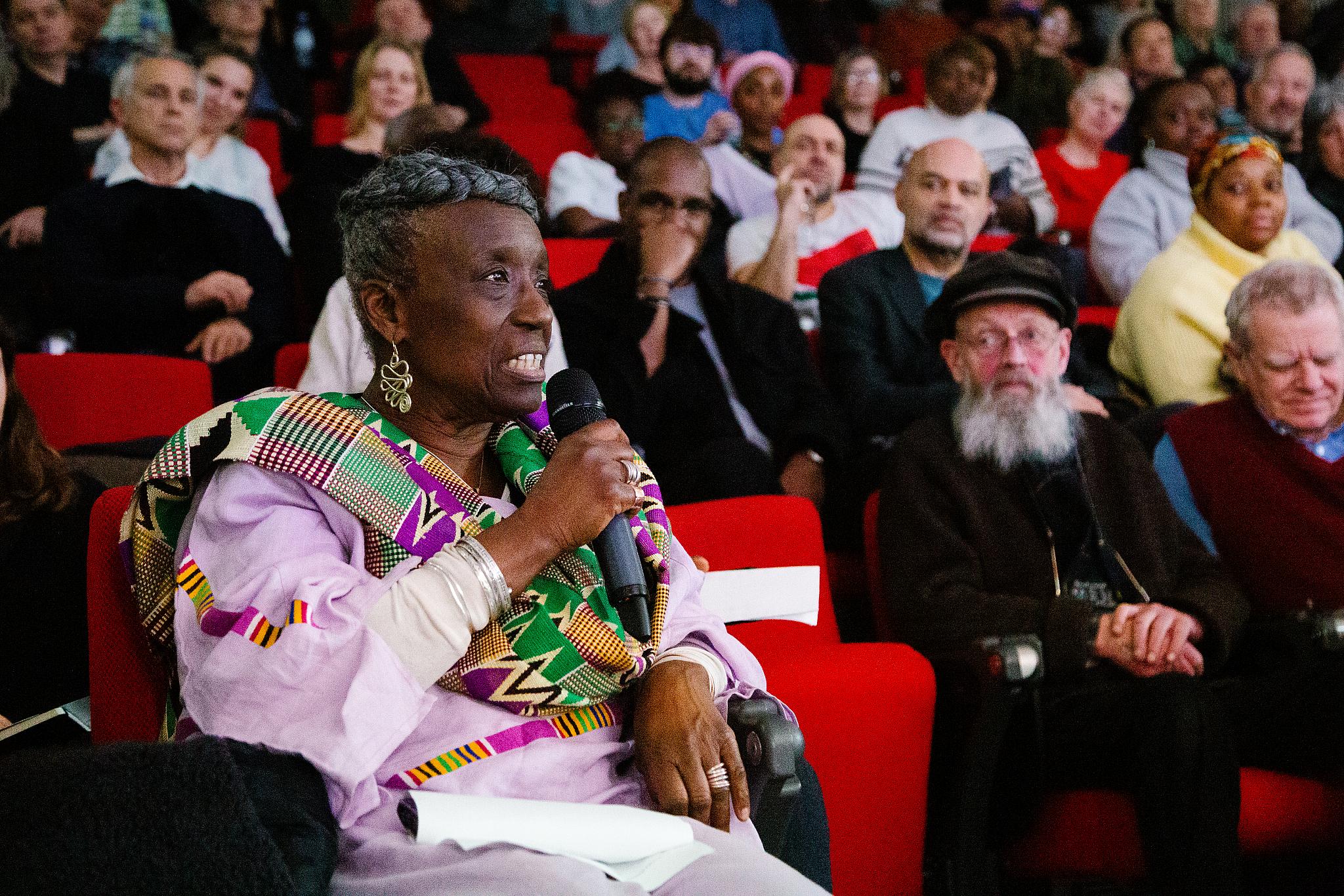
Dr Magna Aidoo reflects back to LKJ remembering mutual friends and acquaintances