Reimagining Digital ID
Primary page content
Reimagining Digital ID, a new exhibition supported by Goldsmiths’ Migrant Futures Institute (MFI) showcases the artwork of Karen refugees living in camps along the Thailand–Myanmar border.
The exhibition is part of wider research project, funded by the British Academy, that explores how Karen refugees in Thailand experience digital ID systems.
Digital identification or ‘Digital ID’ refer to the digitised methods through which people can prove who they are. Increasingly, such systems include biometric information such as fingerprints, iris scans or facial recognition.
The drawings showcase the artists’ everyday life struggles, their experience with biometric systems and their dreams for the future.
They also reveal the values that should underpin people’s ideal identity system.
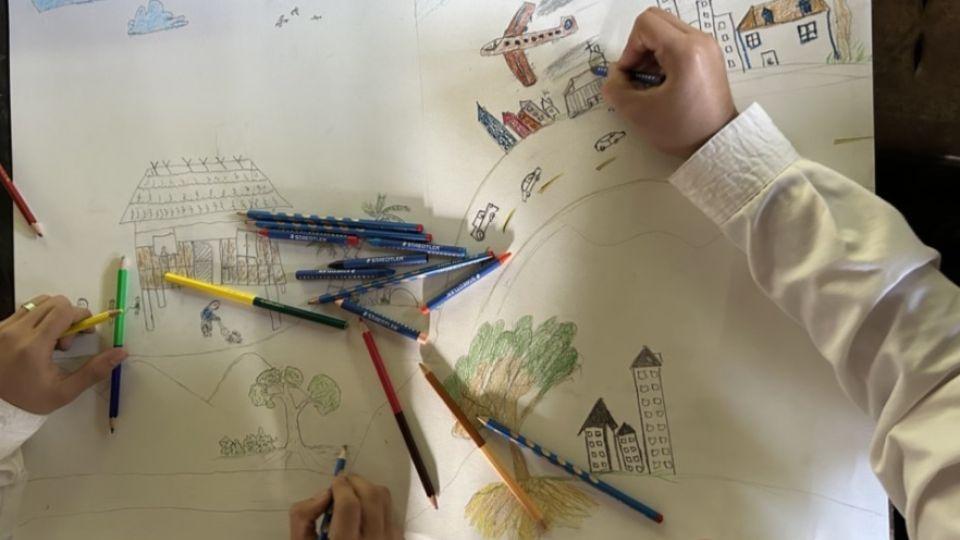
Creative workshops invited refugees to imagine fairer identity systems through shared art-making
Reimagining identity through art and research
Reimagining Digital Identity highlights how the Migrant Futures Institute approaches migration research differently. Rather than observing from afar, the MFI works alongside displaced communities as equal partners, centring their creativity and lived experience.
The project is a collaboration between Goldsmiths and Chiang Mai University, co-led by Professor Mirca Madianou, Co-Director of MFI, and Dr Charlie Hill from Chiang Mai University.
The resulting pieces offer a vivid, personal response to the rise of biometric ID systems, illustrating both the challenges of visibility and the search for dignity and recognition.
A conversation with Professor Mirca Madianou, MFI Co-Director
For Professor Madianou, the project became a way to turn complex research on digital identification into a space where refugees could share their own visions of identity and recognition…
Why combine art and research?
The Karen people are deeply creative, with artistic expression woven into daily life. Art felt like a natural medium, emotionally resonant and locally meaningful. We turned to it as an alternative to more traditional or Eurocentric research methods. Drawing isn’t just a way to gather stories; it creates a shared space where people can make their experiences visible.
How were the drawings made?
We invited participants to imagine their ideal identification system through creative workshops involving drawing, poetry, storytelling, and mapping. While most chose to draw together, others shared stories or recited poetry. Each piece was accompanied by a short narrative recorded by our team, allowing the artists to describe their work in their own words.
What do you hope visitors take away?
We hope the exhibition raises awareness about the Karen people’s circumstances and creativity, and sparks conversations about the impact of digital ID systems on refugees and other marginalised groups.
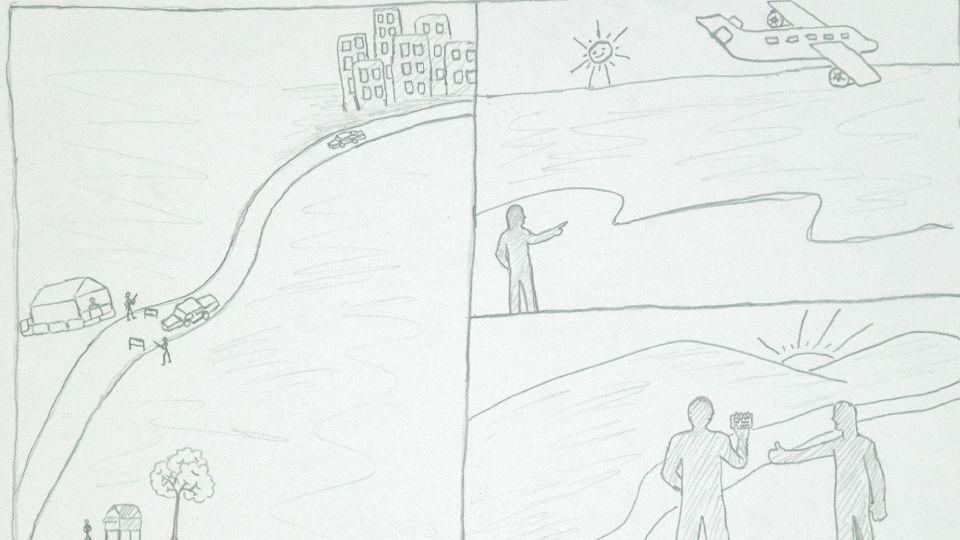
Visual narratives explore life between borders and the search for dignity in a world of digital IDs.
Alongside the exhibition, a symposium on 8 November will bring together researchers, designers, and human-rights advocates to explore these issues in depth.
Why is this conversation important now?
With the UK government planning to introduce digital ID, it’s vital to learn from places like Thailand, where these systems have been tested for years. Our research shows that discussions about digital ID are really about equity, dignity, freedom, and justice.
Refugees need identification systems that let them work and travel with dignity; issues that resonate globally.
What role can universities like Goldsmiths play?
The Migrant Futures Institute aims to centre migrant and refugee experiences to transform how society talks about migration. Through this exhibition, we hope the Karen artists’ visions of alternative futures can inspire new partnerships and collective action for a more just world.
If you could change one thing about digital ID systems, what would it be?
First, involve affected communities in every stage of design and implementation. Second, question the idea of “digital by default”, not all identification needs to be digital.
Finally, ensure people know how their data is used and have non-digital options to access services. These are the basic conditions for consent, dignity, and fairness.
Exhibition details
Reimagining Digital Identity runs from 1–27 November 2025 in the Richard Hoggart Building, New Cross, London, SE14 6NW
The exhibition launch will take place on November 8th during the one-day conference 'Reimagining Digital Identity: learning from the South'
Find out more about the Migrant Futures Institute (MFI).