China Miéville's The Rouse wins the 2026 Goldsmiths Prize
Primary page content
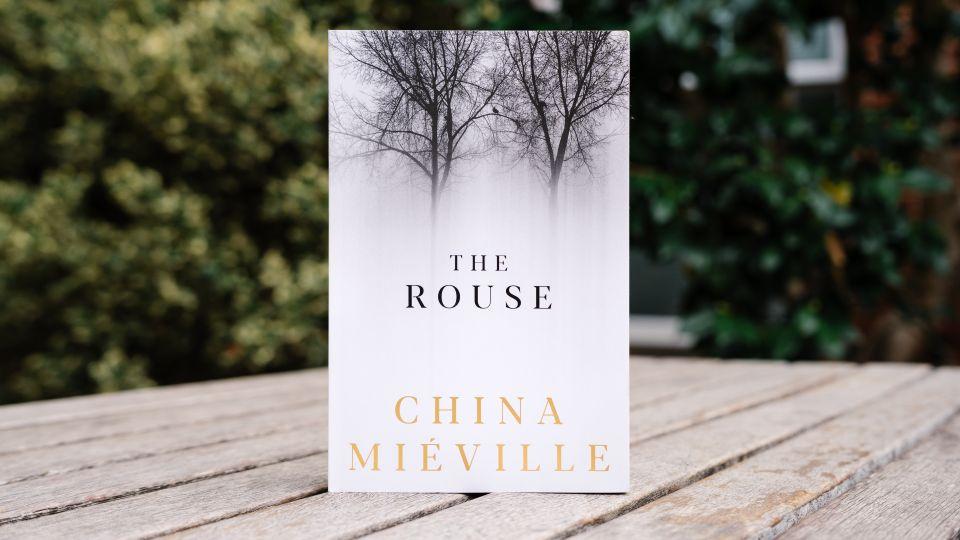
The Rouse, commended by the judges for breaking "most explosively with expectation", is the winner of the annual prize that celebrates fiction at its most novel.

Writer China Miéville with his trophy
China Miéville was awarded the £10,000 Goldsmiths Prize at a ceremony at Foyles in central London. At over 1,200 pages long, The Rouse is the longest novel to win the Prize to date.
China Miéville is a Sunday Times bestselling author. His previous novels include 'The City & The City', 'Embassytown', and 'Perdido Street Station', and his non-fiction includes a study of international law and a history of the Russian Revolution. In an interview with the New Statesman, Miéville described The Rouse as "the defining book of my life, that I've been writing for most of my adulthood".
Excellent though all the books on the shortlist are, it seemed only right to give this year's Goldsmiths Prize to the one that, in terms of ambition, bold use of history, linguistic experiment and sheer scale, broke most explosively with expectation.
Francis Spufford, Chair of Judges and Professor of Creative Writing
Tanjil Rashid, Culture Editor at the New Statesman, said: "Throughout his career, China Miéville has given imaginative form to a distinctly weird vision of the world, deeply personal but also unashamedly political. Of all the awards he has won, this is the prize he was destined for."
Francis Spufford, author of four novels and Goldsmiths Professor of Creative Writing, was joined on the judging panel by writer and translator Kate Briggs, novelist Hari Kunzru, and journalist and former Evening Standard Literary Editor David Sexton.
Judge Hari Kunzru said, "The Rouse is a monumental work that combines a sprawling history of Britain’s postcolonial entanglements in the latter half of the twentieth century with speculation about what lies ‘beyond the veil’ of death. China Miéville sets himself the daunting task of describing phenomena that are indescribable, stretching language to its limits and pushing formal and genre boundaries. In a time when much fiction is careful to colour inside the lines, this enormous, exuberant, overflowing book is a reminder that the novel is capable of containing multitudes.”
At Goldsmiths, we encourage our students to look at the world through different lenses and to embrace different ways of thinking. The Goldsmiths Prize, rewarding expectation-defying novels, encapsulates the spirit of curiosity and inventiveness that is so central to our University. We're delighted to continue to champion challenging, boundary-pushing fiction and its important role in society.
Vice-Chancellor Professor Joanna Newman MBE, FRSA
The novels shortlisted for the 2026 Goldsmiths Prize were:
- Polly Barton, 'What Am I, A Deer?' (Fitzcarraldo Editions)
- China Miéville, 'The Rouse' (Picador)
- Doireann Ní Ghríofa, 'Said the Dead' (Faber)
- Keith Ridgway, 'Dooneen' (Fitzcarraldo Editions)
- Aea Varfis-van Warmelo, 'Attention Seeking Behaviour' (Peninsula Press)
- Missouri Williams, 'The Vivisectors' (4th Estate)
Now in its fourteenth year, the Goldsmiths Prize was launched in association with the New Statesman in 2013 with the goal of celebrating the creative daring associated with Goldsmiths as a university and to reward fiction from the UK and Ireland that embodies the spirit of invention that characterises the novel genre at its best.
The trophy
Every year one of our talented Design students creates a unique trophy for the winning writer, bringing to life their version of the iconic Goldsmiths Prize flourish motif which is inspired by Laurence Sterne's Tristram Shandy. This year’s trophy, made from pewter and steel, was created in the BA Design workshops on campus by Veera Bagasaria.
Find out more about the Goldsmiths Prize