Vice-Chancellor’s Art Prize celebrates seven outstanding undergraduate artists
Primary page content
Seven graduating students have been recognised with this year’s Vice-Chancellor’s Art Prize, selected by Professor David Oswell, Vice-Chancellor (Interim), in recognition of exceptional creativity, originality and artistic ambition across the Goldsmiths Undergraduate Art Degree Shows.
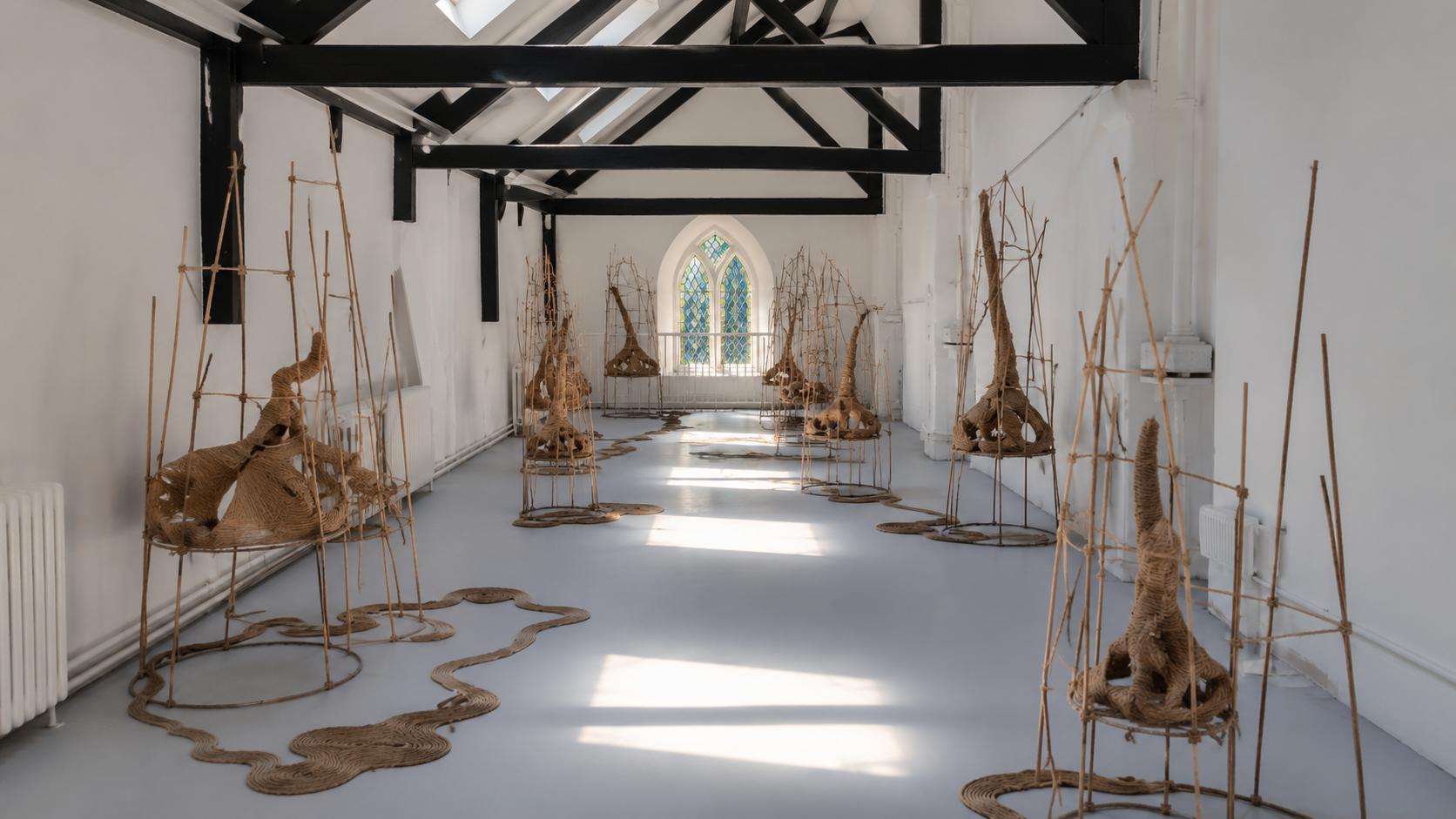
Futian Jin's ambitious rope installation transformed the architecture of St James Hatcham Building, inviting visitors to experience the space from new perspectives.
The works by the graduating students from BA (Hons) Fine Art & History of Art and BA (Hons) Fine Art explored themes including identity, memory, participation, power and belonging.
The winning projects ranged from intimate explorations of family relationships and large-scale immersive installations to works that reimagined familiar aspects of contemporary culture and invited audiences to become active participants in the artistic experience.
Speaking about this year’s undergraduate art degree shows, Professor David Oswell, Vice-Chancellor (Interim) said; “The quality and diversity of work on display was remarkable,”
“What particularly struck me were the works that invited audiences to look again. These were projects that rewarded curiosity and sustained attention, revealing new layers of meaning through participation, observation and reflection. Together, they demonstrate the confidence, originality and intellectual ambition of Goldsmiths students.”
Professor David Oswell, Vice-Chancellor (Interim)
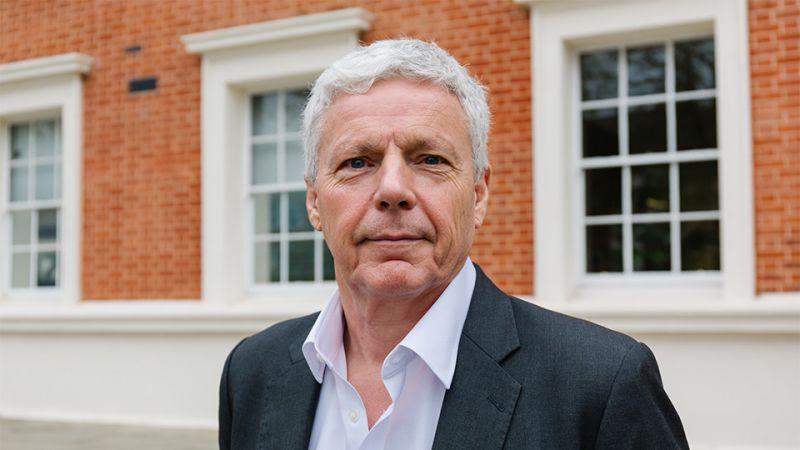
During visits to the Degree Shows, Professor Oswell toured exhibitions with academic staff, discussing the work on display before selecting the prize winners.
Across the winning works, audiences were invited not simply to observe, but to engage, question and reflect on the systems, assumptions and conventions that shape how we experience the world around us.
BA (Hons) Fine Art & History of Art
The three artists selected from BA (Hons) Fine Art & History of Art demonstrated the breadth and originality of contemporary artistic practice at Goldsmiths. Drawing on personal stories, political institutions and material experimentation, their work invited audiences to look beyond the familiar and consider questions of identity, memory, belonging and connection from new perspectives.
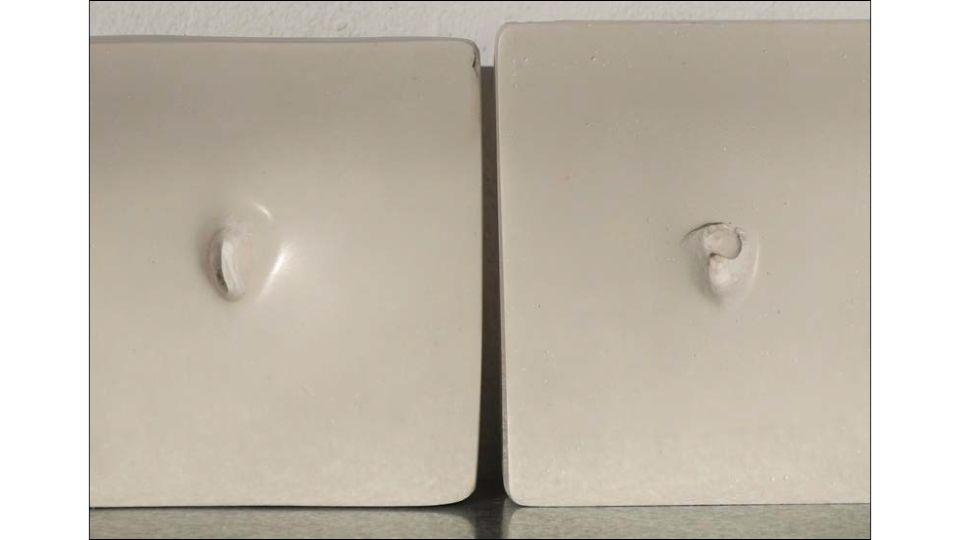
Betty Clarke combined casts of participants' belly buttons with personal interviews exploring relationships between mothers and children.
Betty Clarke
Betty Clarke was recognised for a project that combined casts of participants’ belly buttons with anonymised interviews exploring their relationships with their mothers. Through sculpture and personal testimony, Clarke created a sensitive and thought-provoking exploration of connection, memory and identity, transforming intimate individual experiences into a powerful collective reflection on human relationships. Professor Oswell was particularly impressed by the way the work combined personal stories and artistic practice to explore one of the most fundamental human relationships.
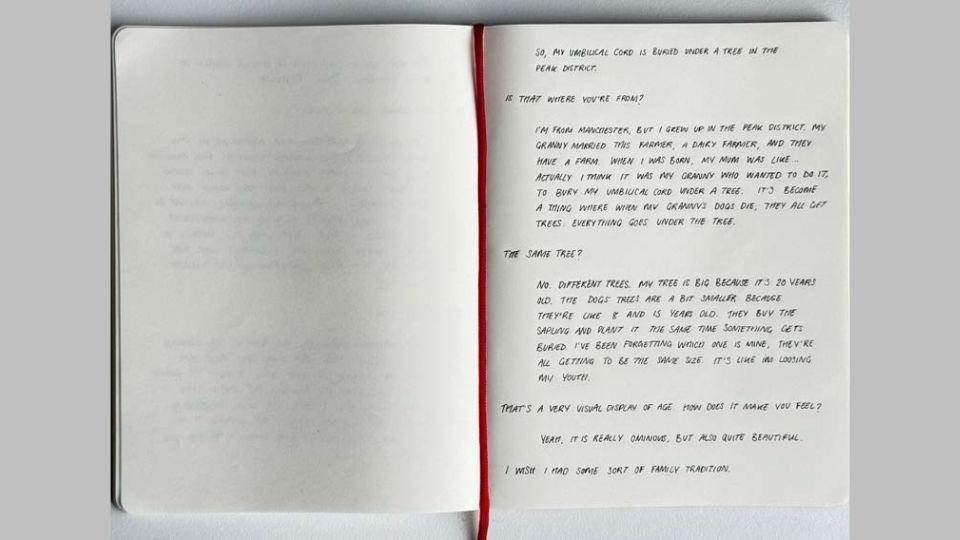
An accompanying journal formed part of Betty Clarke's thoughtful exploration of memory, identity and family relationships.
Ciaran Maunder
Ciaran Maunder’s work drew comparisons between Goldsmiths and the Houses of Parliament, using artistic practice to examine questions of governance, representation and belonging. Professor Oswell praised the project’s intellectual ambition and its ability to translate complex political ideas into an engaging and accessible artistic experience.
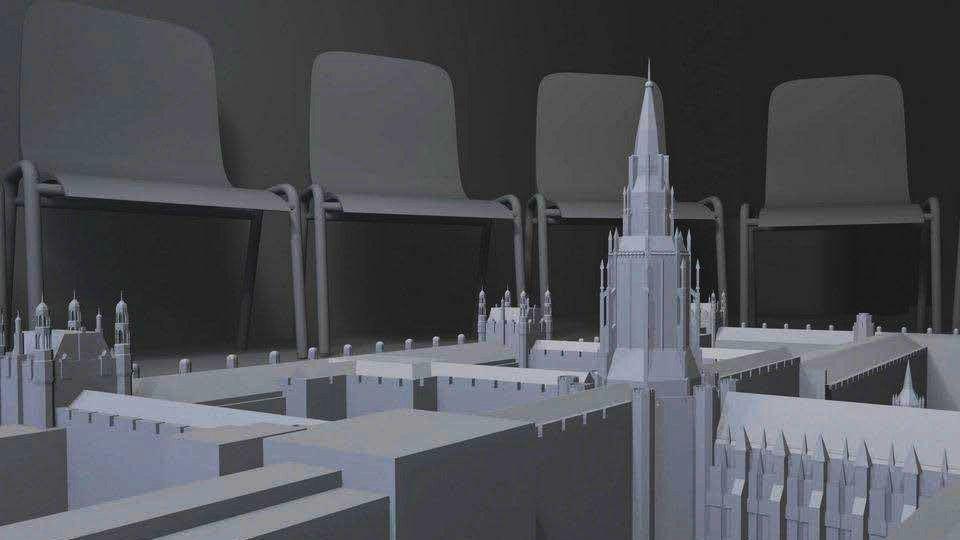
Ciaran Maunder's installation drew comparisons between Goldsmiths and the Houses of Parliament.
Hoi Sun Wang (Chloe)
Hoi Sun Wang was selected for a body of work that combined painting and ceramics with exceptional confidence and technical skill. Professor Oswell was particularly struck by a suspended ceramic sculpture that brought a sense of movement, delicacy, and even the sinister, to the installation, demonstrating a sophisticated understanding of material, form and space.
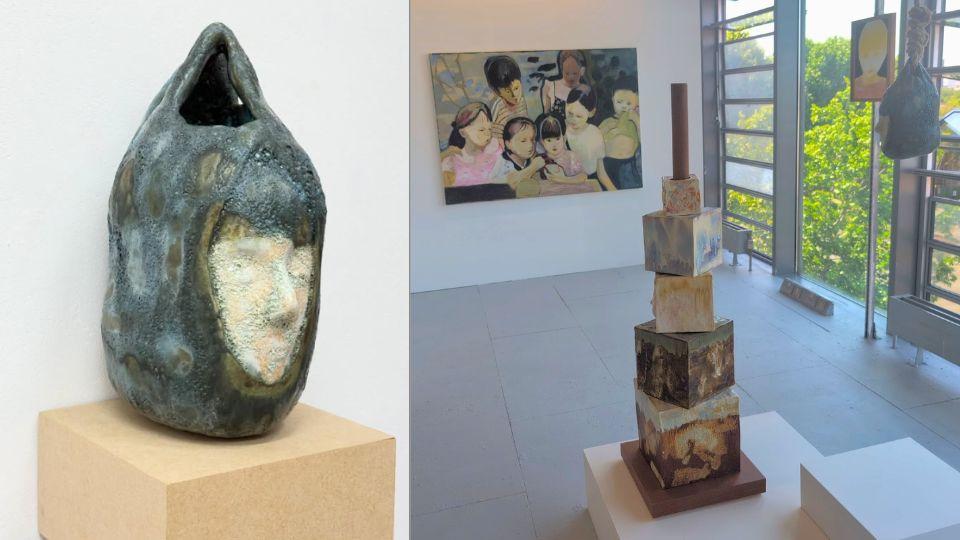
Hoi Sun Wang's work combined painting and ceramics, with a suspended sculpture that particularly impressed Professor David
BA (Hons) Fine Art
The selection from the BA (Hons) Fine Art Degree Show celebrated artists who challenged expectations through their use of space, participation and cultural critique. From large-scale installations that transformed buildings and lecture theatres to works that rewarded audience interaction and reimagined familiar aspects of popular culture, the winning projects demonstrated the breadth, confidence and experimental spirit of contemporary art at Goldsmiths.
Futian Jin
Futian Jin was recognised for an ambitious installation that transformed a potentially awkward space in St James Hatcham Building through a series of intricate rope-built structures. Expanding across the exhibition space, the work demonstrated a sophisticated understanding of scale, material and spatial composition, encouraging visitors to experience the environment from multiple perspectives. Professor Oswell was particularly impressed by the way Jin responded to the architecture of the building, transforming an everyday material into an immersive artistic experience.
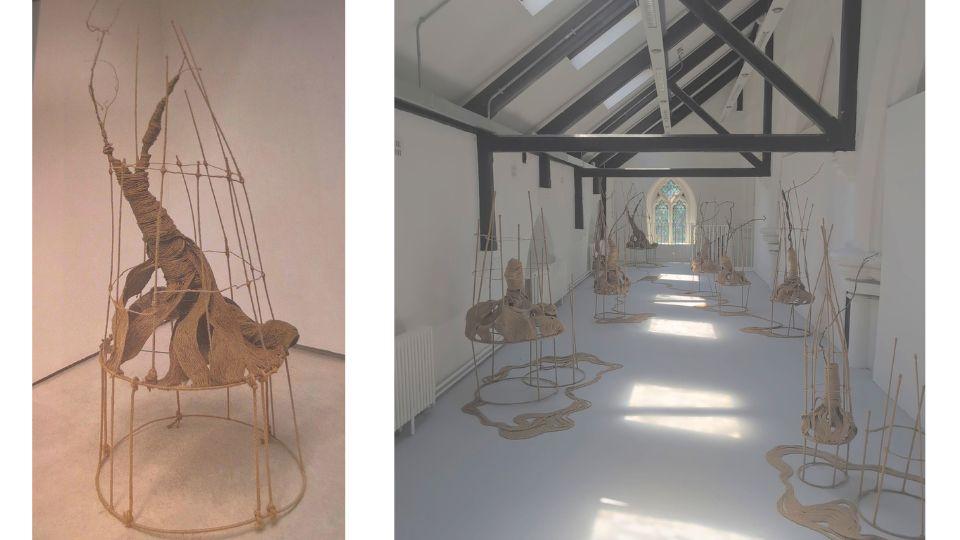
Futian Jin's installation encouraged visitors to move through the space, revealing new forms and relationships from different viewpoints.
Earl Gibson
Earl Gibson was recognised for Dream of Total Illumination, an installation that combined visual intrigue with an unexpected element of audience participation. Visitors who took the time to explore the work discovered telephone numbers embedded within the installation that could actually be called, extending the artwork beyond the physical space of the gallery. Professor Oswell praised the work’s playful inventiveness and its ability to reward curiosity and engagement.
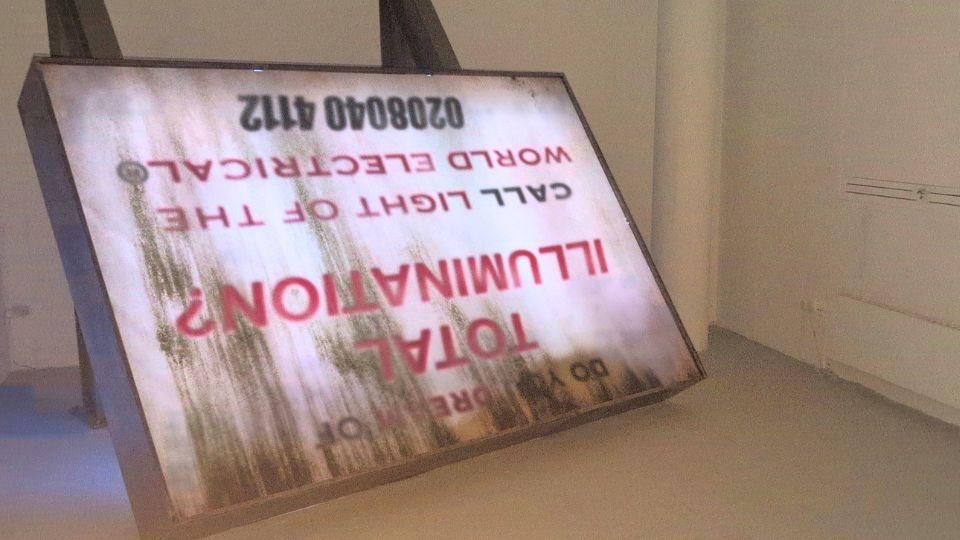
Earl Gibson's work unfolded through a series of discoveries, including working telephone numbers that transformed the experience of the installation and rewarded curiosity.
A concealed body (not real) forms part of Earl Gibson's Dream of Total Illumination, an installation that rewards curiosity and continual discovery.
Estelle Liao
Estelle Liao was recognised for an ambitious installation that transformed an entire lecture theatre into an immersive artistic environment. Taking over a space normally associated with teaching, assessment and institutional authority, the work invited visitors to experience a familiar setting in a completely new way.
Estelle Liao transformed an entire lecture theatre into an immersive installation exploring interpretation, context and institutional space.
Alongside the installation, Estelle reflected on questions of interpretation, context and evaluation, exploring the relationship between an artwork and the frameworks through which it is understood. Her work considered how meaning is produced, how artistic practice is assessed, and the extent to which explanation shapes the reception of creative work.

An excerpt from Estelle Liao's installation, which explored questions of interpretation, context and the ways in which artistic practice is understood and evaluated
Kip Ives
Kip Ives was recognised for work that draws on popular culture, reality television and drag performance to explore the construction of identity and gender. Reworking familiar cultural references through a distinctly contemporary lens, Ives creates work that is at once humorous, provocative and sharply observant. Kip’s ability to subvert familiar narratives and encourage audiences to question assumptions about performance, authenticity and self-representation, really impressed.

Kip Ives' work draws on reality television, drag culture and popular media to explore identity, performance and representation.
While the Vice-Chancellor's Art Prize recognises a small number of individual artists, Professor Oswell paid tribute to the wider graduating cohort.
"The standard of work across the Degree Shows was exceptionally high."
The artists recognised through these prizes represent just a small part of the creativity, experimentation and critical thinking on display. I would like to congratulate all of our graduating students and thank them for sharing their work with the Goldsmiths community and the wider public."
Professor David Oswell
The Vice-Chancellor's Art Prize forms part of the annual Goldsmiths Degree Shows, which showcase the work of graduating students from Goldsmiths' internationally renowned School of Art, whose staff, students and alumni have played a significant role in shaping contemporary art and artistic practice in the UK and around the world.
This year's Degree Shows also form part of Goldsmiths' 120th anniversary celebrations, marking more than a century of creativity, experimentation and critical enquiry at the university while highlighting the work of the next generation of artists.
The Degree Shows continue throughout the summer, offering visitors the opportunity to experience the work of this year’s graduating artists.
Find out more and plan your visit on the Degree Shows website.