MA/MFA Experimental Film & Documentary
Content navigation menu
Why study MA/MFA Experimental Film & Documentary at Goldsmiths
The MA/MFA Experimental Film and Documentary at Goldsmiths helps storytellers discover their unique voices, new audiences and exciting possibilities. If you're passionate about pursuing a career as a storyteller, film director or content creator in an environment that promotes innovative filmmaking and cross-disciplinary collaboration, this programme is for you.
- Focused on building a "total filmmaker" with a strong focus on independent practice, this MA leans actively encourages collaboration and networking across the entirety of Goldsmiths and its extended communities.
- This MA is designed to help you develop your distinctive authorial voice as a filmmaker and storyteller, offering training, mentoring, masterclasses and facilities that nurture innovative approaches to film practice as a self-shooting, self-editing director and producer.
- You will gain a well-rounded set of creative and professional skills in conceptual development, cinematography, sound design, project pitching, animation, producing and editing, making you highly employable in the independent film, promotional media and digital content production industries.
- The programme offers a unique blend of hands-on workshops, studio and location filming exercises, filmmaker masterclasses, conceptual development, industry pitch experience and cross-disciplinary collaboration opportunities. It also offers private edit time and technical support to ensure the professional-standard completion of your projects.
- We have an outreach focus, encouraging and mentoring students to enter their work in festivals, network with industry leaders and peers, foster collaboration and contribute to the wider filmmaking community.
Contact
If you have specific questions about the degree, contact Leah Borromeo .
Length
1 year full-time
Entry requirements
You should have (or expect to be awarded) an undergraduate degree of at least 2:2 standard in a relevant/related subject. You might also be considered if you are not a graduate but have relevant experience. Some form of experience of working with moving image is a requirement for all applicants.
Fees
Home - full-time: £17000
International - full-time: £32000
School
Media, Communications and Cultural Studies

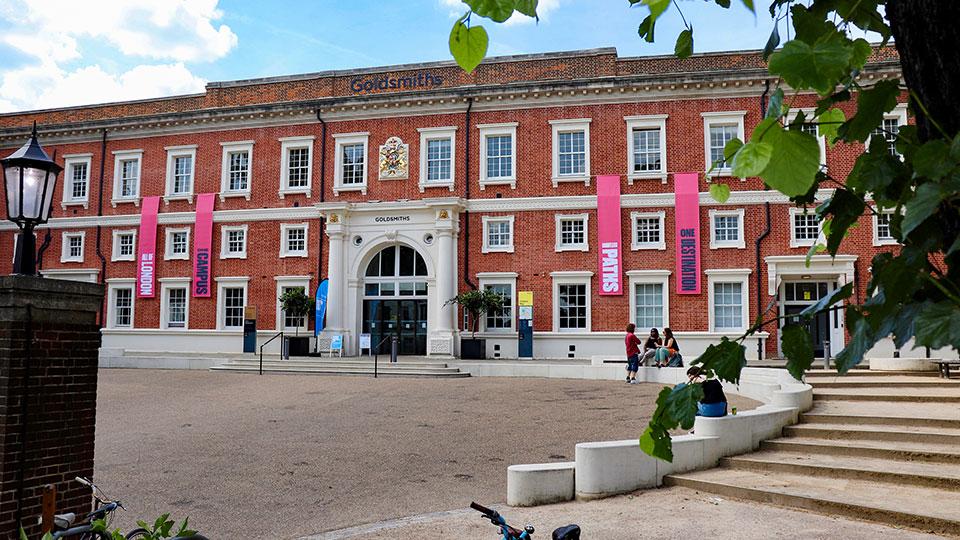
We are an Adobe Creative Campus. During your studies, you will be able to use Photoshop, Premiere Pro, Illustrator and more for free on your own devices.
Facilities
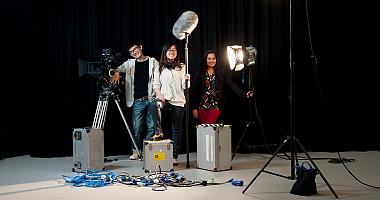
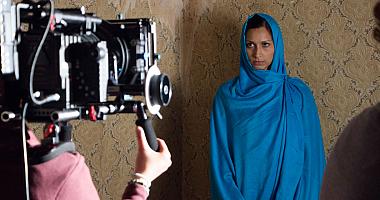
This MA is housed in a new purpose-built media facility with state-of-the-art teaching spaces including film and photography studios, a range of professional cameras including Sony FS5s and Blackmagic Cinema, edit suites with Avid Media Composer and Adobe Premiere, animation studios and Pro Tools audio post-production suites.
The programme offers a unique blend of hands-on workshops, studio and location filming exercises, filmmaker masterclasses, conceptual development, and industry pitch experience. It also offers private edit time and technical support to ensure the professional-standard completion of your projects.
Our campus also includes a new 4k cinema screen and a rich and diverse student body with which to network, grow and collaborate with.
What you'll study
Compulsory modules
You will take 120 credits of compulsory modules:
- Short Film Practice (30 credits)
- Specialist Skills (Doc & Exp) (30 credits)
- Final Project (Doc & Exp) (60 credits)
Optional modules
You will also choose 60 credits of optional modules. This can vary each year but may include:
- Producing & Legal Fundamentals (30 credits)
- Storytelling Strategies (30 credits)
- Media & Culture in the Middle East (30 credits)
- Adaptation for Filmmakers (30 credits)
- Feminist Practices (30 credits)
- Data, AI & Forensic Journalism (30 credits)
- Immersive & Generative Arts (30 credits)
- Experimental Media (30 credits)
- Gender Sexuality & Affect (30 credits)
- Activist Film & Social Change (30 credits)
- Film Editing Fundamentals (30 credits)
- Mobile & Podcast Journalism (30 credits)
- Digital Methods (30 credits)
- After Images (30 credits)
Note about optional modules (if available): The above is indicative of the typical modules offered, but is not intended to be construed or relied on as a definitive list of what might be available in any given year. The module content and availability is subject to change.
Overview
A range of optional modules deepen aesthetic perception, creative thinking and practical expertise within the wider context of filmmaking as a cultural activity.
You'll also be encouraged to develop a variety of transferable intellectual, organisational and communication skills in order to equip themselves for a range of future employment and research contexts.
Entry requirements
You should have (or expect to be awarded) an undergraduate degree of at least second class standard in a relevant/related subject as well as a level of practical experience from work in the arts or the media.
You might also be considered if you aren’t a graduate, or your degree is in an unrelated field but have relevant experience and can show that you have the ability to work at postgraduate level.
Some form of experience of working with moving image is a requirement for all applicants.
Because funding deadlines and requirements vary around the world, applications are considered on a rolling basis from February onwards and places on the programme fill up across the recruitment cycle. For this reason, we strongly advise you to submit your completed application as early as you can.
International qualifications
We accept a wide range of international qualifications. Find out more about the qualifications we accept from around the world.
If English isn’t your first language, you will need an IELTS score (or equivalent English language qualification) of 7.0 with a 7.0 in writing and no element lower than 6.5 to study this programme.
How to apply
You apply directly to Goldsmiths using our online application system
You apply directly to Goldsmiths using our online application system.
Before submitting your application you’ll need to have:
- Details of your academic qualifications
- The email address of your referee who we can request a reference from, or alternatively a copy of your academic reference
- Copies of your educational transcripts or certificates
- A personal statement – this can either be uploaded as a Word Document or PDF, or completed online. Please see our guidance on writing a postgraduate statement and ensure that you answer the following questions in your statement:
- Tell us about your passion and aptitude for Filmmaking
- What are your dreams and aspirations?
- How did your engagement with visual media develop, and how has it developed in terms of professional, voluntary and personal work?
- A two-minute autobiographical film introducing yourself
OR - Examples of your recent work in a related field (eg moving image samples), preferably via a web link to your online portfolio – please upload this under 'additional' in your online application (NB the maximum file size you can upload is 20MB)
- IELTS 7.0 at the point of application (if you are from a non-majority English-speaking country)
You should emphasise your practical/theoretical experience in the arts or the media in your application.
You'll be able to save your progress at any point and return to your application by logging in using your username/email and password.
When to apply
Applications open in October and close on 1 August. Applicants are encouraged to apply early to avoid disappointment.
When are applications considered
Applications are considered in batches from February onwards so we would advise you to apply as early as possible.
Fees and funding
Annual tuition fees
These are the PG fees for students starting their programme in the 2026/2027 academic year.
- Home - full-time: £17000
- International - full-time: £32000
If your fees are not listed here, please check our postgraduate fees guidance or contact the Fees Office, who can also advise you about how to pay your fees.
It’s not currently possible for international students to study part-time under a student visa. If you think you might be eligible to study part-time while being on another visa type, please contact our Admissions Team for more information.
If you are looking to pay your fees please see our guide to making a payment.
Funding opportunities
BAFTA scholarship
UK students offered a place on this MA are eligible to apply for the BAFTA Scholarship Programme. Find out more on our MCCS funding page.
Visit that page and the Goldsmiths scholarships finder below to find out what other funding you may be eligible for.
Paying your fees
Find out about paying your tuition fees.
If you are a UK student you may be eligible for a postgraduate loan.
Meanwhile our Careers Service can also offer advice on finding work during your studies.
Additional costs
In addition to your tuition fees, you'll be responsible for any additional costs associated with your course, such as buying stationery and paying for photocopying. You can find out more about what you need to budget for on our study costs page.
There may also be specific additional costs associated with your programme. This can include things like paying for field trips or specialist materials for your assignments. Please check the programme specification for more information.
Careers
Where this degree can take you
If you are passionate about fashioning an exciting career for yourself as a filmmaker in an environment that promotes innovative filmmaking, this course is for you.
Our alumni are active in the film, media and cultural industries around the world, working and winning awards as documentary producers and directors.
Recent alumni are active in the film, media and cultural industries around the world as:
- Content Producers
- Documentary Filmmakers
- Cinematographers
- Producers
- Dis
- Gaffers
- Grips
- Media Creatives
Award-winning alumni
Our former students have gone on to win awards including:
- BAFTA for Best Student Documentary & Best Fiction
- Grierson nominations for Best Student Documentary
- Postgraduate Prize at the Royal Television Society Student Awards
- Student Award at the One World Media Awards
- RTS Award for Best Editing
They've also launched their own film festivals, worked on critically acclaimed films and documentaries, and have had their work screened on the BBC as well as at Sheffield Docfest, BFI Flare, the London Film Festival, National Geographic's All Roads Film Festival and Open City, the London Documentary Festival.
Find out more about employability at Goldsmiths.