Designs enable public to listen ‘like a tree’ to boost engagement with climate change
Primary page content
Understanding what it’s like to ‘listen like a tree’ could be the trigger that helps the public reconnect with the environment and positively engage with climate change.
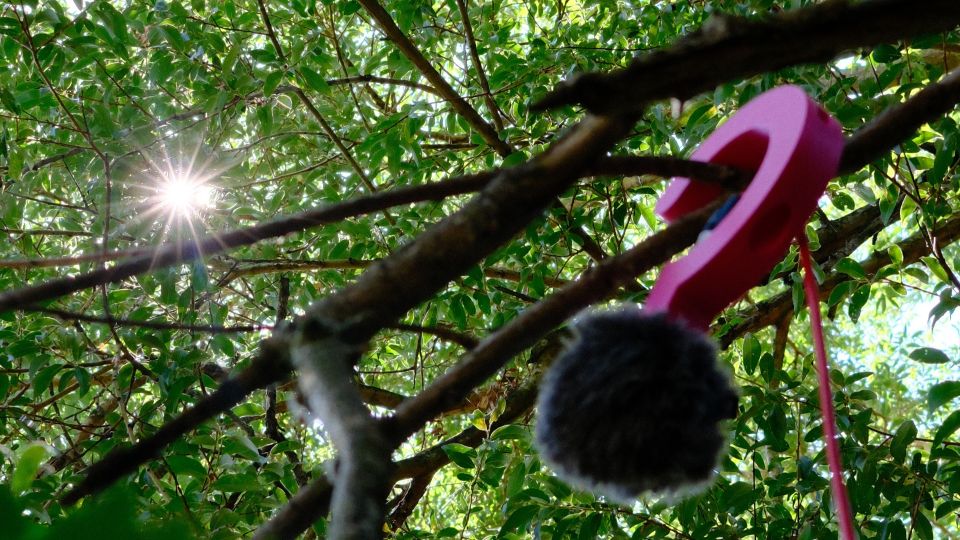
One of the adapted mics placed into the canopy of a tree. Photo: Ewan Jones Morris
The nine-month long project aimed to leverage low-cost and accessible technology to create new ways to increase public engagement with local biodiversity and climate change. Along with a series of events and workshops, the project resulted in the development of an open-source toolkit aimed to support communities to engage with climate change and biodiversity themes and encourage behavioural change that will benefit the environment.
A collaboration between the School of Design at Goldsmiths, University of London, the Angela Marmont Centre for UK Nature at the Natural History Museum, and Phoenix Community Housing, the project was led by Dr Mike Thompson, Lecturer in Design, with Dr Tobie Kerridge, Senior Lecturer in Design, as co-lead. ‘Reperceiving Communities: Prototyping the More-Than-Human Community Toolkit’ was funded by the Arts and Humanities Research Council.
Our aim was to engage Lewisham residents with issues around climate change and biodiversity by using low-cost, accessible imaging and audio tools such as microscopes and field recorders that we adapted to enhance their capabilities.
Dr Mike Thompson, School of Design
Listening Like a Tree
Using newly designed attachments for field recording equipment, an array of microphones was utilised to create the experience of what it sounds like to be a tree.
Through events and workshops, participants could wear silent-disco-style headphones and listen to live audio captured by the specially adapted microphones. Experiencing what a tree ‘hears’ allows participants to understand the place of the tree in the ecosystem, and the impact of other environmental factors on the tree.
The bespoke attachments created for the project include:
- Geophone and antiradio attachments to capture vibrations and electromagnetic waves resonating in a tree
- A float, so that underwater microphones could be set adrift in water and capture sounds near tree roots
- A hook and selfie stick adaptor, which allows microphones to be placed high in branches
There’s a white willow next to the river in Brookmill Park. It leans on a footbridge that crosses the DLR. You can pick up so much with our toolkit, from the rustling leaves you’d expect, to the tremors of people walking across the bridge and the impact of passing DLR trains on the electromagnetic static. It really demonstrates how the human and natural world are interwoven.
Dr Mike Thompson, School of Design
The designs for the attachments are available freely via printables.com for anybody to 3D print and use with their own communities.
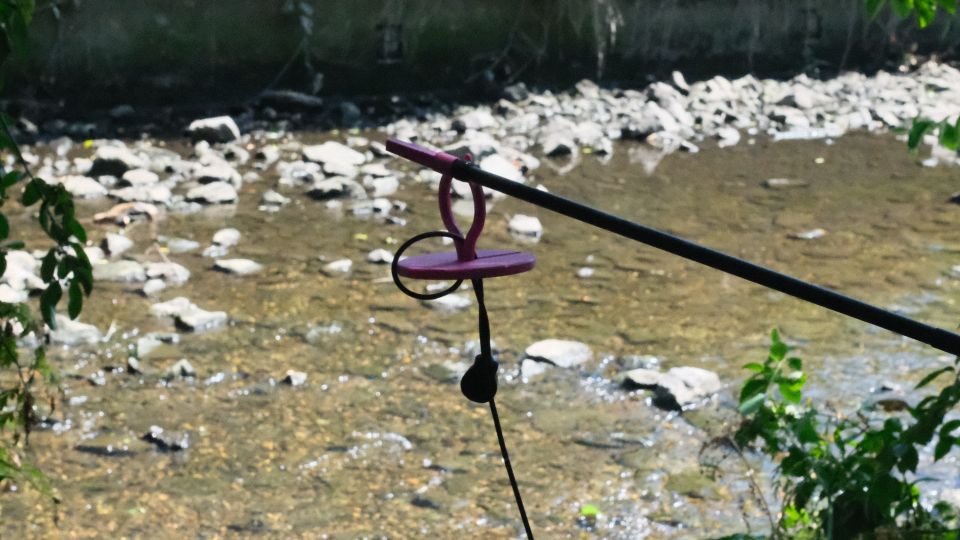
One of the adapted mics can float on water near tree roots
There’s Something in the Water
This part of the project involved designing a pond or river water viewing device, the ‘aquatron,’ with an attached pump, for viewing the tiny creatures in the water.
Drawing on ideas about how people tend to project human traits onto non-human animals, these events applied film noir tropes to wildlife’s behaviour. Engaging young people in workshops through placing them in the role of the detective (which included wearing fedoras), they learned about different species through the lens of investigating the murky depths.
Community engagement
Over the course of the project, the team offered activities at ten events or workshops, including workshops with Student Discovery Learning, Phoenix Community Housing’s Summer Fun events, and at the Natural History Museum’s Bioblitz day in the Nature Discovery Garden.
Young people were encouraged to reflect on what they’d heard and seen through drawing activities and contributing ideas for future interactive projects.
Further Goldsmiths involvement in the project included research associate Nick Williamson’s work on interaction design and prototyping, associate lecturer Ewan Jones Morris providing animations and communication design, and research associate Kevin Logan acting as the ‘tree-jay’ to moderate sound volume levels in real time.
The open-source toolkit is available on Printables.com