New hub, new chapter for Computing at Goldsmiths
Primary page content
Goldsmiths opens new home for Computing with celebration of creativity, innovation and community.
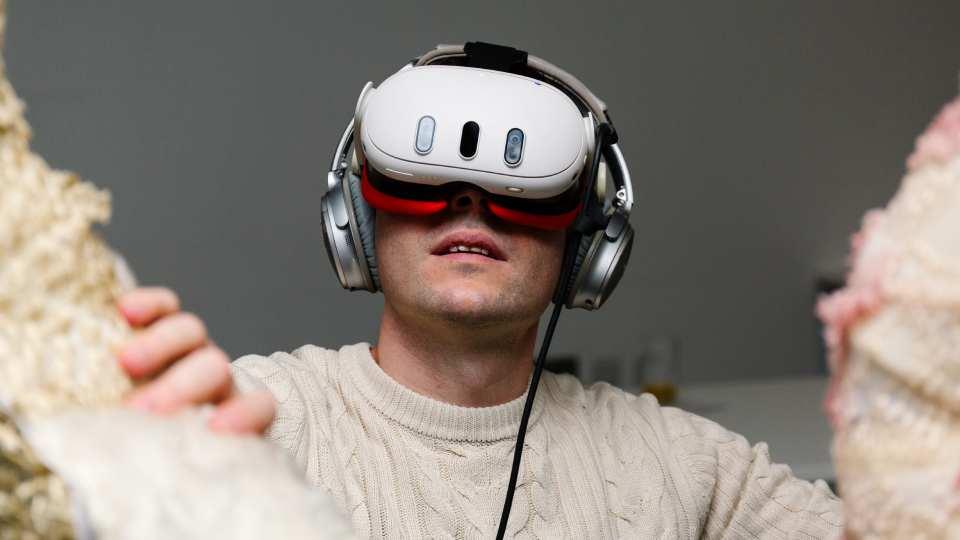
A participant immerses themselves in a virtual‑reality installation, blending creative technology with sensory exploration designed by Goldsmiths Computing PhD student Tianyuan Zhang
Goldsmiths welcomed students, alumni, industry partners, civic leaders and staff to mark the official opening of the School of Computing’s new hub in the Caroline Graveson Building. The newly refurbished four floor building now houses User Experience and Games labs, a dedicated space for PhD researchers, collaboration areas and a whole host of brand-new facilities, forming a central base for teaching, research and creative experimentation.
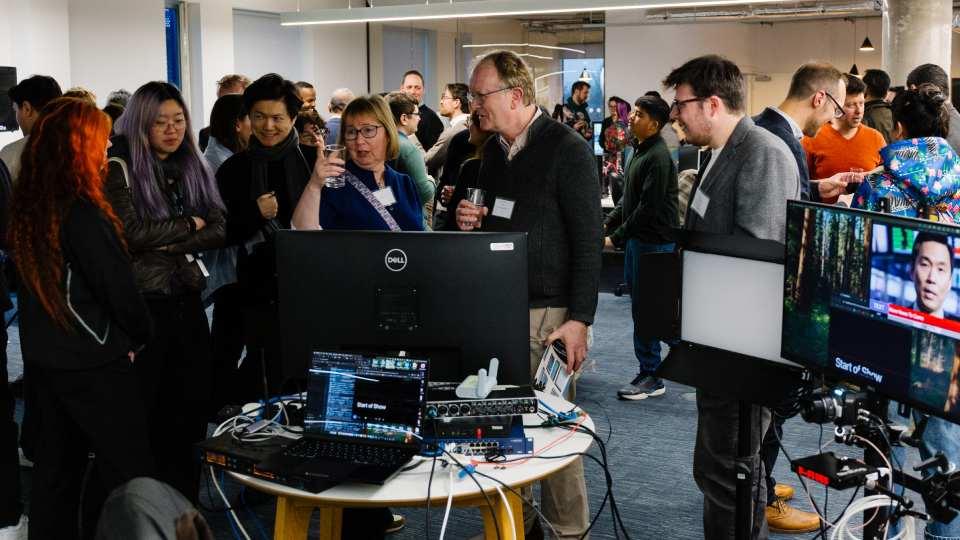
Students, staff, and industry guests gather around a live computing demo, exploring projects and prototypes showcased across the department.
Across the building, visitors explored projects spanning virtual reality, creative AI, computational arts, games, digital storytelling, robotics and interactive media.
The atmosphere reflected the breadth of disciplines and imaginative work emerging from Computing at Goldsmiths, including a standout selection of creative, computer science and AI, spatial and games work from staff, students and alumni.
Among these were outputs from students recognised by the prestigious Lumen Prize, work developed during the Tate Exchange residency with Anthropic, and ‘Sensing Nature’ by Tianyuan Zhang, winner of the Sensory Award at the Innovate UK Immersive Tech Awards 2025.
Computing at the heart of Goldsmiths’ creative heritage
Speaking at the event, Interim Vice Chancellor Professor David Oswell reflected on how the new building marks a significant moment in Goldsmiths’ 120-year history. He noted that Computing now carries forward the University’s longstanding culture of creativity, critical thinking and experimentation, all values that have shaped generations of artists, designers, performers and makers.
“This building does more than house equipment. It marks a new chapter in Goldsmiths’ long tradition of creativity, experimental and critical thinking. For 120 years, this has been a place where ideas take shape and where students learn to question, imagine and innovate.”
Professor David Oswell, Vice-Chancellor (Interim)
He described the launch as a moment that “brings Goldsmiths’ creative heritage into a new digital era,” pointing to projects across the building that combine technical skill with imagination.
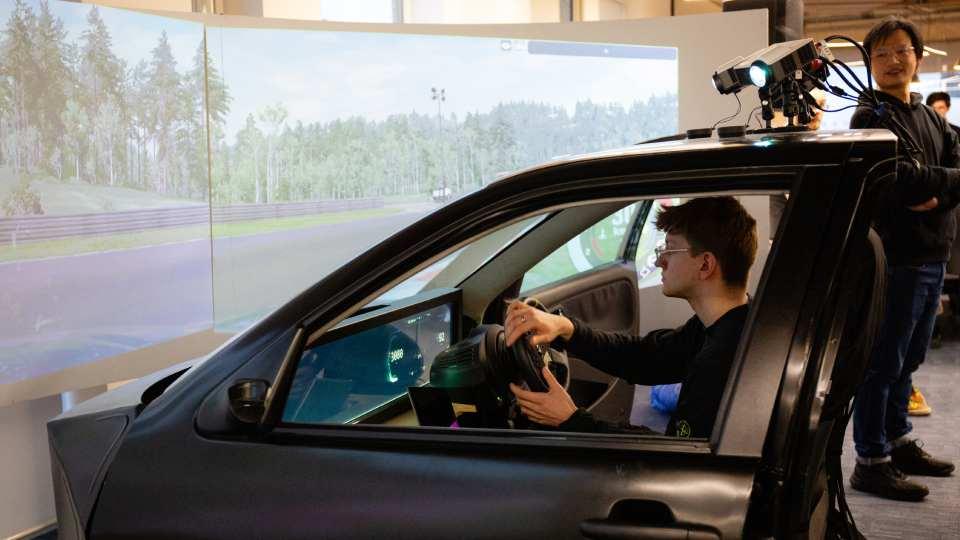
Student try out a custom‑built driving simulator, integrating real‑world hardware with bespoke software engineering
A space designed for collaboration and discovery
For Professor Jamie Ward, Head of the School of Computing, the new building brings long‑needed coherence to a fast‑growing community. He emphasised how the redesigned spaces, from the new computer labs on the 1st and 2nd floors, with 100 and 60 machines respectively, to specialist VR, AI, games and creative‑technology areas, now allow teaching, research and project work to happen more fluidly.
“This new hub gives Computing the kind of space that matches the scale of our ambitions, a place designed for collaboration, discovery and experimentation. The new computer lab on the second floor, alongside studios for VR, AI, games and creative technology, means students can develop ideas more fluidly and ambitiously."
Professor Jamie Ward, Head of School, Computing
"What you see around the building today is exactly the kind of interdisciplinary, creative computing that Goldsmiths is known for."
A hub for next generation computing and digital practice
The building is named after Caroline Graveson, Goldsmiths’ first Woman Vice Principal, appointed in 1905. Graveson was instrumental in shaping the College as a coeducational and inclusive institution that championed opportunity and skills development.
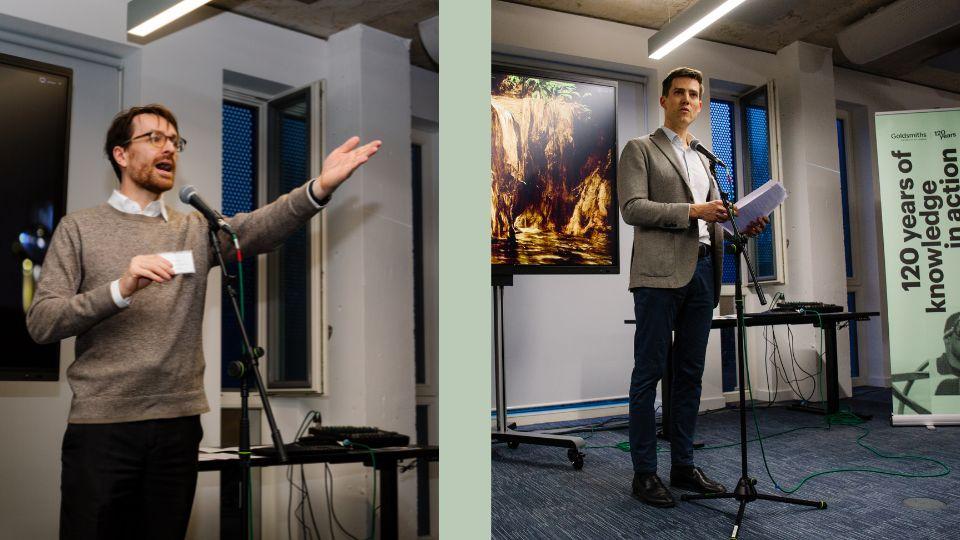
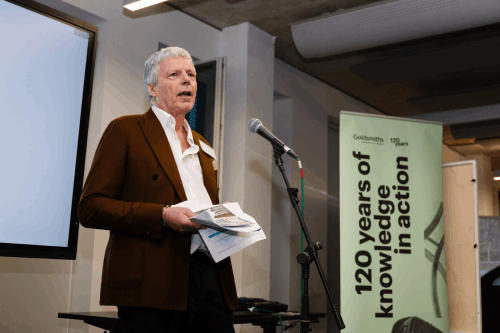
Professor Jamie Ward (left) welcomes guests and Tom Sleigh, Chair of Council (right) reflects on Goldsmiths' long tradition of innovation before declaring the building 'open'.
Chair of Council Tom Sleigh reflected on how her legacy resonates with the ambition of today’s Computing students, noting that the creativity and curiosity on display embodied the same spirit of experimentation and opportunity that Graveson championed.
Student innovation at the centre
Students and alumni led demonstrations throughout the building, sharing work in VR, AI, games, interactive installations, creative coding and digital arts. Many guests spent the evening in conversation with the creators, exploring how projects developed from concept to prototype.
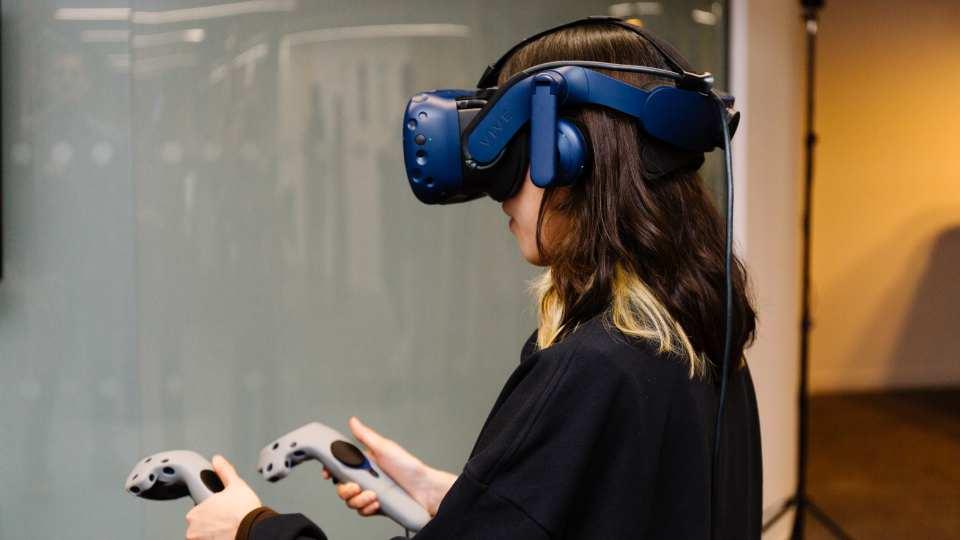
A participant immerses themselves in a virtual‑reality environment designed by Goldsmiths Computing students.
With a dedicated new space, the computing society Hacksmiths spoke with guests about their plans. “The new facilities are perfect,” said first year Computing student Alfonso Mantilla, from Ecuador and a member of the Hacksmiths team.
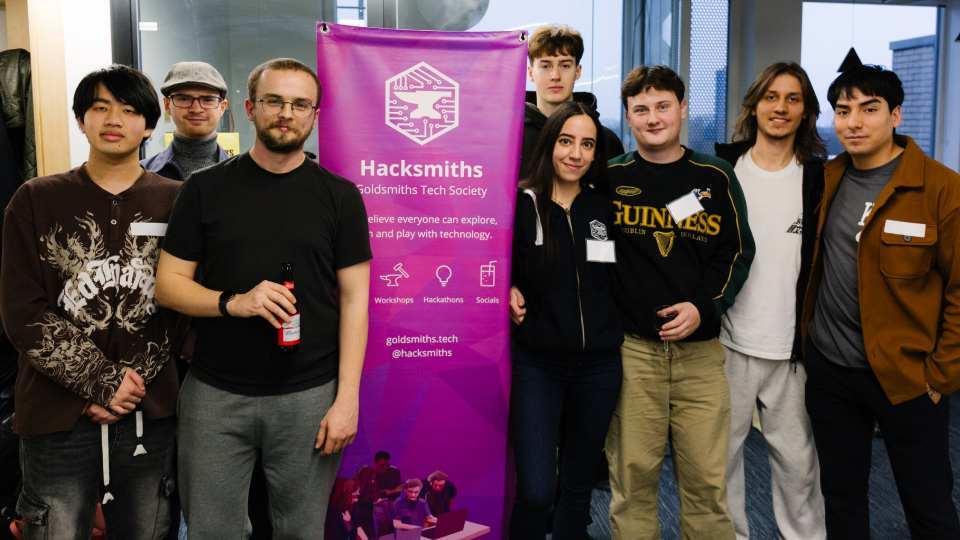
The Hacksmiths (l-r) Derek Chu, Archie Parks (with the grey hat), Bradley Jones, Roan Jones, Ana Berjano, Tom Curtis, Maksymilian Zarzycki & Alfonso Mantilla
“We’ve heard lots of great stories about the original Goldsmiths Hacksmiths, so with the new space, and by working alongside really experienced students and staff, we’re excited to build on that history and get hands on with much more ambitious projects together.”
Alfonso Mantilla, first year Computing Student and Hacksmith
A growing computing ecosystem across Lewisham and London
The event drew partners, and praise from, Lewisham Council, Lewisham College, Mulberry UTC, NHS teams, Innovate UK, Deloitte, the BBC, creative studios and arts organisations such as Tate Modern and Punchdrunk and Computing’s External Advisory Board, reflecting the diverse and expanding network connected to Computing at Goldsmiths.
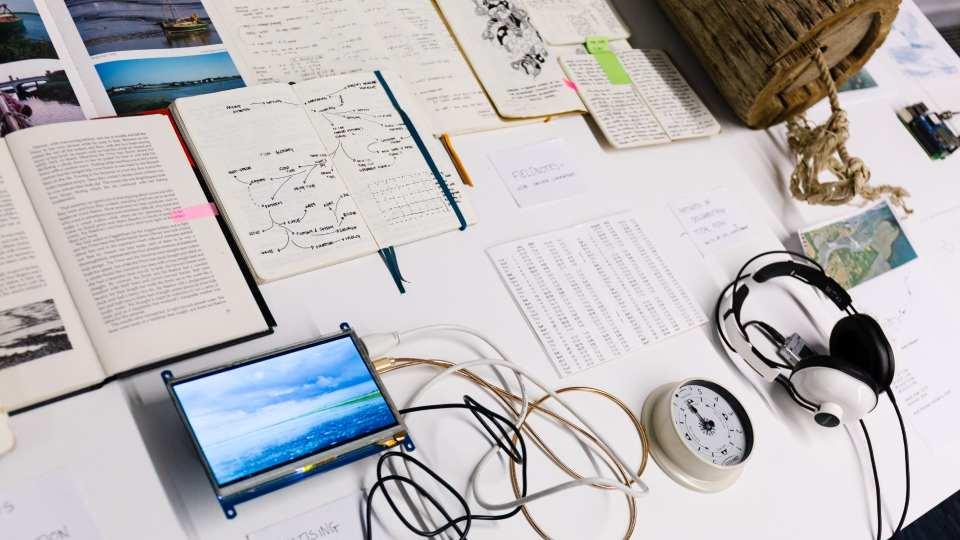
Sketchbooks, prototypes, and research materials on display, highlighting the diverse creative‑computing practices across the department.
A home for creativity, technology and the next generation of ideas
The new Computing hub in the Caroline Graveson Building will now host public events, workshops, hackathons, exhibitions and community engagement programmes. The space has been designed not only to support current teaching and research, but to spark new collaborations and connections provide students with a hub where a supportive peer community and the next generation of ideas can grow.
See where ideas can take you, join a community of creators, coders and technologists at Goldsmiths School of Computing