Louis Henderson
Primary page content
Louis Henderson's MPhil/PhD Art research project
The Secret Ladder: Underdevelopment as Opportune Deprivation in the Work of Wilson Harris
This practice-led research seeks to establish a cross-cultural collaboration between England and Guyana across different artistic practices of cinema, literature and performance in order to enquire into the problem-spaces of; race and representation, the afterlife of transatlantic slavery, and the sociological/ecological effects of colonial extraction.
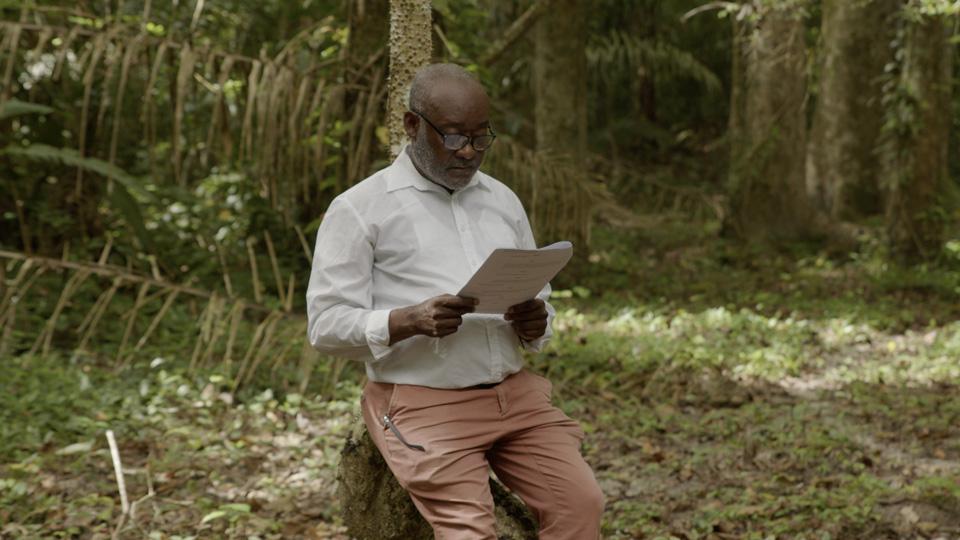
Offering a critical analysis of the work of Guyanese author Wilson Harris, this project will initiate a collaboration with a group of people that live in the village of Baracara along the Canje river in Berbice, Guyana. Baracara is where Harris set his 1963 novel The Secret Ladder, written on the eve of Guyanese independence about the encounter between two societies living in/with differing stages/understandings of development (The government of British Guiana) and underdevelopment (The descendants of maroons living along the Canje river).
The novel stages that difference as a way to interrogate what those terms mean and how they could be understood otherwise and this research sets out to argue that Harris celebrates ““underdevelopment”…as a positive symbol in his conception of Caribbean prospects - that of an opportune deprivation or dispossession” that encourages innovation as to ways of living outside and against the plantation-capitalist system.
In the last decade, vast reserves of oil were discovered and exploited off the coast of Guyana (moving from sugar fields to oil fields) and so the problem of development for some as being secured only through the active underdevelopment of others comes back into question. 63 years since The Secret Ladder was published it seems important to go back to Harris’ writing in order to think deeply about the effects this apparent economic windfall from crude oil will have on the environment and the local populations of humans, animals and plants.
It is not only an economic question about how to resist the oil curse, the so-called Dutch disease, but also an ecological question on what happens when development is premised on the exhumation of dead matter from under the earth.
Student website
Supervisors