First Nationwide Survey into Mental Health in the Indian Music Industry Launches
Primary page content
Pioneering research into the mental health of people working in the Indian music industry will be the most comprehensive as well as the first survey of its kind conducted in India.
In a global collaboration between the Global Music Institute and TAVTA - both based in India - and Goldsmiths alongside UK-based data specialists Creative Empirical, a comprehensive survey will capture and quantify the views and experiences of musicians and wider professionals working in the Indian music industry. The researchers are particularly interested in the non-film and/or independent sectors (the part of the music industry outside of the dominance of the Hindi film industry).
The survey, which partners with the Indian Performing Right Society (IPRS) for distribution, seeks to gain an understanding of the mental health and wellbeing of people working in the Indian music industry, and to tackle the stigma associated with the topic.
Pioneering research into occupational risks for musicians’ mental health
Previous research by Dr George Musgrave, Senior Lecturer in Cultural Sociology and Creative Industries, and Dr Dorian Lamis at Emory University revealed that musicians in the England and USA were at high risk of suicide. Detailed analysis of global mortality data identified higher risked factors linked to suicide for people working in music sector. Mortality data revealed that musicians were among the top five occupational groups with the highest suicide rate in England.
In 2020, research by Dr. Musgrave and Dr. Sally Anne Gross found that rates of anxiety and depression among both musicians and music industry workers were significantly higher than rates in the general population.
Dr Musgrave’s work has pioneered our understanding of occupational stress that may be associated with musicians’ mental health and suicide risk including profound emotional precarity, vulnerability to exposure on social media, travelling and touring and the emotional strain that can place on them, and investing their lives and identity in a precarious dream.
Dr Musgrave’s research over the past fifteen years has prompted calls for their music industries to take musician’s mental health seriously and to move beyond the unhelpful and potentially harmful romanticisation of suicide among this group. However, much of this research has focused on Europe and the United States, until now.
Dr Musgrave said: “Routine mortality data shows that musicians are an at-risk group for suicide. The data in this recent paper were shocking. But, along with giving pause to those working in the music industry in the UK and US they posed an equally important question about whether these mental health concerns are being replicated across the world.”
"With India’s independent music sector emerging as a major player in the global music industry it’s vital that we understand their lives and their experiences too given the role they play in the global music industry. We need this survey to paint a clear picture of the experiences of musicians and their co-workers so that active and meaningful steps can be taken."
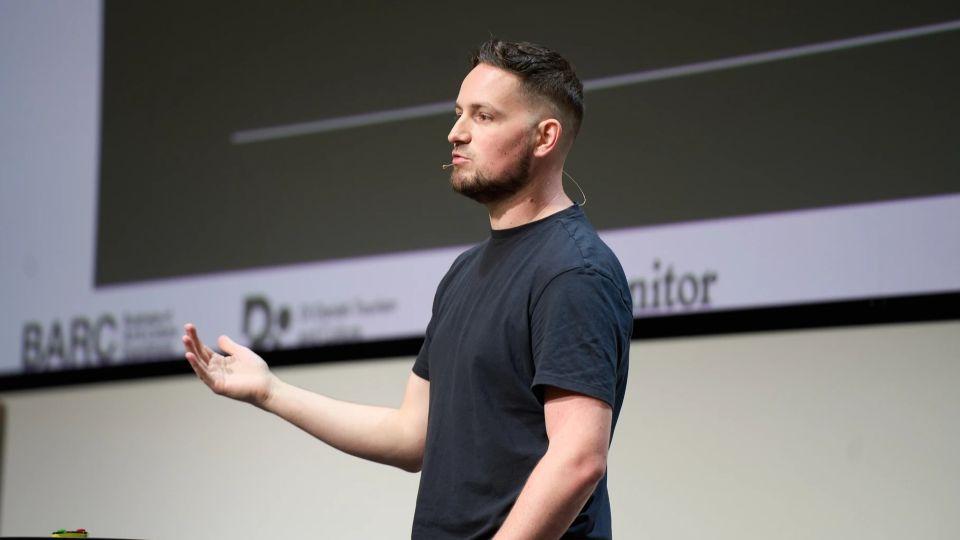
Dr George Musgrave presenting
Expanding the conversation to India
Dr Musgrave believes that the issue of anxiety, depression, poor well-being, and high suicide rates among musicians is not limited to the US and UK.
With celebrated voices sharing their experiences, the conversation about mental health in India is growing in momentum. Despite this, the music industry in India continues to grapple with mental health stigma, inadequate infrastructure, and a significant lack of research in the field.
‘It’s Time to Talk’ is a pioneering piece of research. It aims to gain an understanding of the health and wellbeing of people working in the Indian music industry to foster new cultures of care, more forms of tailored support to address industry-specific needs and challenges, and contribute towards building a safer, more empathetic, and sustainable music ecosystem in India.
The opportunity to learn more about mental health in this dynamic and vibrant music economy, and drive change to make a difference through our global collaboration, is incredibly exciting.
Dr George Musgrave, School of Creative Management
Goldsmiths Associate Lecturer Oliver Durcan, as Director of data specialists Creative Empirical, will also be contributing to the data analysis for the groundbreaking project.
If you are affected by any issues discussed in this article support is available for our students and staff from Goldsmiths and external organisations.