MA Computer Games: Art & Design
Content navigation menu
Why study MA Computer Games: Art & Design at Goldsmiths
This MA is tailored for people who want to start a career in the game industry. One of the only programmes in the UK taught by actual game developers, it will teach you game design, art and animation, and game programming. This programme has a strong focus on entrepreneurship and business, including the possibility to carry out an internship with industry partners.
- As a fast-growing 150-billion-dollar business, the game industry offers countless professional opportunities. The MA Computer Games: Art & Design is right for you if you want to make game development a sustainable career and to work in this creative and rewarding industry.
- Study in one of the only programmes taught by actual game developers, designers, and artists with years of experience in the game industry.
- Learn to design and develop games using state-of-the-art tools and game engines from actual game developers and industry veterans.
- Focus on which skills you want to learn, through a selection of option modules you can choose from.
- You will learn essential skills relevant to the Game Industry, including bringing your designs to life by developing and programming your own games. Depending on your previous coding experience, you will learn to program games through coding or using node-based editors.
- Collaborate with colleagues from other courses, including the MSc Computer Games Programming and the MA Games and Playful Design.
- Build your portfolio through practical coursework.
- Access state of the art game labs and facilities.
- Get your first internship in the game industry (or work on a research project instead).
- Take part in the many events and game jams we organise every year, and be part of the creative and diverse environment that surrounds Goldsmiths.
- Access the strong UK community of publishers and creators with innovative voices creating ground-breaking titles.
Contact
If you have specific questions about the degree, contact the programme leader, Alan Zucconi .
Length
1 year full-time or 2 years part-time
Entry requirements
You should have an undergraduate degree of at least second-class standard in a relevant/related subject. You might also be considered if you aren’t a graduate or your degree is in an unrelated field, but you have relevant experience and can show you can work at postgraduate level.
Fees
Home - full-time: £14300
Home - part-time: £7150
International - full-time: £21000
School
Subject

We are an Adobe Creative Campus. During your studies, you will be able to use Photoshop, Premiere Pro, Illustrator and more for free on your own devices.
Internship and Research Pathways
There are two pathways available to all students in the MA Computer Games - Internship or Research. The pathway must be chosen when you enrol but it may be changed on a case-by-case basis.
Internship
Students on the Internship pathway take part in an industry placement during the Summer Term. This is the perfect opportunity to kickstart your career in the game industry. We have a strong network of games companies and studios and have helped obtain placements for a significant number of students, many of whom secured permanent employement following this.
If you are a student visa holder, you might be able to work full-time (40 hours/week) during the Summer Term, giving you a strong advantage in your search for an internship. We also facilitate overseas students in taking up placements/internships in their home country with the option of remote supervision.
Research
Students on the Research pathway will work on a final project instead. This is recommended if you want to pursue an academic career, or if you want to deepen your knowledge in a specific area.
What you'll study
Compulsory modules
All students take the following modules:
| Module title | Credits |
|---|---|
| Modelling and Animation 1 | 15 credits |
| Modelling and Animation 2 | 15 credits |
| Game Design and Analytics | 15 credits |
You will also take one of the following modules.
If you are comfortable with coding, you can take Games Programming 1, which will teach you the basics of games programming using Unity and C#. If you have no previous coding experience, you will be advised to take Visual Games Development 1, which will allow you to code games using node-based editors.
| Module title | Credits |
|---|---|
| Games Programming 1 | 15 credits |
| or | |
| Visual Game Development | 15 credits |
Final project
Students on the Internship pathway are required to take part in an industry placement during the Summer Term.
Students on the Research pathway will work on a final project instead.
Teaching and assessment
Taught sessions and lectures provide overviews of themes, which students are encouraged to complement with intensive reading for presentation and discussion with peers at seminars.
Assessments build on lectures and seminars so students are expected to attend all taught sessions to build knowledge and their own understanding of their chosen discipline.
All assessed work is accompanied by some form of feedback to ensure that students’ work is on the right track. It may come in a variety of forms ranging from written comments on a marked essay to oral and written feedback on developing projects and practice as they attend workshops.
Talks, events, and conferences
Goldsmiths is a nexus for game development in London. Each year we run several events and bring guest speakers from the game industry. This is one of the ways we create more links with the industry and can offer our students help in getting internships in various games studios during the summer term.
These are some of the game-specific events that we run every year:
Global Game Jam
The Global Game Jam is a yearly event in which people from all over the world work on making a small game over the course of a weekend. For several years in a row, Goldsmiths has been proudly hosting the largest GGJ site in Europe, and in 2026 we became the second largest site globally.
The event is open to the public, and we welcomed game studios as well as students from other London colleges and universities (including London College of Communication, London Southbank University, SAE Institute, University of West London, University for the Creative Arts, and Imperial College London).
AI and Games Conference
Goldsmiths is home to the “AI and Games Conference”, now the largest game AI event in the world. The 2025 edition featured talks from Electronic Arts, Bitpart AI, Amazon Web Services, Ubisoft, Google, Databricks, Riot Games, Arm, Creative Assembly, and Kythera, among many other companies and universities.
The “AI and Games Conference” is organised in collaboration with Dr Tommy Thompson (best known for the popular AI and Games YouTube channel), Duygu Çakmak (Creative Assembly), Dr Gabriel Robert (Final Strike Games), Matthias Siemonsmeier (Splash Damage), and Alan Zucconi (Goldsmiths).
Seminar Series: Games & Entertainment Industries
A series of talks organised by Prof William Latham and Richard Leinfellner, bringing key figures from the creative industries all around the world. The list of previous speakers includes:
- Steve Goss, Creative Director, Supermassive Games
- Richard Wilson, Head of TIGA
- David Bishop, Head of Game Design, MindCandy
- John Ribbins, Creative Director, Roll7
- Jeff Wagner, Senior Technology and Production Consultant, SideFx
- Russell Clarke, Director of Product Development, Ideaworks Game Studio
- Sam Martin, Head of Technology, Geomerics
- Jonathan Taylor, MediaTonic
- Lee Singleton, Square Enix
- David Amor, MAG Interactive
- Greg Furber, Rewind
- Adam Whittaker, Natural Motion/Zegami
- Andrew Oliver and Phillip Oliver, Rebellion
- Tom Hegarty, Roll7
- Sam Hayhurst, 22 Cans
- Matt Carrol, Sports Interactive
- Martin Rigby, Investor
- Gaetano Dimita, IP Games Expert, Queen Mary Legal Faculty
Games Library Night
A biannual event taking place during Reading Week and organised by course leaders Alan Zucconi and Federico Fasce, which celebrates the more independent side of the game industry. We use these opportunities to showcase students' games to the public and give space to underrepresented voices in the industry.
Game Nights
Here at Goldsmiths, we occasionally run game nights, where staff and students can play together. We currently host a large Minecraft Server where students from all game courses are welcome to join. The server includes a faithful reconstruction of the Richard Hoggart Building, which is Goldsmiths’ main building.
Entry requirements
You should have (or expect to be awarded) an undergraduate degree of at least second-class standard in a relevant/related subject, such as Game Design/Development, Art, Design, 3D Modelling, Animation or Computer Science.
You might also be considered if you aren’t a graduate or your degree is in an unrelated field, but have relevant experience and can show that you have the ability to work at postgraduate level.
In some instances, we may ask to see more of your work or to conduct a short interview.
International qualifications
We accept a wide range of international qualifications. Find out more about the qualifications we accept from around the world.
If English isn’t your first language, you will need an IELTS score (or equivalent English language qualification) of 6.5 with no element lower than 6.0 to study this programme. If you need assistance with your English language, we offer a range of courses that can help prepare you for postgraduate-level study.
How to apply
Apply directly to Goldsmiths using our online application system
Before submitting your application you’ll need to have:
- Details of your academic qualifications
- The email address of your referee who we can request a reference from, or alternatively a copy of your academic reference
- Copies of your educational transcripts or certificates
- A personal statement – this can either be uploaded as a Word Document or PDF, or completed online. Please see our guidance on writing a postgraduate statement
- A portfolio of relevant work (see below)
You'll be able to save your progress at any point and return to your application by logging in using your username/email and password.
Submitting your portfolio
A portfolio of relevant work (such as digital games, programming samples, art-based/sketchbook, games assets, design documents) is required for your application. This could take whichever form works best to showcase your work, although a PDF or a video is strongly encouraged.
If you have worked on a game, the best way to showcase it is to include a link to a gameplay video. Please be advised that due to safety reasons, we cannot play executable or install files sent by applicants; so a video and a WebGL build would be ideal to showcase your games.
If you have worked on other, non-games related creative projects, you are welcome to show that in your portfolio, as everything that can demonstrate your creativity and commitment is welcome. Please note that our system has a maximum file size of 20mb so you may need to host your work elsewhere and upload a link.
When to apply
We accept applications from October for students wanting to start the following September.
We encourage you to complete your application as early as possible, even if you haven't finished your current programme of study. It's very common to be offered a place that is conditional on you achieving a particular qualification.
Late applications will only be considered if there are spaces available.
If you're applying for funding, you may be subject to an earlier application deadline.
Selection process
Admission to many programmes is by interview, unless you live outside the UK. Occasionally, we'll make candidates an offer of a place on the basis of their application and qualifications alone.
Find out more about applying.
Fees and funding
Annual tuition fees
These are the PG fees for students starting their programme in the 2026/2027 academic year.
- Home - full-time: £14300
- Home - part-time: £7150
- International - full-time: £21000
If your fees are not listed here, please check our postgraduate fees guidance or contact the Fees Office, who can also advise you about how to pay your fees.
It’s not currently possible for international students to study part-time under a student visa. If you think you might be eligible to study part-time while being on another visa type, please contact our Admissions Team for more information.
If you are looking to pay your fees please see our guide to making a payment.
Additional costs
In addition to your tuition fees, you'll be responsible for any additional costs associated with your course, such as buying stationery and paying for photocopying. You can find out more about what you need to budget for on our study costs page.
There may also be specific additional costs associated with your programme. This can include things like paying for field trips or specialist materials for your assignments. Please check the programme specification for more information.
Paying your fees
Find out about paying your tuition fees.
If you are a UK student you may be eligible for a postgraduate loan.
Meanwhile our Careers Service can also offer advice on finding work during your studies.
Student work
Pivot
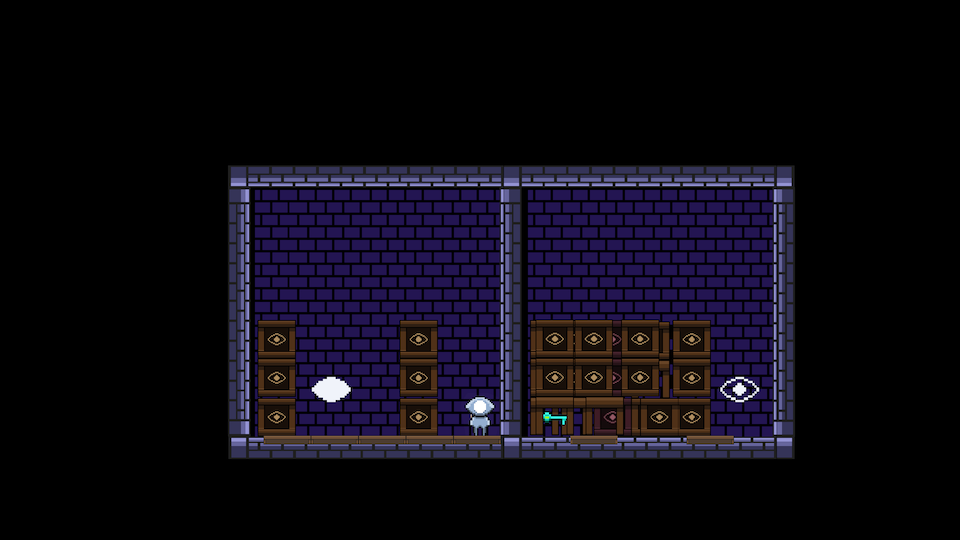
For his first project at Goldsmiths, Michael and his cohort were tasked with creating a vertical slice of a 2D game.
"I had some experience with working on 2D games, so I wanted to take the opportunity to push myself further. In the end, I was able to create Pivot my 2D game inspired by the game Fez. I was able to recreate that game's mechanics and apply them to my own. I was able to achieve something I had never done before and was able to learn from it. This thought process would be applied to my way of working throughout the course."
Unreal Engine 4 project
Zipeng Cheng created this Unreal Engine 4 project from scratch, producing a finished game demo.
Explore more student work
You can see some of the games and projects our students worked on as part of their studies on the GamesAtGold page on itch.io.
Careers
Where this degree can take you
Our programme opens up multiple career options including:
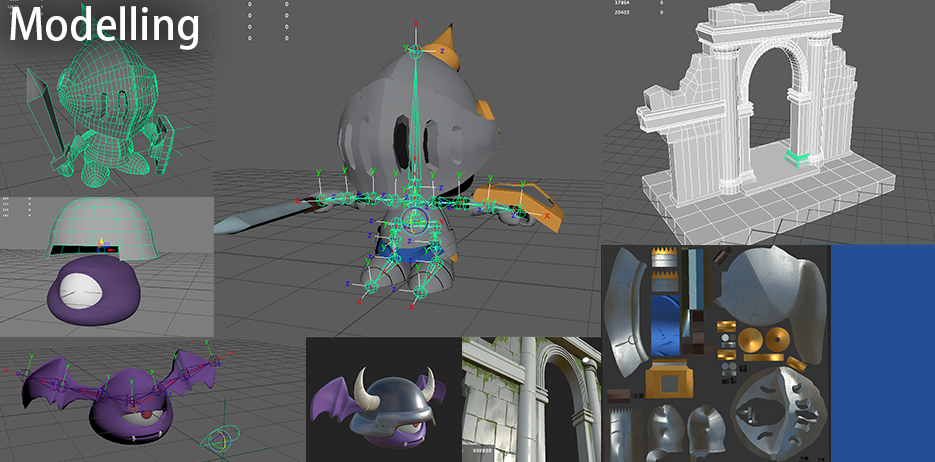
- 2D and 3D Modeller or animator for the Games, XR, Film and TV Special Effects Industry (Art and Design Pathway)
- Producer in a Games Development Company, leading to senior management roles
- Computer Games Developer for the Serious Games and Gamification Sectors
- Creative Games and Interactive Technical Lead in an Advertising Agency
- Creative Director Role in small or medium company
The MA Computer Games is the perfect fit for anyone who is – or wants to be – in one of the following positions:
- People who want to find a job in the game and entertainment industries
- Game designers who want to learn how to code to bring their ideas to life
- 3D Artists, riggers, and animators who want to master state-of-the-art modelling software
- Character artists and concept artists and who want to create assets for games
- Game developers who want to improve their programming skills
- Creative people who want to use interactive technologies for their projects
Industry links
As part of the MA, students may choose to do an internship with a games-related company. Over the years we worked closely with industry leaders and game studios to offer industry placements.
Many internships result in permanent positions, and almost 100% of our graduates find work four to five months after finishing the programme. Some have gone on to work in major studios like EA, Ubisoft, Sony, Creative Assembly, Microsoft, Cinesite, Framestore, Splash Damage, Rebellion Studios, Mediatonic, Frontier, Supermassive Games, and Roll7, as well as getting funded for start-ups such as Terrardhard.
Oversea students might be able to do their internship in their home country, with Tencent Games being a popular choice for many.
We have dedicated employability resources to build employer relations and manage additional initiatives to support your future career opportunities, including regular communication of external opportunities for mentoring and work experience and an annual Career week (a focussed week of career support every June where you can access alumni panels by programme and a range of industry talks).
Staff
Staff teaching on this programme include: