MA/MFA Photography Practice
Content navigation menu
Why study MA/MFA Photography Practice at Goldsmiths
If you have any questions about the MA Photography Practice at Goldsmiths, you can meet with the programme convenor online.
The MA/MFA Photography Practice at Goldsmiths approaches photography as an expanded art form in a time of radical transformation. You will develop your art practice within one of the UK's oldest and most established schools for media and cultural studies, where photography is read through power, culture and technology, not craft alone.
Over one year, you'll move from open experimentation to a resolved body of work, presented in a public degree show. You'll work across analogue, digital and emerging media in well-equipped darkrooms, studios and digital suites, supported by specialist technicians, with the room to take risks early and the structure to commit to a sustained project.
- Learn how to look. We build the visual sensitivity required to make powerful images mainly through critique: reading how images are made and how they speak, how politics and culture fold into a single frame, and what you actually think, know and have to say.
- A small, close cohort. The course is intensive and the group stays small, so you spend real time with the same people all year, and friendships form fast. The same tutors and technicians work with you throughout, so the professional relationships you build have time to actually matter.
- Photography as an expanded field. Move between darkroom, digital, moving image, installation and emerging tools as your ideas require, with the conceptual grounding to make those moves mean something.
- Space for critical thinking. Our theory teaching, including Gender, Sexuality and Affect, Race and Technology, and Contemporary Feminist Media Cultures, comes from the School of Media, Communication and Cultural Studies’ tradition and gives your work a sharper frame than technique alone.
- A public exhibition. Your practice culminates in a degree show, with professional documentation and contextual writing.
- London, and a real industry. Close ties to London's photography world, including galleries, festivals, curators, photo editors and professional labs.
- Facilities and expert support. Darkrooms, studios, large-format printing, expanded-media and immersive video facilities, with technical staff who know how to help you realise ambitious work.
- A high-ranking school. Ranked 2nd in the UK for research quality (REF 2021) and 18th in the world for Communication and Media Studies (QS World University Rankings by Subject 2026).
- The option to upgrade to an MFA. Progress to the MFA for a further year of sustained, self-directed practice, one-to-one mentoring and professional development, resolved in a public MFA exhibition. If you want the weight of a further two years behind your qualification, the MFA gives you that: a distinct, internationally recognised award, not just a longer MA.
Contact
If you have specific questions about the degree, contact Jacob Love .
Length
1 year full-time for the MA, 2 years full-time for the MFA
Entry requirements
You should have (or expect to be awarded) an undergraduate degree of at least 2:2 standard in a relevant/related subject. You will also be required to provide a photographic/creative portfolio containing 3-5 projects.
Fees
Home - full-time: £14900
International - full-time: £28600
School
Media, Communications and Cultural Studies

We are an Adobe Creative Campus. During your studies, you will be able to use Photoshop, Premiere Pro, Illustrator and more for free on your own devices.
What you'll learn:
- Visual sensitivity: build the eye to create powerful images, developed through sustained critique
- Technical range: work confidently across analogue and digital processes, and the emerging tools reshaping the medium
- Critical framing: read photography through power, culture and technology, not technique alone
- Professional presentation: prepare and present a body of work to exhibition standard, with contextual and reflective writing
- Sustained independent practice (MFA): if you progress to the second year, develop a substantial body of work to a professional, exhibition-ready standard over a further twelve months
What you'll study
On both the MA and MFA pathways, you will follow the same programme strucure in Year 1.
MA (Year 1)
You'll engage with photography through hands-on workshops, critical seminars, one-to-one tutorials, and independent research. Our approach emphasises both technical precision and creative experimentation, encouraging you to develop work through cycles of making, critique, and refinement that sharpen your visual sensibility.
Term 1
The programme begins with a period of intensive exploration and experimentation. During your first term, you'll test ideas, techniques, and approaches through diverse workshops and projects, culminating in an interim exhibition early in the spring.
This initial phase encourages productive risk-taking and discovery, creating space for unexpected breakthroughs that might inform your developing practice.
Term 2 and 3
Building on these discoveries, the second half of the programme shifts toward sustained development of your individual project. With ongoing tutorial support and technical guidance, you'll refine your creative voice and conceptual framework while deepening your technical mastery. This extended investigation culminates in the Final Degree Show, where you'll present a substantial body of work alongside professional documentation and contextual writing that demonstrates both your technical accomplishment and conceptual depth.
This journey from open exploration to focused development gives you the freedom to discover new possibilities before committing to a sustained investigation of your most compelling ideas.
MFA (Year 2)
You can choose to take a second year of study and upgrade your degree to an MFA. During this year, you will focus solely on developing your practice.
Teaching and learning
Critique is central to how you learn here. You return to the group with your work at every stage, and learn to read an image closely enough to argue for it: how it is made, how it speaks, how politics and culture fold into a single frame, and, most importantly, what you actually think, what you know, and what you have to say. That same scrutiny allows you to become more nuanced and complex in your own making.
How you'll be assessed
Assessment is by portfolio submission, coursework and written essays.
Work submitted for assessment emphasises real-world outputs, which could include exhibitions (such as an interim show or the final degree show), multi-channel video installation, artist books and zines, alongside reflective writing and contextual research and development documentation.
In the MFA year, assessment also includes a viva, in which you set out and defend the thinking behind your final body of work.
Watch videos of student work
Our community
- Dynamic international cohort: Study alongside students from diverse cultural backgrounds who bring unique perspectives to image-making
- London connections: Benefit from our close ties to London's vibrant art scene and photography community, including special relationships with Peckham24 photography festival and other high profile commercial galleries
- Expert faculty: Learn from active practitioners who are pushing the boundaries of contemporary photography through their own research and creative work
- Critical context: Position your practice within the rich intellectual environment of Goldsmiths, where photography is examined at the intersection of art, media, and society
What our students say
.JPG)
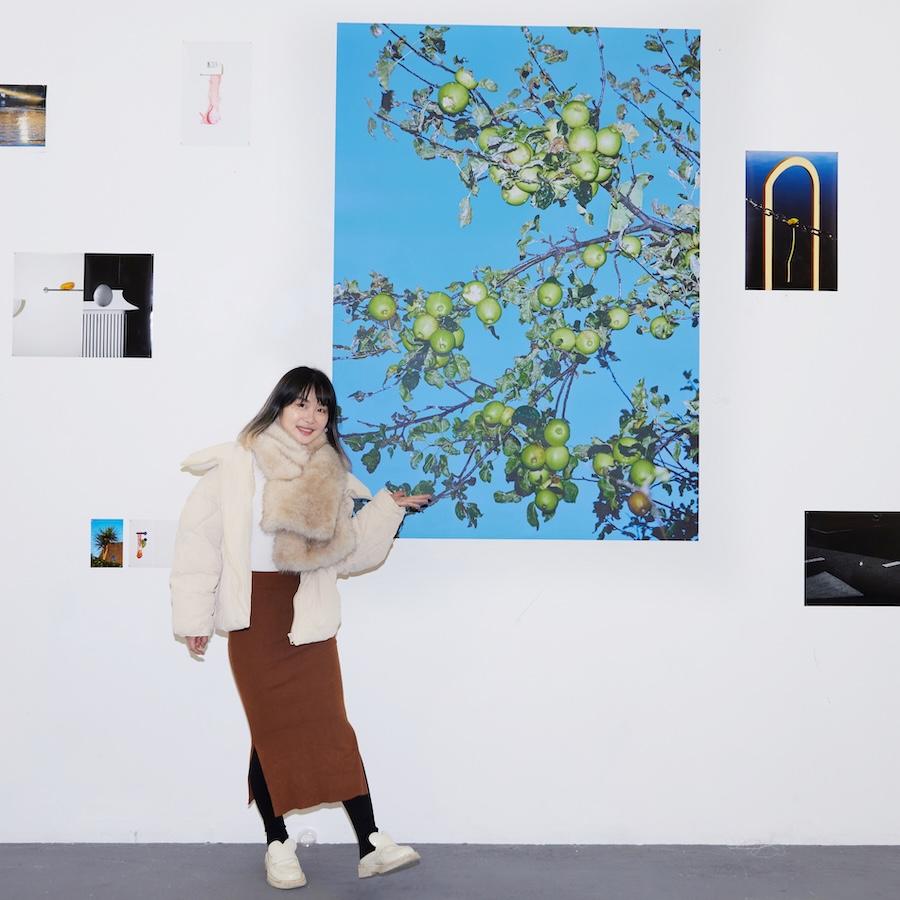
Technical facilities and workshops
Our extensive facilities support both traditional and experimental approaches:
- Analogue: medium and large format cameras, darkrooms, alternative processes, film technologies
- Digital: high-end cameras, studio lighting, post-production suites, large-format printing
- Expanded media: moving image, sound, 3D, and the Sonic Immersive Media Lab for large-scale multiscreen video installation
- Emerging tools: AI image generation, computational photography, CGI
- Making and showing: bookbinding, zine production, dedicated installation and exhibition space
Facilities access continues through the MFA year if you choose to progress into Year 2.
Entry requirements
You should have, or expect to be awarded, an undergraduate degree of at least second class standard in a relevant or related subject, along with some practical experience in a relevant area.
You will also need to submit a portfolio of around 3 to 4 completed creative projects.
You may also be considered if you are not a graduate, or your degree is in an unrelated field, but you have relevant experience and can show you are ready to work at postgraduate level.
International qualifications
We accept a wide range of international qualifications. Find out more about the qualifications we accept from around the world.
If English isn’t your first language, you will need an IELTS score (or equivalent English language qualification) of 6.5 with 6.5 in Speaking and no element lower than 6 to study this programme. If you need assistance with your English language, we offer a range of courses that can help prepare you for postgraduate-level study.
Fees and funding
Annual tuition fees
These are the PG fees for students starting their programme in the 2027/2028 academic year.
- Home - full-time: £14900
- International - full-time: £28600
If your fees are not listed here, please check our postgraduate fees guidance or contact the Fees Office, who can also advise you about how to pay your fees.
It’s not currently possible for international students to study part-time under a student visa. If you think you might be eligible to study part-time while being on another visa type, please contact our Admissions Team for more information.
If you are looking to pay your fees please see our guide to making a payment.
Funding opportunities
Explore the Goldsmiths scholarships finder to find out what funding you may be eligible for.
Paying your fees
Find out about how to make a payment.
If you are a UK student you may be eligible for a postgraduate loan.
Additional costs
In addition to your tuition fees, you'll be responsible for any additional costs associated with your course, such as buying stationery and paying for photocopying. You can find out more about what you need to budget for on our study costs page.
There may also be specific additional costs associated with your programme. This can include things like paying for field trips or specialist materials for your assignments. Please check the programme specification for more information.
Careers
You'll graduate with a distinctive practice, strong technical and conceptual skills, and the critical thinking to work across contemporary art and commercial contexts.
Careers our previous graduates have undertaken:
- Exhibiting artist
- Commercial or editorial photographer
- Educator
- Curator
- Roles across the creative industries where strong visual literacy matters
If you progress to the MFA, the additional year builds toward:
- A resolved, professional body of work and public exhibiting profile
- Progression to doctoral research
- Teaching, particularly abroad: the MFA is internationally recognised as the terminal degree in studio practice and is the standard teaching qualification in countries including the US
How to apply
You apply directly to Goldsmiths using our online application system for MA Photography Practice.
If you know you want to work toward the MFA, you apply in the same way: during your first year you will have the opportunity to progress onto the second (MFA) year. There is currently no separate application route for the two-year MFA at the point of application.
You apply directly to Goldsmiths using our online application system.
Before submitting your application you’ll need to have:
- Details of your academic qualifications
- The email address of your referee who we can request a reference from, or alternatively a copy of your academic reference
- Copies of your educational transcripts or certificates
- A personal statement – this can either be uploaded as a Word Document or PDF, or completed online. Please see our guidance on writing a postgraduate statement
- A photographic/creative portfolio containing 3-4 projects in a single PDF. If you have any questions about your portfolio, contact j.love(@gold.ac.uk).
Most decisions will be made on the basis of your application and portfolio but some applicants may be interviewed.
There is no deadline for this programme but we recommend applying early as places are limited.
Find out more about applying.