Notice: Undefined variable: overrideActive in /var/www/html/pg/ma-promotional-media/index.php on line 683
MA Promotional Media: Public Relations, Advertising and Marketing
Content navigation menu
Why study MA Promotional Media: Public Relations, Advertising and Marketing at Goldsmiths
The MA Promotional Media explores the impact of digital platforms, artificial intelligence and automation on promotional professions, skills and techniques.
- You will explore the convergence between public relations, advertising, and marketing roles, as well as digital-first roles including paid social, short-form video production, social listening, and community management.
- This MA isn’t about studying ads or press coverage, but about becoming a professional who can cross-examine and critique the power dynamics between promotional professions, their client-organisations and today’s platformised media landscape.
- At its core, this Masters looks at how you can better serve society by improving communications across the promotional disciplines, and how public relations (PR), advertising, and marketing professionals can best develop within a challenging, fast-changing digital world.
- You’ll learn how to reflect on contemporary intellectual theories – including digital media studies, sociology, feminist theory, software studies and algorithmic culture – and apply them to workplace realities so you plan the next decade of your career.
- The School of Media, Communications and Cultural Studies (MCCS) has been ranked second in the UK for 'world-leading or internationally excellent' research (Research Excellence Framework, 2021) and 22nd in the world (fourth in the UK) in the 2025 QS World Rankings by Subject.
The questions we explore
- We want you to understand the existing power struggles shaping traditional and digital-first promotional professions as they get to grips with AI, automation and digital platforms. Therefore, this programme will look at public relations, advertising, and marketing as inter-related disciplines, drawing on theoretical and professional debates around industry issues as they happen.
- You’ll explore the implications of Generative AI on production practices in promotional work, and the skills required to contend with the growing mountain of marketing technology or ‘martech’ software now serving the promotional industries.
- You’ll also examine current industry expectations and trends, and look at the crossovers between digital skills, creativity, management, and strategy.
The processes we use
- The programme blends theory and practice-based teaching on its core modules. In addition, you’ll have many practice-based options in different subject areas, from storytelling strategies to film craft fundamentals, digital audiovisual media, to consumer behaviour or marketing strategy.
- You'll also get the latest insights from industry professionals across PR, advertising and, marketing through our visiting speaker series. Recent industry guests have discussed: go-to market strategies for the tech sector, executing campaigns with creator communities, and developing effective ‘social-first’ strategies.
- We periodically host public seminars on topics such as algorithmically enabled digital advertising, with prestigious academic speakers from around the UK.
- You’ll also be encouraged to attend the School's Community Lectures and Media Forums, which cover everything from ‘Platform Capitalism and the Gig Economy’ and ‘Radical Ethics and Transformative Justice for Responsible AI’.
Contact
If you have specific questions about the degree, contact Dr Clea Bourne .
Length
1 year full-time or 2 years part-time
Entry requirements
You should have (or expect to be awarded) an undergraduate degree of at least 2:2 standard in a relevant/related subject. You might also be considered if you aren’t a graduate or your degree is in an unrelated field, but you have relevant experience and can show you can work at postgraduate level.
Fees
Home - full-time: £11800
Home - part-time: £5900
International - full-time: £23000
School
Media, Communications and Cultural Studies

We are an Adobe Creative Campus. During your studies, you will be able to use Photoshop, Premiere Pro, Illustrator and more for free on your own devices.
Overview
Throughout the compulsory components of the degree, you'll examine the many ways that public relations, advertising, marketing and emerging promotional specialisms are represented in society, together with the skills and techniques enacted by practitioners in their day-to-day roles. You will be encouraged to develop your critical and analytical skills, but also to think creatively and become more confident in your academic judgment.
Note that this isn’t a business studies-style MA. It’s a rigorous, academic programme that investigates promotional workers, their workplace experiences, and their use of media in today’s campaigns and debates.
Our compulsory modules apply fields such as sociology, anthropology, feminist studies, digital media and digital cultural studies to public relations, advertising and marketing, exploring how these and other promotional professions work together, where they overlap, and where the tensions lie.
You also have the freedom to choose optional modules from across theory and practice in different subject areas.
Goldsmiths prides itself on its innovative and critical approaches, and you will be encouraged to immerse yourself in its wider intellectual environment to deepen your understanding of the cultural infrastructure surrounding PR, Advertising, Marketing and other promotional work.
What you'll study
Compulsory modules
All students take the following modules:
| Module title | Credits |
|---|---|
| Promotional Media I: Changing Fields & Contexts | 30 credits |
| Promotional Media II: Campaign Skills & Techniques | 30 credits |
| Dissertation | 60 credits |
Note about optional modules (if available): The above is indicative of the typical modules offered, but is not intended to be construed or relied on as a definitive list of what might be available in any given year. The module content and availability is subject to change.
Structure
The Masters is built up of modules worth 180 credits. The programme comprises:
- Two compulsory modules taught in the School of Media, Communications and Cultural Studies (60 credits in total)
- A 12,000-word dissertation (60 credits)
- Optional modules chosen from MCCS or from other subject areas (60 credits)
How you'll be assessed
- You will be assessed primarily through coursework essays and written projects.
- Both compulsory modules include group presentations, including the opportunity to develop a promotional campaign.
- Practical modules may require audiovisual elements to be submitted.
- Your final piece of work will consist of a dissertation of approximately 12,000 words.
What our students say


Entry requirements
You should have (or expect to be awarded) an undergraduate degree of at least second class standard in a relevant/related subject.
You might also be considered for the programme if you aren’t a graduate or your degree is in an unrelated field, but you have relevant experience and can show that you have the ability to work at postgraduate level.
International qualifications
We accept a wide range of international qualifications. Find out more about the qualifications we accept from around the world.
If English isn’t your first language, you will need an IELTS score (or equivalent English language qualification) of 6.5 with a 6.5 in writing and no element lower than 6.0 to study this programme. If you need assistance with your English language, we offer a range of courses that can help prepare you for postgraduate-level study.
How to apply
Apply directly to Goldsmiths using our online application system
Before submitting your application you’ll need to have:
- Details of your academic qualifications
- The email address of your referee who we can request a reference from, or alternatively a copy of your academic reference
- Copies of your educational transcripts or certificates
- A personal statement – this can either be uploaded as a Word Document or PDF, or completed online. Please see our guidance on writing a postgraduate statement
You'll be able to save your progress at any point and return to your application by logging in using your username/email and password.
When to apply
We accept applications from 1 October for students wanting to start the following September.
We encourage you to complete your application as early as possible, even if you haven't finished your current programme of study. It's very common to be offered a place that is conditional on you achieving a particular qualification.
Late applications will only be considered if there are spaces available.
If you're applying for funding, you may be subject to an earlier application deadline.
Selection process
Admission to many programmes is by interview, unless you live outside the UK. Occasionally, we'll make candidates an offer of a place on the basis of their application and qualifications alone.
Find out more about applying.
Fees and funding
Annual tuition fees
These are the PG fees for students starting their programme in the 2026/2027 academic year.
- Home - full-time: £11800
- Home - part-time: £5900
- International - full-time: £23000
If your fees are not listed here, please check our postgraduate fees guidance or contact the Fees Office, who can also advise you about how to pay your fees.
It’s not currently possible for international students to study part-time under a student visa. If you think you might be eligible to study part-time while being on another visa type, please contact our Admissions Team for more information.
If you are looking to pay your fees please see our guide to making a payment.
Funding opportunities
Aziz Foundation Scholarship
Up to nine full fee waiver scholarships are available. The scholarship is open to British Muslims who are Masters offer holders with specific career aspirations, including a career in media or journalism.
Find out more about the Aziz Foundation Scholarship.
Explore the Goldsmiths scholarships finder to find out what funding you may be eligible for.
Paying your fees
Find out about how to make a payment.
If you are a UK student you may be eligible for a postgraduate loan.
Additional costs
In addition to your tuition fees, you'll be responsible for any additional costs associated with your course, such as buying stationery and paying for photocopying. You can find out more about what you need to budget for on our study costs page.
There may also be specific additional costs associated with your programme. This can include things like paying for field trips or specialist materials for your assignments. Please check the programme specification for more information.
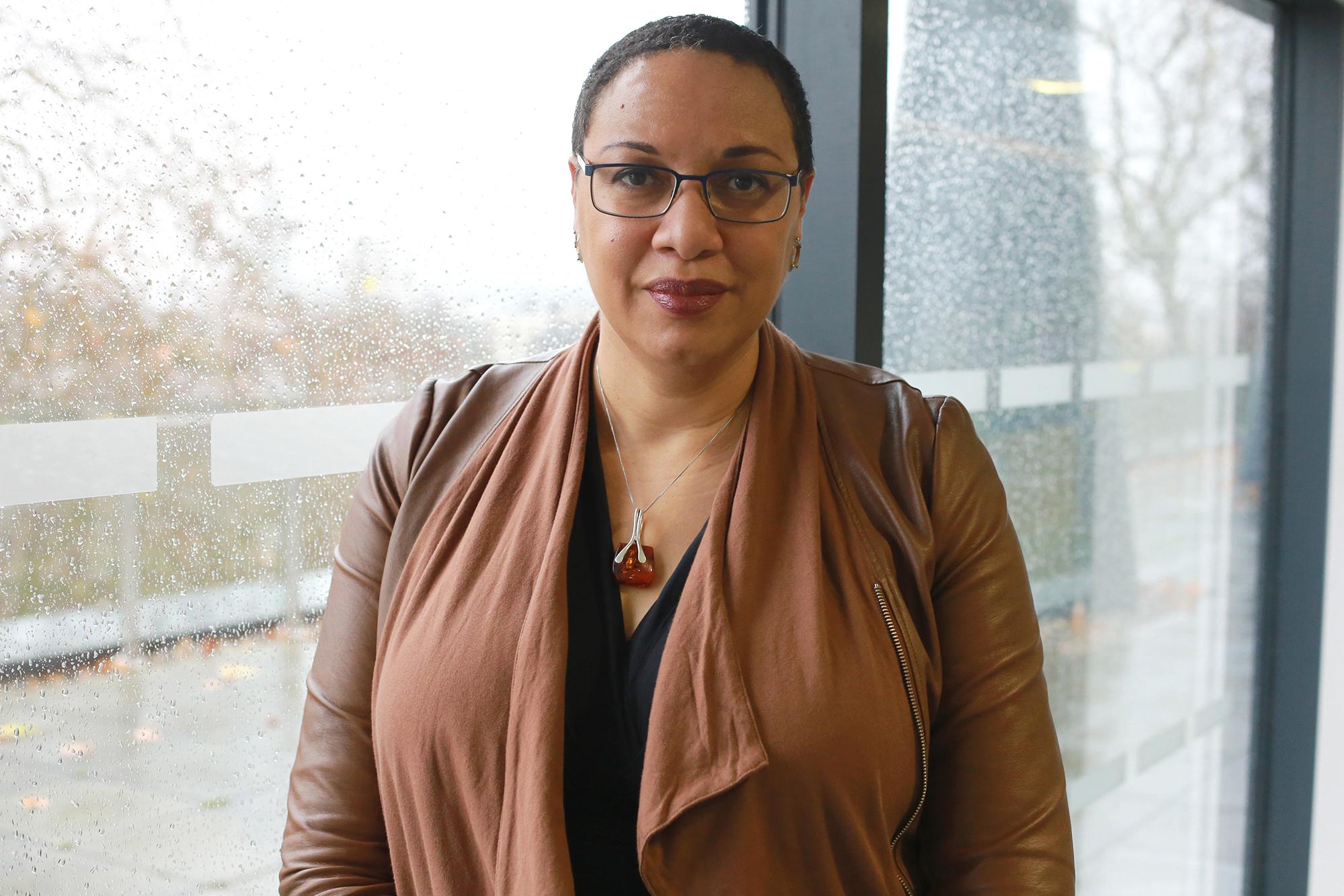
Find out more about staff in the School of Media, Communications and Cultural Studies.
Careers
Where your Masters could take you
- Account executives
- Content marketers
- Corporate communicators
- Digital copywriters
- Event managers
- Government communicators
- Influencer marketing specialists
- Paid social executives
- Platform strategists
- Product managers
- Media buyers
- Media planners
- Marketing officers
- Online community managers
- Programmatic advertising executives
- SEO/GEO analysts
- Sponsorship coordinators
- UI/UX copywriters
You can read more about possible career options after you graduate on our careers page.
Skills
Recent dissertations
Your dissertation (60 credits) is an opportunity to dissect industry trends or issues.
Recent dissertation topics include:
-
Bollywood Weddings: Celebrity Wives, Fabulous Lives
-
China’s Millennials: Rejecting Luxury Products?
-
Empowering Disability Narratives: Disabled Bodies on Social Media
-
Gamification in Marketing Sugary Snacks
-
Emotional Labour on TikTok
-
Evolving Storytelling of Black Women’s Hair
-
Framing Poverty on Thai Social Media
-
High-Tech Storytelling: A Typology for Technology Marketing
-
Live from the White House: Government communication and the Trump Administration
-
Online Ad Fraud and Search Engine Advertising on Baidu
-
Media Brands’ Response to ‘Fake News’
-
Promoting the UK’s Aesthetic Dentistry Boom
-
Public Relations and Participatory Culture in South Korea
-
Public Sector Brands on Social Media: The NHS and The Met Police
-
Nostalgia Aesthetics in Influencer Marketing
-
Rebranding Strategies in Aviation Marketing
-
Representing ‘Active Seniors’ in Korean Advertising
-
Social Media Affordances in the Chinese music streaming market
-
Youtubers: Promoting Products…and Political Opinions?
-
Virtual Influencers’ Authenticity