2025 at Goldsmiths: a year of knowledge in action
Primary page content
From global platforms to the streets of Lewisham, 2025 was a year of courage, creativity, and vision at Goldsmiths, a year when imagination leapt off the page and into the world.
Goldsmiths did not just witness change… we shaped it
Across studios, labs, libraries, and civic spaces, our community turned curiosity into impact, creating a mosaic of research, art, and engagement that was unmistakably Goldsmiths.
This spirit framed the start of our 120th anniversary celebrations, where alumni, students, staff, and partners joined together to reflect on our past while imagining our future.
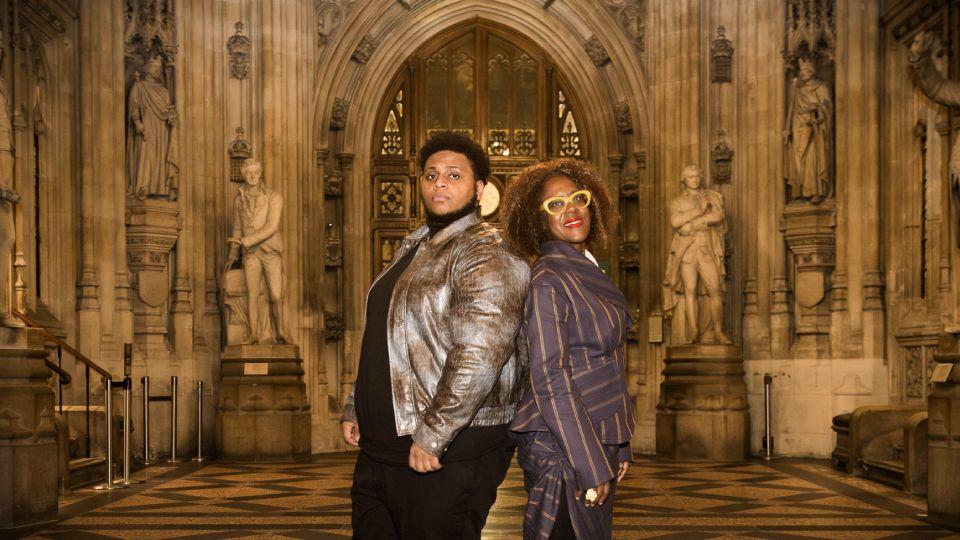
Equity Awards Scholar Omar Elsaaidi with Master of the King's Music, Goldsmiths alumnus and Honorary Fellow, Errollyn Wallen CBE.
Creative futures: culture in motion
Our alumni lit up the cultural landscape in ways that felt both global and deeply personal. From music to visual art, their work reached millions without losing the intimacy of studio craft. A Brit Award for the producer of one of the most culturally significant albums of recent years, Charli XCX’s Brat, stood alongside a Vanity Fair cover painted by a Goldsmiths art alumnus, moments that carried the signature of our creative DNA.
Literature continued to push boundaries. The Goldsmiths Prize 2025 shortlist showcased bold experimentation, and C.D. Rose’s We Live Here Now claimed the award, reaffirming our commitment to risk-taking and reinvention.

Charli 2 (2025)
Curators brought scholarship to life: Dr Becca Voelcker’s Land Cinema series at the Barbican explored landscape and time, while a Goldsmiths PhD student curated the Chile Pavilion at the Architecture Biennale.
Our creative reach extended to Somerset House, where Goldsmiths researchers collaborated on Tai Shani’s installation The Spell or the Dream, blending art and critical inquiry in a space that challenged audiences to rethink narrative and form.
Our Summer Degree Shows remain a defining moment in the Goldsmiths calendar.
These exhibitions are not just assessments; they are cultural events that attract audiences from across London and beyond. Featuring the Vice-Chancellor’s Art Prize and the Postgraduate Art Prize, our degree shows demonstrate how assessment and acclaim can coexist. They are a celebration of ambition and originality, affirming Goldsmiths as a crucible for new ideas and a launchpad for creative futures.
-RESIZED.jpg)
The Spell or The Dream by Tai Shani
That spirit of openness extends beyond our degree shows. The Goldsmiths Centre for Contemporary Art (CCA), our on-campus gallery, brings world-class exhibitions and bold commissions to the public, free of charge. From internationally acclaimed artists to emerging voices, the CCA creates a space where students, staff, and local communities can experience cutting-edge art and ideas together. It’s a living example of how Goldsmiths opens its doors, making creativity accessible and fostering dialogue beyond the university.
In computational arts, collaboration became both method and message. Students showcased AI-collaboration art with partnerships with Somerset House and Tate Modern asked what creativity looks like when machines become co-makers.
Day of dialogue and securing vital resources
The Day of Dialogue at Goldsmiths CCA reflected our strategic ethos: resilience through collaboration. Led by alumnus Sir Antony Gormley RA and Brenda Emmanus OBE, the event brought donors, students, and civic partners into meaningful conversation about sustaining creativity in a complex landscape.
With higher education facing tariffs, levies, and financial pressures, we’ve been working harder than ever to secure vital resources. This commitment ensures we can continue delivering world-class education and research that benefits society.
Out of that day came a transformative announcement: Peter L. Kellner pledged a bequest of art valued at over £4 million and gifted £2 million in cash to sustain creative education initiatives at Goldsmiths.
There is no question that Goldsmiths led the way in what was valued in an arts education. It was fantastic coming here, it was very, very clear, there was something very different.
Artist Sir Antony Gormley, alumnus and Honorary Fellow
Migration, belonging, and futures
Another defining moment was the confirmation of an £11.2 million grant from Oak Foundation to establish the Migrant Futures Institute. Rooted in Goldsmiths’ creative and critical traditions, the Institute will co-produce research with migrant and refugee communities, launching formally in 2026.
The Festival of Migration brought artists, researchers, and residents together to explore identity and belonging. Projects like Reimagining Digital ID examined technology and the role of digital identification, while research into migrants held on Diego Garcia showed how storytelling can influence policy.
Knowledge in action: research that resonates
Goldsmiths research continues to make an impact globally.
Forensic Architecture, based at Goldsmiths’ Centre for Research Architecture, has been awarded a significant Wellcome Discovery Award for their cutting-edge use of spatial and digital methods to investigate deaths in police custody.
Their recent cartography of genocide in Gaza and analysis of settler-colonial violence in Palestine exemplify their powerful evidence-based approach. This work continues to inform legal cases, exhibitions, and policy debates, demonstrating how architectural practice can serve justice and accountability
In the humanities, the Decadocs network launched to reinterpret decadence through a contemporary lens, while the NEUROLIVE study revealed how live performance affects the brain, deepening our understanding of art and cognition.
Social research addressed urgent issues. Dr George Musgrave’s study on suicide risk in the music industry exposed systemic challenges, and his new project in India (It’s Time to Talk) is tackling mental health stigma in creative sectors globally. The Muslim Youth Futures report examined barriers to participation and belonging, while Professor Saul Newman’s RECLAIM project explored civic dialogue and political futures.
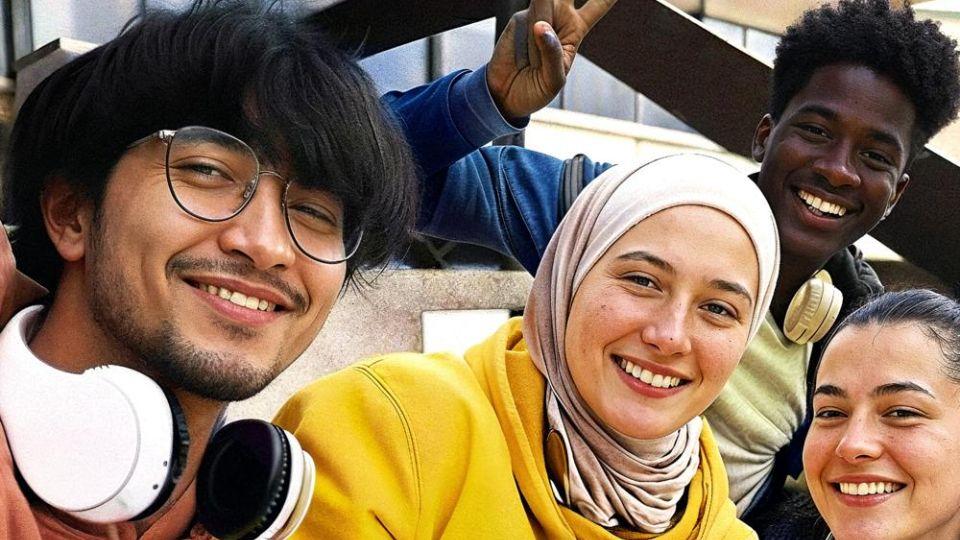
The Muslim Youth Futures report examined barriers to participation and belonging.
Our research did not stay on the page; it reached people, shaped policy, and sparked change.
Across disciplines, we advanced human-centred approaches to technology. A €2.5 million ERC project explored how platforms and AI shape civic life, while Dr Marco Gillies and Dr Dan McQuillan’s AI demonstrator projects pushed boundaries in immersive and ethical design. Dr Oonagh Murphy’s work on responsible AI reinforced our leadership in shaping technology for public good.
Management scholarship by Dr Ivan Zupic won Sage’s 10-Year Impact Award, and Dr Akshi Kumar received the Florence R. Sabin Award, honouring her contributions to AI and natural language processing.
Other studies touched everyday life included how art boosts wellbeing, and how design innovations make streaming easier for older viewers.
Student stories that inspire
Our students reminded us that courage and curiosity are inseparable.
One moment stood out for its poignancy: MA students’ film Romchyk was screened at the Vatican, where they met Pope Francis shortly before his passing. That encounter was more than symbolic; it spoke to Goldsmiths’ cultural reach and the global conversations our students foster.
Students in Alchemy, our free creative education and mentoring programme for local young people, experienced opportunities that were truly transformative. Through rap, spoken word, and hip hop, they tackled urgent themes such as climate change and social justice, turning creativity into a powerful tool for expression and change.
This year’s programme featured a masterclass with alumnus Danny L Harle, known for working with star performers like Dua Lupa and Charli XCX, giving students a chance to learn from industry-leading talent. Like so many Goldsmiths performances, their work inspired staff, peers, and community partners to imagine change and believe in the power of creativity to open doors.
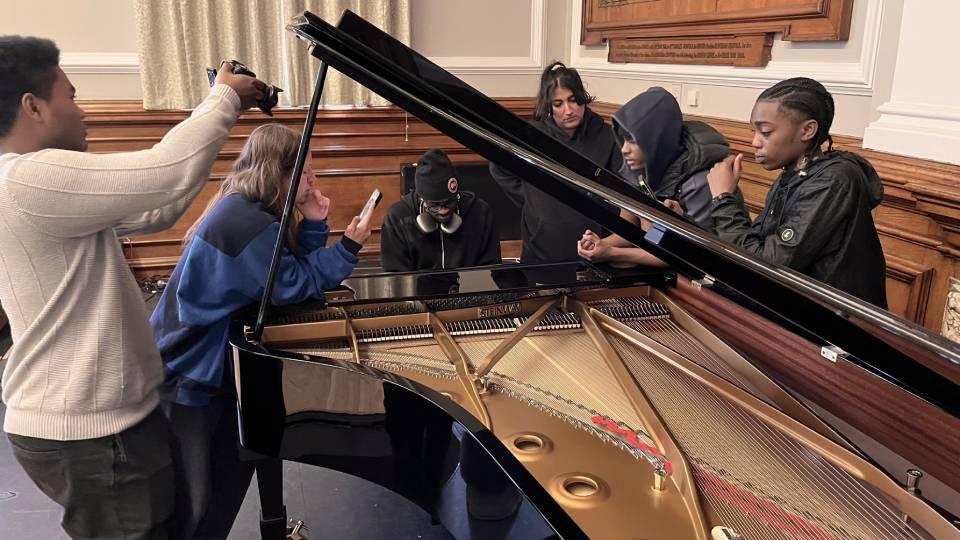
Alchemy collective work to create a response to the statues of Deptford Town Hall
Graduation ceremonies were more than formalities; they were moments of triumph and transformation for our students. They marked the culmination of years of resilience, creativity, and collaboration, and they brought together families, friends, and staff to honour achievements that often began as bold ideas in our studios and seminar rooms. In our January ceremonies honorary fellowships were awarded to writers Caleb Azumah Nelson and Evie Wyld, an alumnus, and to actor and director Kalki Koechlin, also an alumnus.
In September, they were followed by an honorary fellowship for the theatre director Dawn Walton, an alumnus; clean air campaigner Rosamund Adoo Kissi Debrah; and former Chair of Goldsmiths Council, Baroness Dinah Caine, CBE.
The September ceremonies also marked the graduations of our second cohort of Equity Awards scholars. This year, 19 Equity Awards scholars graduated from Goldsmiths, of which five received first class honours degrees, while the rest achieved strong upper second Class (2:1) results, a remarkable record of achievement across the cohort.
Each ceremony reflected the collective strength that defines a Goldsmiths education, a community where curiosity and courage are inseparable. For many graduates, these events were not just endings but beginnings: launchpads into creative careers, research pathways, and civic leadership.
In September it was announced that Goldsmiths claimed the number one spot in the Guardian rankings for academic progression, affirming our role as a catalyst for creativity, innovation, and social change.
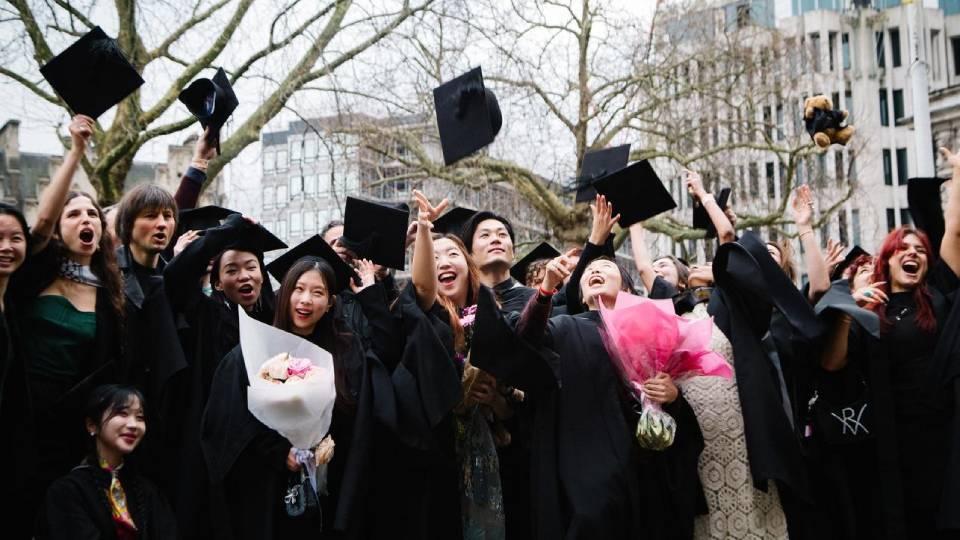
Graduation ceremonies in January and September were moments of triumph for our students
Social justice, community, and repair
Our commitment to social justice took tangible shape across Lewisham and London.
We reimagined the Deptford Town Hall statues, and at Melfield Gardens we achieved something extraordinary: an intergenerational housing initiative co-developed with Phoenix Community Housing. Students now live alongside residents aged over 55 in exchange for time, presence, and community activities.
This project drew national awards and coverage for its innovation and humanity, and it is more than housing; it is a model for civic life that others are watching closely. By blending education, care, and community, Melfield Gardens reflects Goldsmiths’ belief that social justice begins at home.
Through Open Book, we continued to show how creative education meets lived experience, supporting people whose lives may have been shaped by structural disadvantage, social exclusion, or contact with the criminal justice system. In Medway, participants created a film blending memory, research, and craft, while in HMP Downview, the co-created performance Tell Me if I’m Guilty demonstrated the power of creativity as a tool for repair.
.jpg)
Robotics clubs, AI literacy workshops, and creative computing sessions reached hundreds of local young people, building digital confidence and future-facing skills
Our civic work extends into schools and youth engagement. Robotics clubs, AI literacy workshops, and creative computing sessions reached hundreds of local young people, building digital confidence and future-facing skills. And our free annual Art Summer School massively expanded the pipeline of young makers and thinkers aged 16–18, welcoming 30 participants this year.
Alongside this, the Schools Studio Programme, led by Goldsmiths BA Fine Art students, mentors 16–18-year-olds from Lewisham and Southwark through year-long tutorials, studio visits, and collaborative projects, demystifying contemporary art practice and widening access to arts education.
These initiatives are more than activities; they are acts of access and aspiration, giving local youth the confidence to imagine themselves as future artists, technologists, and innovators
City, design, and the public realm
Goldsmiths linked research, design, and civic space through projects like a national audit of UK skateable spaces, collaborations with the Science Museum and Somerset House, and innovations that explored sound, memory, and the future.
.jpg)
Our free annual Art Summer School massively expanded the pipeline of young makers and thinkers aged 16–18, welcoming 30 participants this year.
Acknowledging support
Many of these initiatives are offered at no cost to students and communities, because at Goldsmiths we believe access should never be a barrier to creativity or learning.
These projects do not generate income, or attract fees, yet they deliver immeasurable value. They happen because of the dedication of staff and students, and because of the donors and philanthropic partners who share our vision. Their generosity enables us to widen access, nurture talent, and deliver work that transforms lives and communities.
We are deeply grateful for this support; it turns possibility into reality.
People who open doors
Goldsmiths’ story is written not only by our supporters, and those in lecture theatres and studios, but by people whose work opens doors, sometimes literally.
From leadership to frontline roles, excellence here is embodied in every space.
Siân Prime, Co-head of ICCE and Co-director of the Migrant Futures Institute, was named on the Diversity Powerlist 2025/26, recognising her leadership in enterprise education that centres inclusion and creativity. Her work champions opportunities for underrepresented voices and ensures that innovation is never divorced from equity.
Dr Marl’Ene Edwin and our Equity Awards programme achieved national recognition, shortlisted for the prestigious FutureEd Awards. These honours reflect a commitment to systemic change in education and the belief that diversity is a driver of excellence.
And then there are colleagues whose contributions often go unseen but never unnoticed. Cleaning colleague Angelica Collazos Diez was named Cleaning Operative of the Year at the Cleaning Excellence Awards 2025, a reminder that the quality of our spaces and the care within them is part of what makes Goldsmiths special.
.jpg)
Siân Prime was named on the Diversity Powerlist 2025/26, recognising her leadership and work that centres inclusion and creativity.
Together, these stories show that opening doors is not just a metaphor at Goldsmiths.
It is a daily practice, lived by people who make education accessible, inclusive, and inspiring.
Looking ahead: imagination into action
We ended the year unveiling Chromorama, a 21-metre artwork by Emeritus Professor David Batchelor, a beacon of colour, creativity, and optimism and a new landmark for Lewisham. As we move into 2026, our strategy will amplify creativity, champion social justice, and turn knowledge into action.
2025 showed what is possible when curiosity, courage, and collaboration come together. Thank you to the students, staff, alumni, and partners who made this year unforgettable. It was a year when ideas met action, imagination became reality, and Goldsmiths’ vision for the future began to take shape.